



When handling large-scale cabling projects for data centers and smart manufacturing parks, most electrical contractors face two common pain points: cable overheating in dense wiring areas and troublesome later line adjustments. Traditional solid cable trays and ladder trays cannot balance heat dissipation, flexibility and maintainability. Closed trays trap operating heat and accelerate cable aging, while rigid ladder structures are difficult to modify during equipment upgrades. For modern facilities pursuing long-term stable operation and low maintenance costs, wire mesh cable trays have become the most practical and cost-effective cabling solution.
BDCABLETRAY recently completed a full wire mesh cable tray installation and renovation project for a comprehensive industrial park integrating tier-3 data center, automated production workshops and office buildings. Faced with high-density mixed power and signal wiring, humid pipe corridor environment and frequent production line iteration demands, we delivered a fully customized mesh tray system. This real engineering case shares on-site challenges, tailored solutions, construction details and post-operation results, providing reliable reference for similar industrial and IT cabling projects.
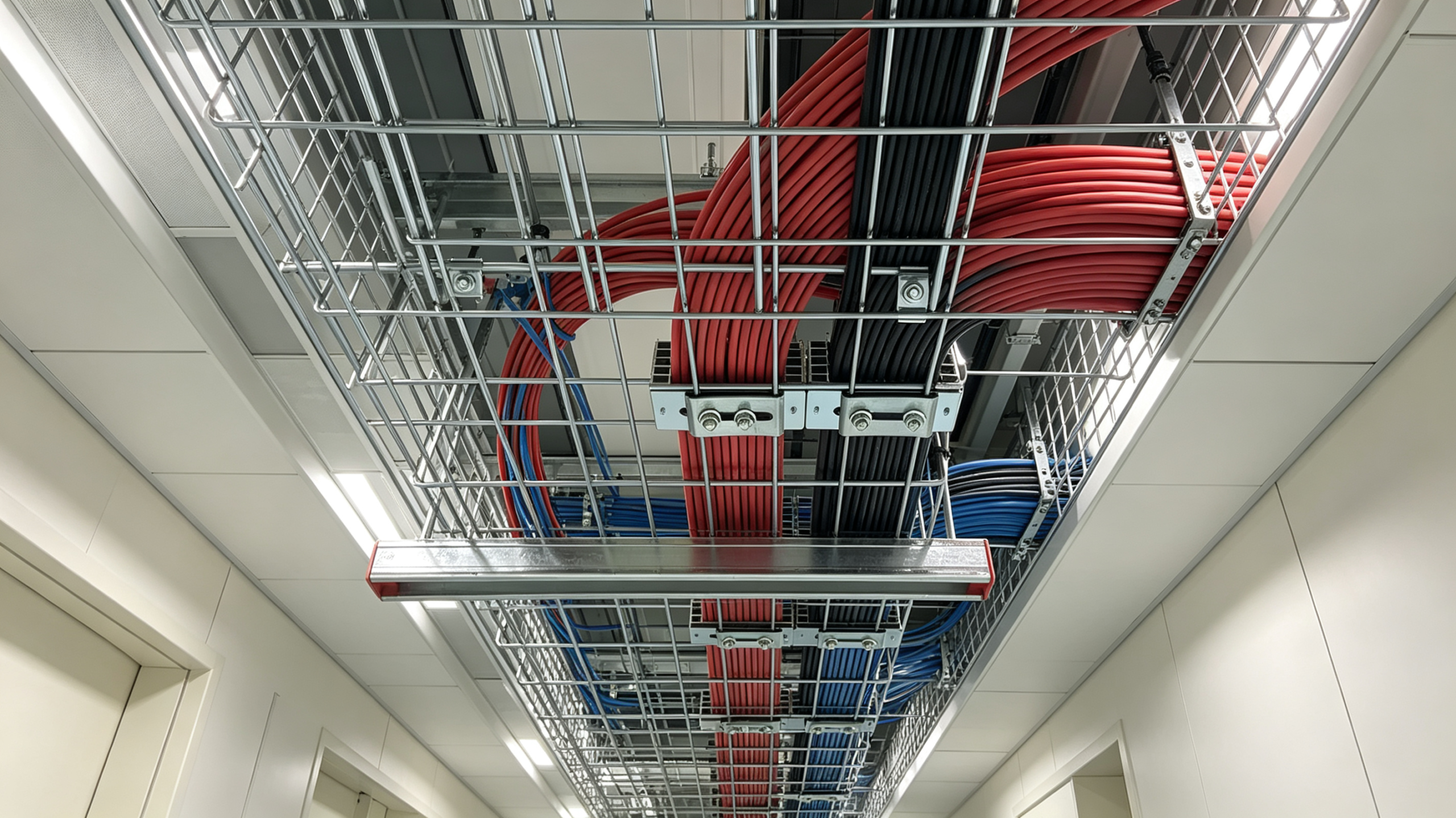
On-Site Project Challenges & Existing Cabling Problems
This industrial park covers multiple functional zones with differentiated cabling requirements. The data center runs 24/7 high-load server wiring, the smart workshop needs regular equipment layout adjustment, and the underground pipe corridor maintains high humidity all year round. The original partial traditional tray layout exposed many practical problems after long-term operation, restricting system stability and daily maintenance efficiency.
Severe heat accumulation in high-density wiring areas
A large number of power cables, optical fibers and network lines are densely laid in the data center ceiling and equipment room. Traditional closed trays lack effective air circulation, resulting in continuous heat accumulation. Long-term high-temperature operation leads to unstable signal transmission, increased cable loss and hidden fire risks, which cannot meet the continuous and stable operation standards of data center infrastructure.
Rigid tray structure unable to adapt dynamic production upgrades
The automated workshop updates production processes and mechanical equipment every few months, requiring frequent addition, replacement and rerouting of control cables. Traditional fixed trays need cutting, drilling and re-welding during modification. The whole process is time-consuming, affects normal production, and leaves messy and unstandardized wiring traces on site.
Hidden cable faults difficult to troubleshoot quickly
Closed tray structures completely cover internal cables. When circuit failures or network interruptions occur, maintenance staff have to disassemble a large number of cover plates for inspection. Minor problems such as loose wiring and slight insulation damage are difficult to detect in time, easily evolving into large-scale system downtime.
Humid environment causes tray aging and corrosion
The underground pipe corridor and semi-outdoor wiring areas have high humidity and condensed water. Ordinary thin galvanized trays are prone to rust and structural deformation after long-term humid erosion. Corroded tray edges may scratch cable insulation, and deformed structures lose stable load-bearing capacity, bringing potential safety hazards.
BDCABLETRAY Custom Wire Mesh Cable Tray Solution
After on-site survey and demand sorting, the BDCABLETRAY engineering team abandoned the traditional rigid tray layout. According to different regional environments and wiring densities, we adopted graded wire mesh cable tray matching schemes, equipped with customized anti-corrosion technology and modular assembly design, focusing on heat dissipation, flexibility, visibility and environmental adaptability to solve all on-site pain points in one stop.
Open mesh structure solves heat dissipation dead angle problem
Different from closed trays with poor air convection, BDCABLETRAY wire mesh cable trays adopt a fully open grid weaving structure. Air circulates freely from all directions of the tray, quickly taking away the heat generated by high-density cables during operation. This design completely eliminates local heat accumulation, effectively reduces cable operating temperature, delays insulation aging, and ensures long-term stable transmission of data and power lines.
Modular assembly supports free layout adjustment
The entire mesh tray system adopts standardized modular accessories, all connected by bolts without on-site welding and painting. The structure supports arbitrary cutting, extension and steering according to on-site wiring routes. When the workshop upgrades equipment or adjusts production lines, the tray can be disassembled, recombined and reused at will, greatly shortening the transformation cycle and avoiding material waste and production downtime losses.
Graded anti-corrosion process for zoning matching
For dry indoor areas such as data centers and office buildings, we adopted hot-dip galvanized wire mesh trays with stable basic anti-rust performance. For humid underground corridors and semi-outdoor areas, we customized 304 stainless steel mesh trays. The graded matching method avoids excessive configuration waste and insufficient protection, ensuring long-term structural stability in different environments.
Visible grid layout improves maintenance efficiency
The transparent mesh structure makes all internal cables clearly visible. Maintenance personnel can quickly check cable aging, wiring confusion and abnormal load without disassembling any parts. Fault location and daily inspection efficiency are greatly improved, realizing early elimination of potential electrical faults.
Lightweight structure reduces overall building load
Under the same load-bearing standard, wire mesh trays are much lighter than solid steel trays. The lightweight design reduces the bearing pressure of ceiling suspenders and pipe corridor supports, effectively improving the overall safety margin of the cabling system, especially suitable for large-area high-altitude laying scenarios.
Post-Project Operation Effects & Practical Improvements
After full installation, wiring sorting and system debugging, the park’s cabling system has maintained stable operation for more than one year. All historical pain points have been completely resolved, and the comprehensive operation efficiency and safety standard of the electrical system have been significantly improved.
In terms of heat dissipation optimization, the open convection structure effectively controls cable operating temperature, completely eliminating high-temperature alarms and heat-induced signal instability. The service life of core cables is extended, and the failure rate of data transmission and power supply is greatly reduced.
In terms of later management, the flexible modular structure adapts to frequent production line upgrades. The wiring modification efficiency is increased by more than 50%, and the annual maintenance and renovation cost of the cabling system is effectively saved.
In terms of environmental adaptation, the graded anti-corrosion mesh trays remain rust-free and non-deformable in humid and complex environments. The overall wiring layout is neat and standardized, fully passing multiple safety audits and facility acceptance inspections.
Typical Application Scenarios of BDCABLETRAY Wire Mesh Cable Tray
Data centers and server rooms
Suitable for high-density fiber and power mixed wiring. Excellent ventilation performance avoids cable heat accumulation and ensures 24-hour stable operation of server and network systems.
Automated smart manufacturing workshops
Ideal for production lines with frequent process adjustments and equipment iterations. Flexible modular design supports dynamic wiring layout and reduces long-term renovation costs.
Commercial and office building weak current systems
Used for ceiling wiring and network cabling. The neat and transparent layout improves building electrical standardization and facilitates daily inspection and maintenance.
Underground pipe corridors and humid industrial areas
Custom stainless steel and anti-corrosion mesh trays adapt to high humidity and dusty environments, with strong durability and low maintenance frequency.
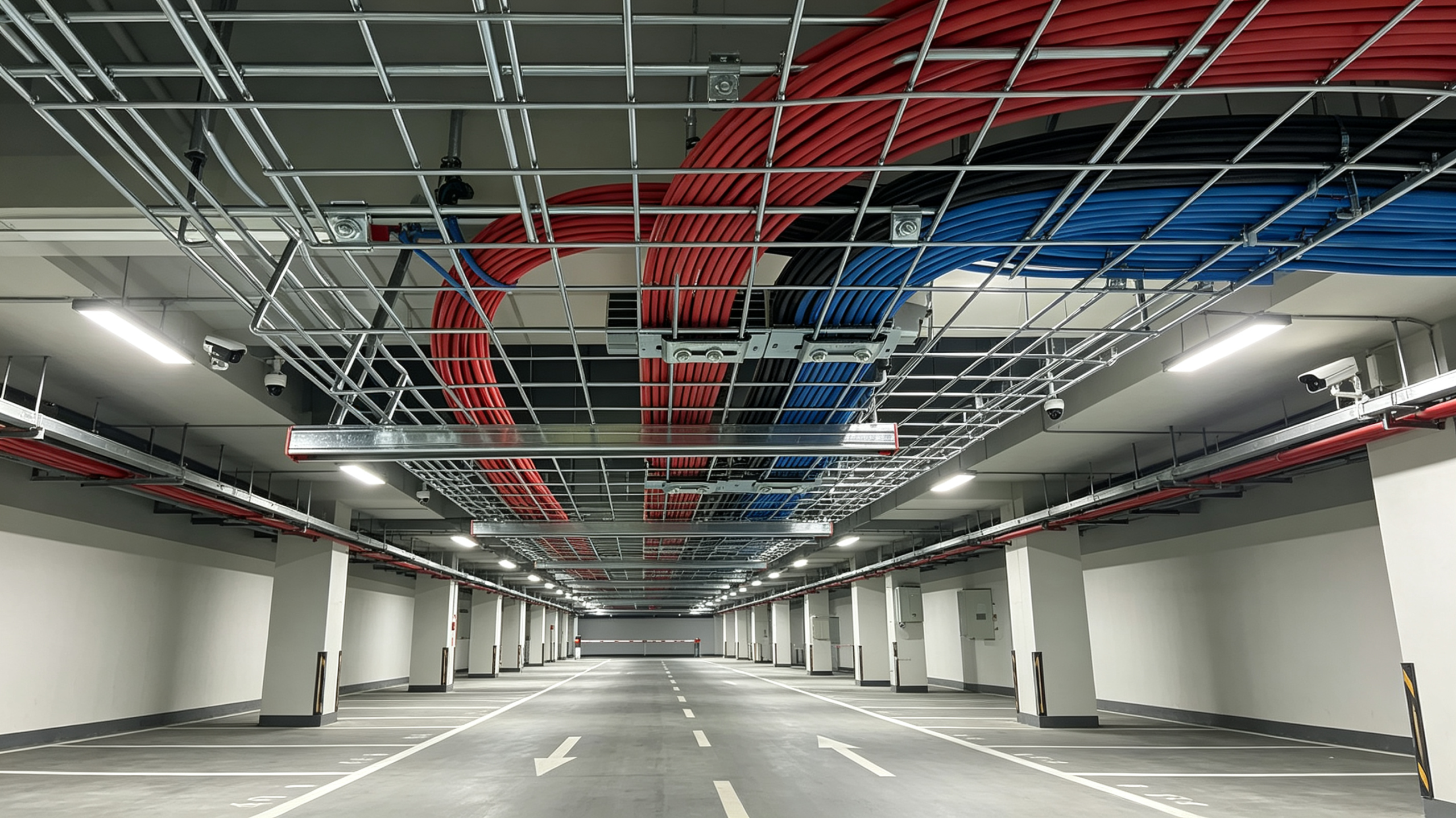
Core Advantages of BDCABLETRAY Wire Mesh Cable Tray Solutions
Full open ventilation avoids cable overheating risks
Zero dead-angle air convection solves the inherent heat dissipation defect of traditional closed trays, effectively reducing cable aging and fire hidden dangers, and improving the overall safety level of the cabling system.
Reusable modular structure saves project costs
Free disassembly and recombination meet the dynamic upgrading needs of modern factories and data centers. No repeated procurement and construction are required, bringing long-term cost advantages for project operation.
Visual layout simplifies daily operation and maintenance
Intuitive cable viewing greatly improves troubleshooting efficiency, avoids hidden faults caused by inconvenient inspection, and makes electrical system management more refined and controllable.
Multi-process customization adapts to complex environments
Multiple material and surface treatment options support customized matching for different scenarios, ensuring stable product performance in dry, humid, indoor and outdoor environments.
If you are looking for high-ventilation, flexible and low-maintenance cable tray solutions for data centers, smart factories and commercial projects, contact BDCABLETRAY. Our professional engineering team provides free on-site survey, customized scheme design and full-process technical guidance to create a safe, standardized and high-efficiency cabling system for your project.
FAQ
1. What makes wire mesh cable trays better than traditional solid and ladder trays?
Wire mesh cable trays feature fully open ventilation, flexible modular assembly and visible wiring structure. Compared with closed trays that trap heat and rigid ladder trays that are hard to modify, they effectively avoid cable overheating, support free layout adjustment, and greatly simplify daily maintenance, making them more suitable for modern high-standard cabling projects.
2. Can wire mesh cable trays bear heavy-duty industrial cable loads?
Yes. BDCABLETRAY wire mesh trays adopt thickened steel wire welding and reinforced structural design. With stable and reliable load-bearing capacity, they can fully meet the laying requirements of high-power cable bundles. Meanwhile, their excellent heat dissipation performance avoids safety hazards caused by high-load cable heating, which is more suitable for industrial scenarios than ordinary trays.
3. Are wire mesh cable trays suitable for humid and corrosive environments?
Absolutely. BDCABLETRAY provides multiple anti-corrosion options including hot-dip galvanizing, powder coating and 304 stainless steel. Customized processes can effectively resist humidity, condensed water and slight corrosion, ensuring long-term stable use in underground pipe corridors, coastal areas and humid workshops without rust or deformation.
4. Is wire mesh cable tray installation complicated and time-consuming?
No. The whole system adopts bolt-on modular assembly without on-site welding and painting. The lightweight structure is easy to carry and install, which greatly shortens the construction cycle. It can also be cut and spliced on-site according to actual conditions, adapting to various complex wiring routes.
5. Does BDCABLETRAY support personalized customization of wire mesh cable trays?
Yes. BDCABLETRAY supports full customization of wire mesh trays, including different widths, heights, wire diameters, mesh sizes and surface treatments. We can formulate exclusive solutions according to project wiring density, environmental conditions and layout requirements to perfectly match on-site engineering needs.