



Last summer we supplied cable tray for a 48-bay electric truck charging depot on the edge of Rotterdam, Netherlands. The operator runs a mixed fleet of 19-tonne distribution trucks, all going electric over a five-year plan. The new depot has 48 DC fast chargers under a covered canopy, fed by a dedicated 5 MVA transformer and a small on-site battery storage unit. The owner’s electrical contractor came to us with a tight brief: route the charging cables, the Ethernet comms to each charger, and the network cabling for the depot management system, without blocking the service aisle under the canopy.
The contractor first priced out solid trough tray, the usual choice for indoor power runs. Our engineer walked the site with them for 20 minutes and changed the recommendation. This case walks through why wire mesh was the right call here, what we shipped, and how the install went against a 6-week construction window.
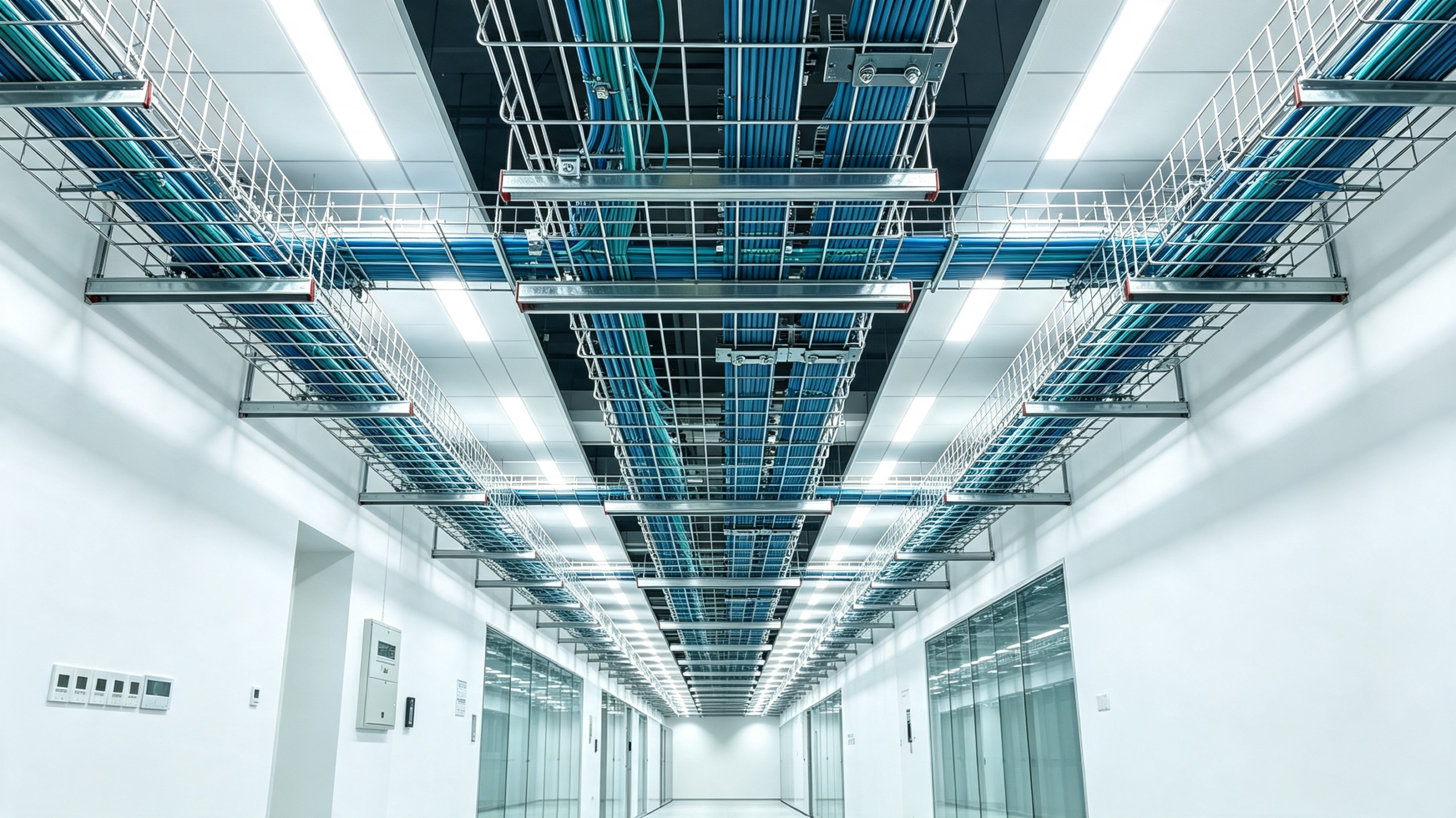
Why Wire Mesh Beat Solid Trough on This Depot
Charging depots look simple on paper: charger, cable, transformer. In practice, they are crowded with cable, fast-changing technology and trucks that need to drive in and out. Wire mesh solved three specific headaches on this site.
Fast on-site modification as charger positions moved
By the time the cable tray was going in, the charger supplier had moved three charging points 2 meters to the left to make room for a wider truck maneuvering lane. Solid trough would have needed custom fabricated bends and reducer fittings, ordered from the factory with a 10-day lead time. Wire mesh is cut and extended on site with bolt cutters: the installer clipped a short section, added a drop, and kept moving. The whole re-route took half a day instead of a week.
Heat dissipation from heavy charging cables
Each charging bay runs a 480 V DC cable carrying up to 250 A during a fast charge. The bundles under the canopy run hot when several trucks charge at once. Solid bottom tray traps that heat against the cable jacket, which ages the insulation faster. Wire mesh is open on all sides: air circulates, the cables run cooler, and the owner gets a longer service life out of both the cable and the tray.
Visibility and troubleshooting
Charging depots have a mix of power cable, Ethernet, charger comms and the depot management system network. On a solid trough, the electrician has to lift a cover and dig through a bundle to trace a circuit. On wire mesh, every cable is visible from the walkway. When a charger went offline during commissioning, the maintenance tech found the loose connector in about ten minutes by looking up at the tray — a job that would have taken hours on a covered trough.
Specs We Supplied
After two drawing reviews with the electrical contractor and the depot operator, we locked the following BOM.
Main trunk runs under the canopy
The main cable trunk ran the length of the 48-bay canopy, about 90 meters long, suspended from the canopy structure by galvanized threaded rod. We used 300 mm × 100 mm galvanized wire mesh tray, wire diameter 4 mm × 4 mm, mesh opening 50 × 100 mm. Main trunk length was about 180 meters (two parallel runs, one for power, one for comms). The drops from the trunk down to each charger used 100 mm × 50 mm mesh, another 96 drops at roughly 3 meters each, totaling about 288 meters.
Secondary runs to the transformer and battery cabinet
From the transformer room to the canopy trunk, we used a heavier 450 mm × 100 mm wire mesh tray on wall brackets, carrying the main LV feeders. Total length on this section was about 220 meters. Because this run is near the battery energy storage cabinet, we separated the control and signal cables into a dedicated 100 mm mesh tray mounted 200 mm below the power tray, following the owner’s earthing and segregation requirements.
Accessories and fixing hardware
We supplied hanger rod sets every 1.5 meters, wall brackets, cable cleats at each charger drop, and stainless cable ties for circuit identification. Because the depot is in the Netherlands with regular rain, every hanger rod and bracket was hot-dip galvanized; the mesh tray itself was pre-galvanized sheet wire with an extra chromate conversion coating for outdoor exposed life.
Production, Packing and Shipping
The order was small enough to ship as a single LCL container, but the contractor asked us to consolidate it with a separate order they were sending to another site. We split the packing clearly: pallet 1 marked “Depot – Trunk”, pallet 2 “Depot – Drops”, pallet 3 “Transformer run”.
Quality checks before packing
Before wrapping, our QC ran a random sample check on the mesh: wire diameter, mesh opening consistency, weld integrity on each joint. We also checked that the zinc coating was even — no bare spots at the weld points. The contractor’s own engineer visited us mid-production and signed off on the sample.
Packing for site handling
Because the depot is an active construction site with trucks coming and going, we packed the tray sections in bundles of 10, shrink-wrapped and on wooden pallets. Each bundle was labeled with the section type and the bay number it belonged to. When the truck arrived on site, the installer carried the bundle straight to the correct row of chargers instead of sorting at the delivery gate.

Installation and First Charging Sessions
The contractor used their own crew. They hung the main trunk from the canopy first, then ran the drops down to each charger pedestal. Because wire mesh is light — about a third of the weight of solid trough — two installers could carry and position a 3-meter section without a lift truck on the raised platform.
Commissioning started four days ahead of the original schedule, partly because the on-site re-routes went so quickly. The depot operator’s maintenance techs walked the installation with our engineer during handover, and we showed them how to clip an extra drop for a future charger — they said it was the kind of thing they would be doing themselves in six months as the fleet grows.
Six months in, the depot is running at about 70% utilization. The operator reports that no tray has sagged, no weld has failed, and the visible cable layout makes their monthly preventive maintenance check much faster. They have already asked us to quote the next phase — 24 more charging bays going in next year — and they are specifying the same 300 × 100 galvanized mesh so the spare parts match.
If you are building an EV charging depot, a warehouse automation upgrade, an open-plan office network fit-out, or any project where cable runs need to be flexible, visible and easy to modify, contact BDCABLETRAY. Send us your cable schedule, the environment the tray will live in, and the number of drops — we will come back with a BOM, a sample and a lead time within one working day.
FAQ
1. Is pre-galvanized wire mesh tray enough for an outdoor covered depot?
Under a covered canopy with no direct rain, pre-galvanized mesh works fine for 10+ years. If the tray is fully exposed to rain or coastal salt air, we recommend hot-dip galvanized after fabrication or stainless 304. Tell us how exposed the route is and we will recommend the right finish.
2. How far apart should wire mesh tray supports be spaced?
Typical support spacing for wire mesh tray is 1.0–1.5 meters for power cable runs, up to 2 meters for light data and comms cable. Heavier 4 mm wire can go to 1.5 meters. We will specify the exact spacing from your cable weight per meter on the drawing.
3. Can wire mesh tray be cut and extended on site?
Yes — that is one of its biggest advantages. Standard bolt cutters trim the wire mesh cleanly, and joining couplers connect sections without special tools. Most installers do 80% of a standard run from the factory kit and modify 20% on site. This is why wire mesh is so popular on retrofit and fast-track projects.
4. How does the cost compare to solid trough or ladder tray?
Wire mesh is usually the lowest-cost option per meter, because it uses the least steel. It is also the cheapest to install because it is light and does not need heavy lifting gear. The trade-off is load capacity — for very heavy power runs, ladder tray is still the right choice.
5. Can you supply future expansion sections that match the existing install?
Yes. We keep the wire diameter, mesh opening, finish and section size on file for repeat customers. When you add the next 24 charging bays, the new tray will look and fit like the original install, and the spare couplers and clips you bought the first time will still work.