



Wire mesh cable tray is widely preferred in data center builds because of its open grid structure, lightweight design and flexible on-site adjustment. Many contractors pick it when they expect frequent cable changes after handover. This single case covers a mid-sized data center expansion project where BDCABLETRAY supplied the full wire mesh tray system and supporting accessories.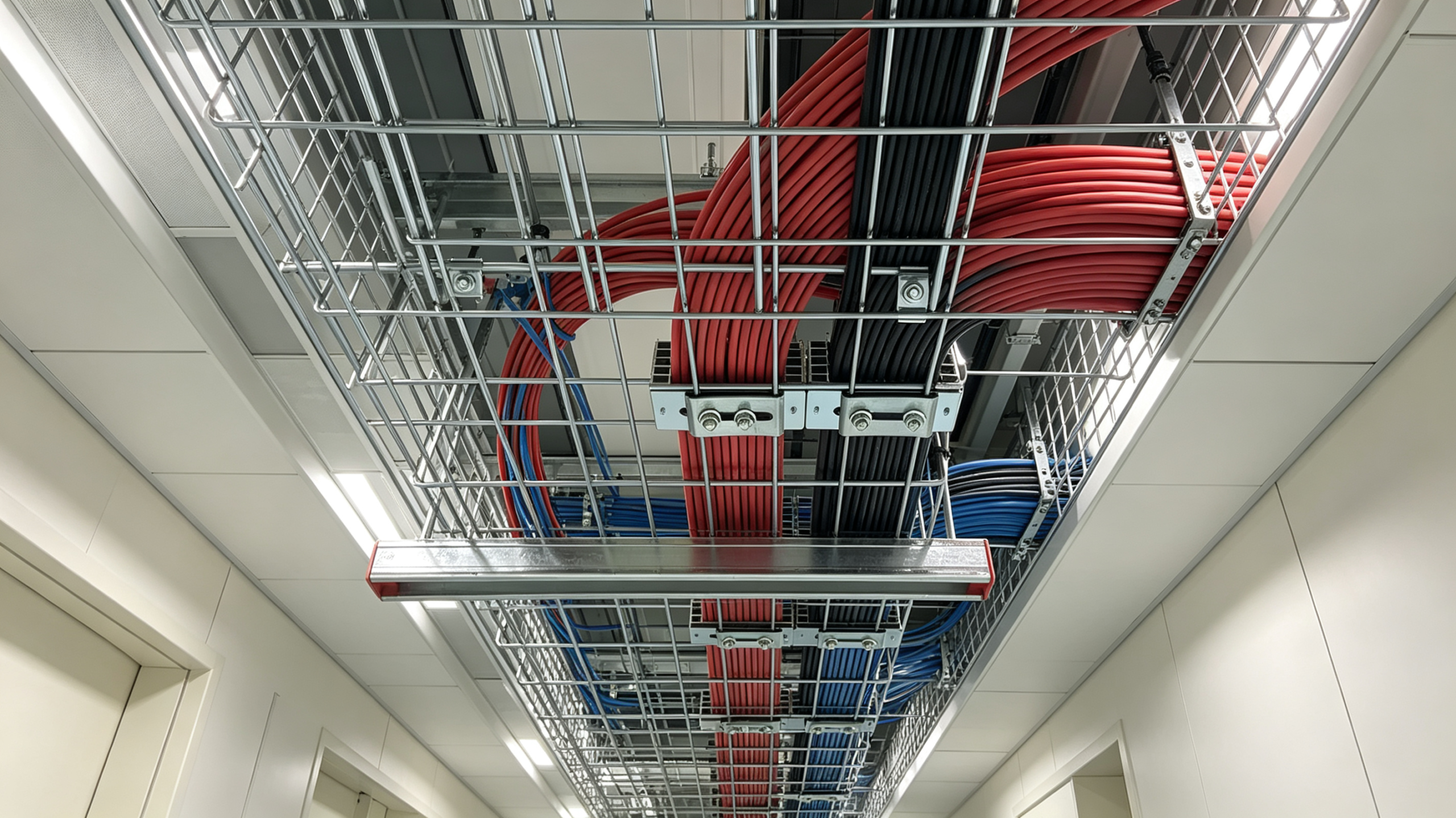
Project Background
Site overview
The project was a data center expansion in Southeast Asia, adding 120 server racks for cloud hosting services. The main overhead cable route ran above cold aisles, carrying CAT6A network cables, fiber optic trunks and low-voltage control cables. The client required fast installation to match the tight construction window before new server delivery.
Original design challenge
The design team initially considered ladder cable tray. But they found ladder sections were heavy and needed prefabricated elbows for every direction change. The server hall also had many crossing pipes and steel beams, which would create dozens of custom bent parts and delay the schedule. The maintenance team also wanted clear visibility so they could trace cables quickly without removing covers.
BDCABLETRAY Wire Mesh Tray Solution
Product specification and finish
BDCABLETRAY recommended pre-galvanized wire mesh cable tray with 4 mm wire diameter, 300 mm width and 60 mm height. Splices, drop fittings and threaded rod hangers were included in the package. We separated power and data pathways by adding plastic dividers inside the mesh tray to reduce signal interference.
Layout and installation plan
The installation team mounted the tray at 1.2 m support spacing. Workers could cut the mesh tray directly on site with wire cutters to bypass beams and pipe runs. No factory bends were ordered for irregular corners. We also arranged separate routes for fiber and copper cables to follow the client’s cabling standard.
Quality checks before acceptance
Our technical team visited the site for inspection. We checked cut edges to make sure sharp wires were trimmed and protected, verified support load balance, and tested cable separation. All tray sections passed the load test and visual inspection before cable pulling started.
Project Outcome
The full cable tray system, around 1600 meters in total, was finished within 8 working days. The installation crew saved nearly 30% of labor time compared with the original ladder tray plan. After one year of operation, the facility team still comments that adding, moving or replacing network cables is much simpler than on their older closed tray systems. The open mesh keeps good airflow and helps avoid local heat accumulation on dense cable bundles.
Key Lessons Learned from This Project
Keep support spacing consistent
Wire mesh tray is flexible. Even if the tray looks strong, uneven or wide support spacing will cause cable sag. For 300 mm wide mesh tray with dense data cables, 1.2 m spacing is the safe choice.
Sort accessories together with tray delivery
Many site delays come from missing splice plates, hangers or dividers. We now bundle all accessories according to drawing zones, so installers can get matching parts without waiting for separate shipments.
Contact BDCABLETRAY
If you are planning a data center, office or industrial retrofit project with wire mesh cable tray, reach out to BDCABLETRAY. We supply galvanized and stainless steel wire mesh trays, custom sizes, dividers, hangers and all related fittings. Send your cable layout drawings and load requirements, and our engineers will give you a tailored quotation. Contact BDCABLETRAY for samples and technical support.
FAQ
Q1: Can wire mesh cable tray carry both data and power cables? Yes, it can hold both types, but you need to separate them with dividers or separate trays to avoid EMI interference. Heavy high-current power cables are usually better suited for ladder tray instead of wire mesh.
Q2: Is pre-galvanized wire mesh tray suitable for long-term data center use? For indoor, dry and clean server rooms, pre-galvanized wire mesh works well. If the site has high humidity or chemical vapors, hot dip galvanized or 304 stainless steel is a better option.
Q3: What is the maximum support spacing for wire mesh cable tray? It depends on wire diameter, tray width and cable weight. For standard 300 mm wide mesh tray with light data cables, 1.2 m is common. Heavier cable loads require spacing reduced to 0.8 m or 1.0 m.
Q4: Can we cut wire mesh tray freely on site? Yes, it can be cut easily with wire cutters or grinding tools. You must trim sharp cut ends and add edge protection to prevent scratches on cable insulation.
Q5: Does BDCABLETRAY provide custom wire mesh tray sizes? Yes. We can produce custom widths, heights and lengths, plus matching accessories. Share your drawings or site measurements, and we will arrange production to match your project schedule.