



Cable tray serves as a structured cable support system, built to hold and route power, control, instrumentation and communication cables across buildings and industrial sites. Unlike closed conduits, it offers an open or semi-open path for cables, making installation, inspection and maintenance much easier. Engineers and contractors pick cable trays to organise wiring, reduce cable damage risk and cut overall cabling project costs. BDCABLETRAY manufactures a full range of cable tray systems tailored to different site conditions and load requirements.
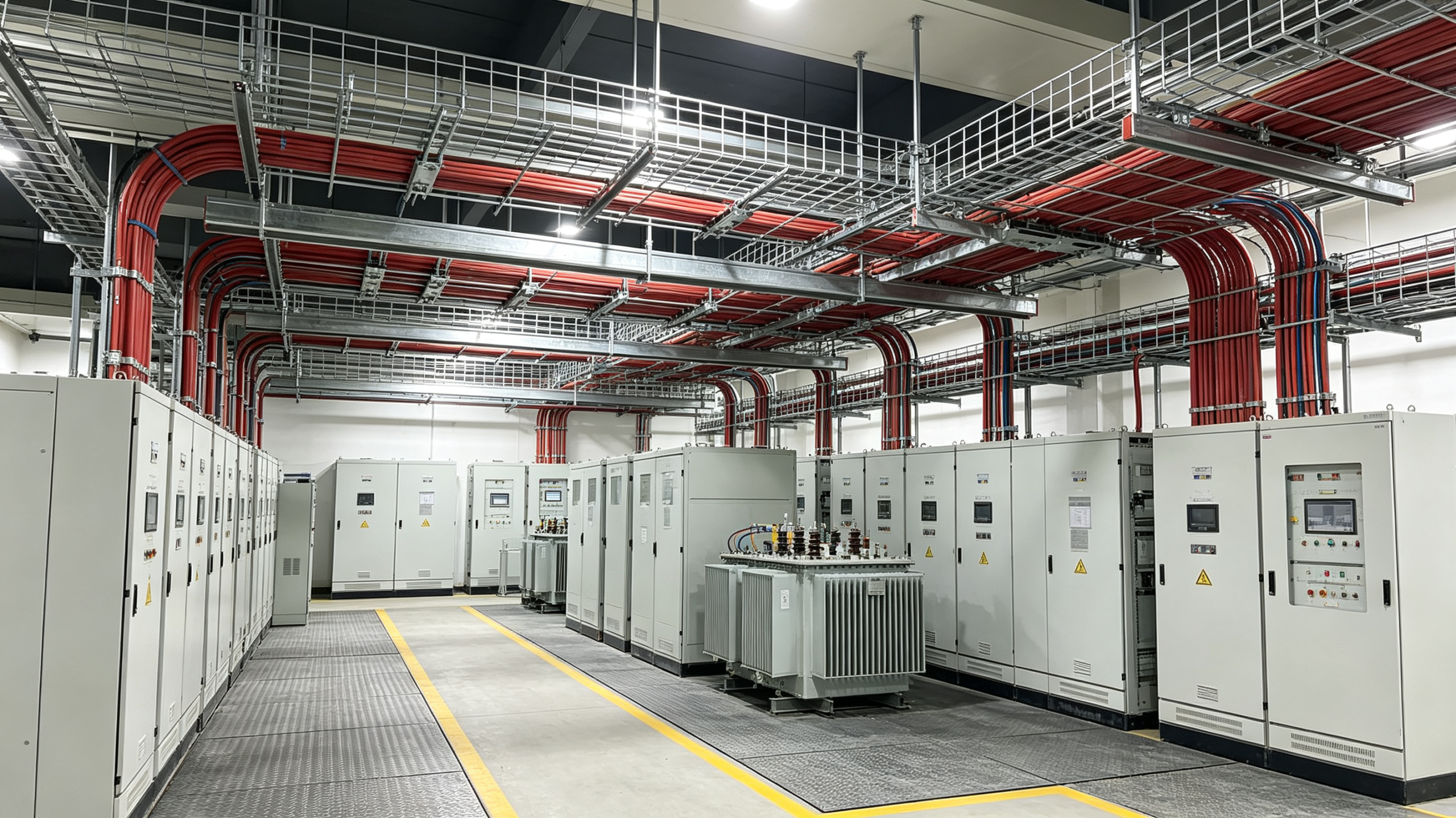
Main Types of Cable Trays
Ladder Cable Tray
Ladder cable tray is the most widely used style. It features two side rails joined by horizontal rungs. The open gaps between rungs deliver great air flow for heat dissipation, and excess moisture can drip away. It works well for heavy power cables in factories, power plants and large industrial facilities.
Perforated / Trough Cable Tray
Perforated trough trays have small holes punched on the base. The holes balance ventilation and cable support, while blocking large debris from touching cables. It fits mixed power and signal cables in commercial buildings, workshops and indoor industrial zones.
Solid Bottom Cable Tray
Solid bottom trays come with a fully closed base. They shield cables against dust, falling particles and minor mechanical impacts. This design is commonly used for sensitive control and instrument cables where extra protection is required.
Wire Mesh Cable Tray
Wire mesh tray is lightweight with welded wire grid construction. It has excellent airflow, simple assembly and flexible routing. Data centres, server rooms and telecom sites often choose this tray for low-voltage and data cables.
Channel Cable Tray
Channel cable tray is compact, with a U-shaped profile. It suits light-load, short-distance wiring runs. Common in office buildings, small electrical rooms and retail projects.
Common Materials for Cable Tray
Hot Dip Galvanized Steel
Hot dip galvanized steel offers strong mechanical strength and reliable anti-corrosion performance. It is the top pick for standard indoor and outdoor industrial projects, with a long service life under normal atmospheric conditions.
Pre-Galvanized Steel
Pre-galvanized steel has a thinner zinc coating. It is cost-effective and suitable for dry indoor environments without heavy moisture or chemical exposure.
Stainless Steel
Stainless steel (304 or 316 grade) stands up to humidity, salt spray and chemical vapours. It is used in coastal areas, food processing plants, wastewater treatment and chemical facilities where corrosion risk is high.
Aluminum Alloy
Aluminum cable tray is light in weight and naturally rust-resistant. It simplifies overhead installation and performs well for outdoor projects and coastal sites with moderate corrosion.
FRP Fiberglass Reinforced Plastic
FRP is non-conductive, corrosion resistant and flame retardant. It is ideal for chemical plants, underground locations and sites where metal conductivity must be avoided.
Typical Applications of Cable Tray Systems
Industrial Manufacturing Plants
Factories use cable trays to arrange heavy power cables, motor control lines and sensor wiring. Open tray design lets technicians check cables quickly without pulling apart closed conduits.
Power Plants & Renewable Energy Sites
Power stations, solar farms and wind projects rely on robust cable trays for high-voltage power and control cables. HDG and stainless steel options are widely selected for harsh outdoor environments.
Commercial & Public Buildings
Shopping malls, hospitals, office towers and airports use cable trays for power distribution, fire alarm and communication wiring. Perforated and channel types are popular for neat indoor cable routing.
Data Centers & Telecom Rooms
Wire mesh trays dominate data centre environments. Good heat dissipation helps keep data cables stable, and fast installation speeds up IT infrastructure deployment.
Marine, Offshore & Coastal Projects
Salt-laden air creates strong corrosion. Stainless steel or heavy-duty HDG cable trays are specified for ports, offshore platforms and coastal facilities.
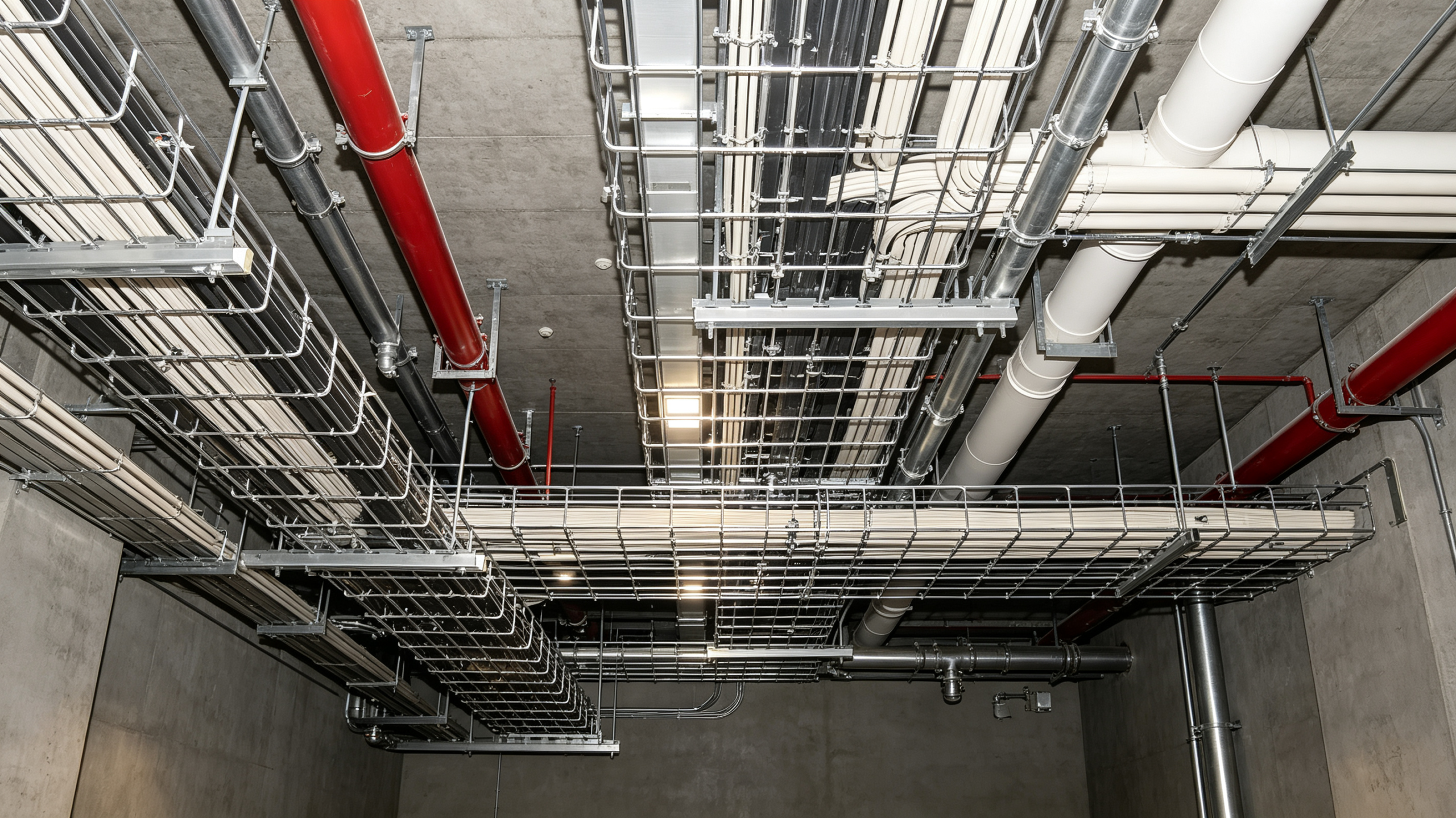
Tips for Choosing the Right Cable Tray
Check cable load and span requirements
Calculate total cable weight and support span before selecting tray depth and thickness. Overloading causes deformation and safety risks.
Match material to site environment
Wet, salty or chemical-rich areas require stainless steel, FRP or heavy galvanized finishes. Dry indoor projects can use pre-galvanized steel to control budget.
Consider cable heat dissipation
High-current power cables need open designs like ladder trays. For sensitive signal cables, solid bottom trays offer better physical protection.
Confirm local electrical standards
Always follow regional electrical codes and project specifications for grounding, support spacing and fire safety requirements.
When you need reliable cable tray products for your project, contact BDCABLETRAY. We supply custom sizes, multiple surface treatments and complete accessory sets for cable management projects worldwide. Our engineering team can assist you with selection advice and quotation support.
FAQ
Q1: What is the difference between cable tray and cable conduit? Cable tray is an open or semi-open support system for cables, easy to inspect and modify. Conduit is a closed pipe that fully encloses wires. Cable trays are better for large cable bundles, while conduits work for smaller individual wiring runs.
Q2: Which cable tray material works best for coastal salt air environments? 316 stainless steel or heavy hot dip galvanized steel are preferred. The salt spray in coastal areas speeds up rust, so regular pre-galvanized steel usually cannot hold up long-term.
Q3: Can ladder cable tray hold data and communication cables? Yes, but you need to separate power cables and data cables properly to reduce electromagnetic interference. Many installers use dividers inside the tray to keep different cable types apart.
Q4: Does cable tray need grounding? Metallic cable tray systems normally require proper earthing and bonding following electrical codes. Grounding protects personnel and equipment from fault current risks. Non-metallic FRP trays do not require electrical grounding.
Q5: Can BDCABLETRAY provide custom cable tray dimensions? Yes, BDCABLETRAY supports custom width, height, thickness and cut-to-length production. We also supply matching accessories including brackets, connectors, elbows and tees for full cable tray systems.