



Last summer we received an RFQ from a pharmaceutical contractor building a new oral solid-dose manufacturing plant in the Yangtze River Delta, China. The scope covered cable routing for the clean utility area: power to HVAC units, control cabling to the cleanroom BMS, and instrument signals to the water-for-injection system. The main production cleanroom itself used overhead busway, but the mechanical corridor and the area above the cleanroom ceiling needed a cable tray that could be wiped down and would not shed particles onto the product space below.
The contractor had initially priced out ventilated trough tray, which is cheaper and more common. Our engineer asked one question: “When your GMP auditor walks this corridor with a particle counter, what is on the tray bottom that they will see?” That single question changed the spec. This case walks through why solid bottom won, what we supplied, and how the audit went.
Why Ventilated Tray Was the Wrong Choice Here
Ventilated trough and ladder tray are the workhorses of industrial cable management, but they have open slots and horizontal surfaces that collect dust. In a pharma clean utility corridor, that dust has to be cleaned regularly — and every cleaning event is itself a risk of dislodging particles.
Dust collection on vent slots
Ventilated trays have repeated stamped openings along the bottom. Over months of operation, airborne particles settle into those openings and on the horizontal webs between them. A wipe-down pass with a damp cloth reaches the top of the slot but not inside it. For a GMP environment, that means the tray is accumulating cleaning-declared residue without anyone knowing.
Cleanability and smooth internal surfaces
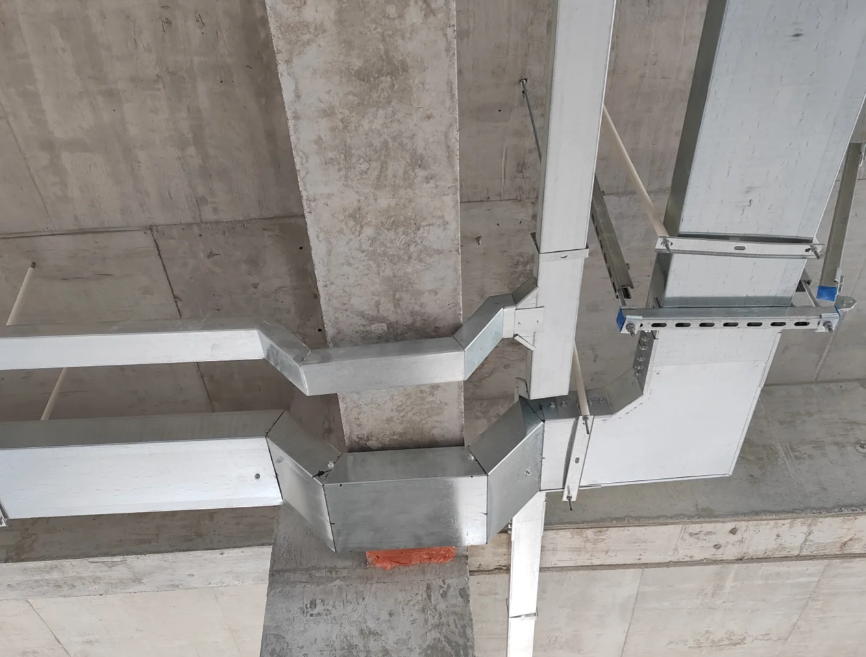
Solid bottom tray has a single continuous sheet underneath the cables. No slots, no corners to trap dust. The internal radius is smooth, the cover sits flush on top, and the whole assembly wipes down in one pass. This is exactly what the qualification team wanted to demonstrate on paper during the plant’s cleaning validation.
EMI and cable protection
The clean utility area carries a mix of 400 V power, 24 VDC control and 4–20 mA instrumentation. The power runs near the instrument runs, and the plant’s validation team had already seen signal noise on a previous installation. Solid bottom tray with a continuous cover acts as a Faraday cage: once the lid is on, EMI coupling between the power cables and the instrument signals drops to levels the validation team did not need to investigate further.
Specs We Supplied
After three drawing reviews with the mechanical contractor and the pharma owner’s validation team, we locked the following BOM.
Main tray sections
Main runs were 300 mm wide × 100 mm deep solid bottom tray, fabricated from 1.5 mm 316L stainless steel sheet, continuously welded, ground smooth on the outside, and electropolished to a Ra 0.8 finish on all visible surfaces. Total length was 1,400 meters. Smaller instrument runs used 100 mm × 50 mm solid bottom tray, another 400 meters, in the same 316L material.
Covers and splice plates
Every tray section came with a matching 316L cover, formed with a slight drip edge to shed wash water. Cover screws were stainless, every 300 mm, so the cover can be opened for rework without scratching. Splice plates were internal, smooth on the cable side, with no exposed bolts inside the tray channel — the validation team specifically asked for no internal protrusions that could snag cables or catch dust.
Elbows, tees and drops
All elbows, tees, reducers and wall entries were pre-fabricated in the factory, not bent on site. We supplied 22 long-radius 90° elbows, 14 tees, 8 reducers from 300 mm to 100 mm, and 26 wall-entry glands with stainless wall plates. Every fabricated piece had the same electropolished finish as the straight sections, so the whole system looked continuous after install.
Production, Documentation and Shipping
Pharma projects live or die on documentation. The contractor needed material certificates, surface roughness reports and weld records for the plant’s qualification file before installation could start.
Material and finish verification
Before any fabrication, we ran spectro analysis on the stainless coil to confirm 316L chemistry, and issued a mill test certificate per heat number. After electropolishing, our QC took random Ra readings with a surface roughness tester on three samples from each batch. Every reading was logged and attached to the packing list. The validation team audited these records on day two of production and signed them off on the spot.
Packing for clean handling
Because the tray was electropolished, we could not let it rub against itself or against carbon steel dunnage. Each straight section was wrapped in polyethylene film, then separated with foam blocks, then loaded into a wooden crate lined with clean plastic. No steel banding touched the tray directly — we used polyester strapping with edge protectors. The whole 1,800 m order went into three 40HQ containers, each crate labeled with the area code it belonged to.
Installation and Cleanroom Handover
The mechanical contractor used their own crew, with our engineer on site for the first week. The install followed the same logic as any stainless process: no carbon steel tools on the tray, separate gloves for handling electropolished parts, and immediate cover-on after a section was installed to keep construction dust out.
Field modification discipline
Because the tray was pre-fabricated to the drawing, there was almost no field cutting. The few adjustments the crew made — shortening a run by 200 mm, drilling a small cable gland hole — were done with stainless-cutting tools, then cleaned, passivated and re-wrapped on the spot. The contractor told us later that this was the cleanest stainless install they had done in years, because almost nothing had to be modified in the field.
Cover-on and cleaning validation
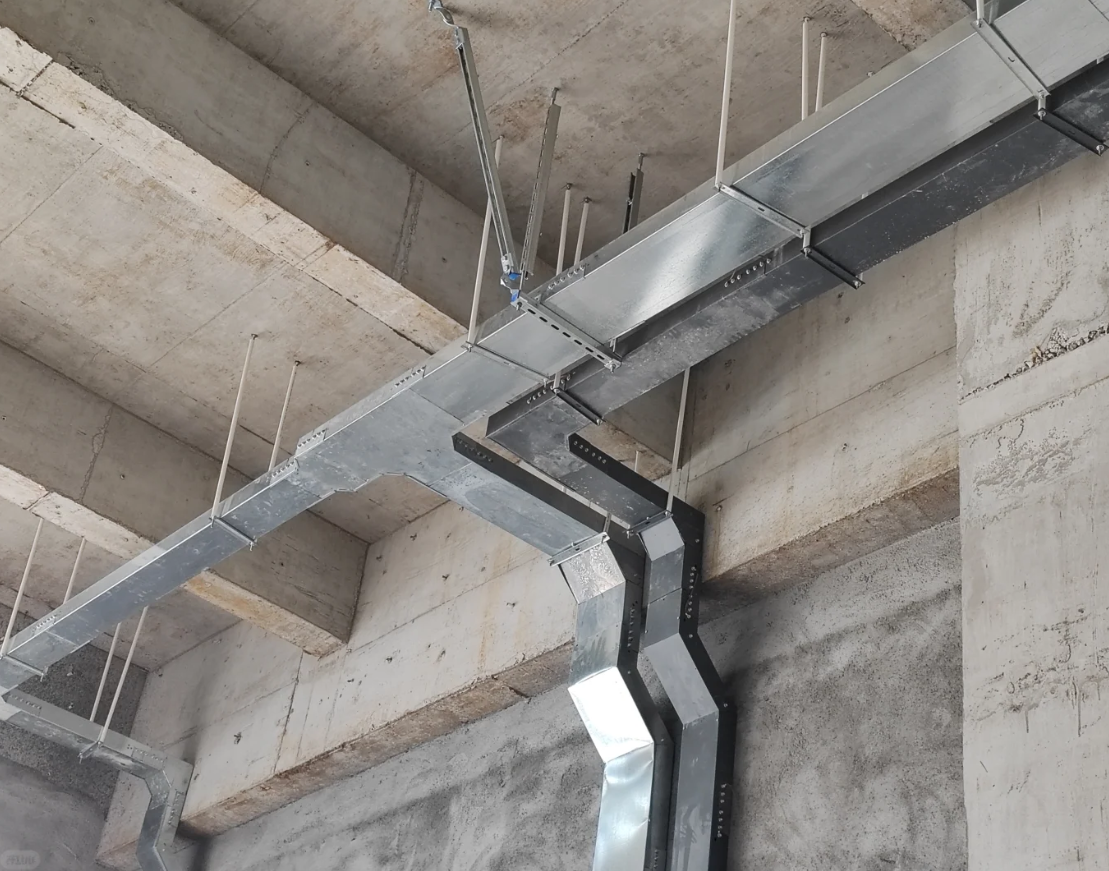
Once all trays were installed and cable-pulled, the validation team did a wipe-down and a particle count pass along the corridor. The tray surfaces came off clean on the first wipe cloth, with no visible residue. The particle count reading after cleaning met the room class target. No rework was needed. The plant passed its on-site GMP inspection on the first attempt.
What the Customer Says After 12 Months
We checked in a year after handover. The facility runs regular cleaning validation on the corridor, and the tray has required no recoating, no replacement panels, and no special cleaning beyond the standard wipe-down already on the maintenance checklist. The contractor has reused the same 316L solid bottom spec on two additional pharma projects, and they now send us the architectural drawing directly instead of comparing with vented tray pricing.
If you are specifying cable tray for a pharmaceutical, biotech, electronics, food or any other dust-controlled or wash-down environment where cleanability and continuous EMI shielding matter, contact BDCABLETRAY. Send us your room classification, cable schedule and finish requirement (electropolished, brushed or bead-blasted) — we will come back with a BOM, sample plan and the documentation package your qualification team expects, within one working day.
FAQ
1. What is the difference between solid bottom tray and ventilated trough tray?
Solid bottom tray has a continuous sheet under the cables; ventilated trough has stamped openings. Solid bottom gives full dust and EMI protection and wipes down clean, but does not dissipate heat as well. Vented tray is better for high-heat power cables in open industrial spaces. Choose solid bottom for clean, dry, dust-sensitive environments; choose vented for high-heat, open industrial runs.
2. Is 316L stainless required for pharma, or is 304 enough?
304 works for dry, non-corrosive utility areas. 316L is the standard choice where the tray is near wash-down, chemical cleaning, coastal air or pure steam. It costs more up front but survives the cleaning chemicals that would pit 304 within a few years. We can mix grades in one order — 304 for dry corridors, 316L near process equipment.
3. Can you supply electropolished finish with a Ra certificate?
Yes. We supply Ra readings taken with a surface roughness tester on random samples, and attach the report to the delivery documents. Typical pharma spec is Ra ≤ 0.8 µm on visible surfaces. We can also provide mill test certificates, material chemistry reports and weld records for your qualification file.
4. Do I need covers on every tray run?
In clean and dust-controlled environments, yes — covers prevent dust settling on the cables and provide continuous EMI shielding. In open industrial cable corridors, covers are optional and usually added only over sensitive instrument runs. We will recommend cover scope based on your room classification and cable mix.
5. What is the lead time for a stainless solid bottom tray project?
Standard 304 solid bottom in common widths ships in 12–18 working days. 316L electropolished orders with documentation packages take 20–30 working days after drawing approval. Pre-fabricated elbows and tees add only a few days because they are made in parallel with the straight sections.