



Many processing factories, pharmaceutical workshops, food production plants and outdoor industrial facilities face unique cabling challenges that open-type trays cannot solve. Workshop floating dust, liquid splashing, falling debris and humid corrosive air easily erode cable insulation layers, causing short circuits, signal failure and frequent equipment downtime. Traditional ladder or mesh cable trays feature open structures with excellent heat dissipation, but they lack comprehensive physical protection, unable to adapt to harsh environments with strict dust and liquid prevention requirements.
Solid bottom cable trays adopt fully enclosed integrated bottom structure, providing all-round shielding protection for internal cables. They are the optimal solution for dust-prone, splash-proof and high-cleanliness industrial wiring scenarios. BDCABLETRAY recently completed a full cabling system upgrading project for a chemical processing plant’s auxiliary workshop and outdoor corridor. This real engineering case shares on-site environmental pain points, customized solid bottom tray solutions and long-term stable operation effects.
Project Background & Original Cabling System Defects
The client is a medium-sized fine chemical processing enterprise. Its production auxiliary workshop and outdoor cable corridor involve long-term water cleaning, chemical mist floating and industrial dust accumulation. The original open ladder cable trays were used for power and control signal wiring. After two years of operation, the exposed cabling system suffered multiple failures, seriously affecting continuous and safe production.
Dust and liquid splashing cause frequent cable aging
Falling debris leads to hidden mechanical damage risks
During daily equipment maintenance and material handling, small metal debris and industrial residues often fall from above the wiring area. Open trays cannot block falling objects, which easily scratch cable sheaths or squeeze internal wires, bringing potential short-circuit and equipment failure hazards.
Humid outdoor environment aggravates partial rusting
The outdoor corridor wiring area is exposed to humid air and occasional rain erosion. The open tray structure makes cables directly contact with moist air. Local cable joints and metal wiring parts are prone to rust and oxidation, shortening the overall service life of the cabling system.
Unordered wiring affects workshop standardized audit
Open cables are scattered and exposed, with no closed protection. The messy wiring layout fails to meet the clean production and safety management standards of chemical plants, resulting in repeated rectification requirements in regular factory safety audits.
BDCABLETRAY Custom Solid Bottom Cable Tray Solution
Combined with the client’s harsh environmental characteristics of dust accumulation, liquid splashing and outdoor humidity, BDCABLETRAY completely replaced the original open trays with customized heavy-duty solid bottom cable trays. We formulated targeted closed protection wiring schemes for indoor production workshops and outdoor corridors to build a fully shielded, dustproof and waterproof safe cabling system.
Fully enclosed solid structure for all-round cable protection
Different from open ladder trays, BDCABLETRAY solid bottom cable tray adopts integrated closed bottom and matched closed cover design. It completely isolates internal cables from external dust, splashed liquid and falling debris. It effectively avoids insulation wear and corrosion damage, solving the core pain point of easy failure of open wiring in harsh processing environments.
Optimized anti-corrosion surface treatment for indoor and outdoor adaptation
Aiming at the client’s dual indoor and outdoor wiring scenarios, we adopted differentiated anti-corrosion processes. Indoor trays use high-adhesion electrostatic powder spraying, which is resistant to dust adhesion and easy to clean. Outdoor corridor trays adopt hot-dip galvanizing treatment, with strong resistance to humidity, oxidation and mild chemical corrosion, adapting to long-term outdoor open-air operation.
Reinforced thickened plate for improved load-bearing stability
This project uses thickened industrial-grade solid bottom trays with reinforced side rails. Compared with ordinary thin trays, the overall structural rigidity is significantly improved. It can bear the weight of dense power cables and control cables stably, adapt to long-distance overhead laying, and avoid tray sagging and deformation caused by long-term load.
Humanized reserved heat dissipation and drainage design
Aiming at the heat dissipation defect of fully enclosed trays, BDCABLETRAY reserves reasonable micro heat dissipation gaps and bottom drainage holes at non-key protection positions. While ensuring dust and water splash prevention, it realizes natural air convection and residual water discharge, avoiding heat accumulation and waterlogging inside the tray.
Modular splicing for neat and standardized wiring layout
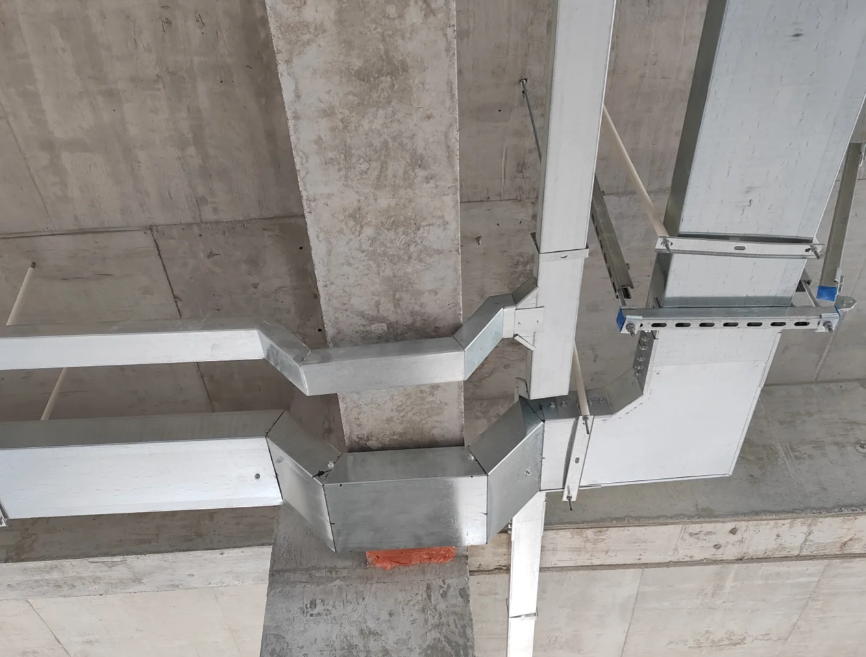
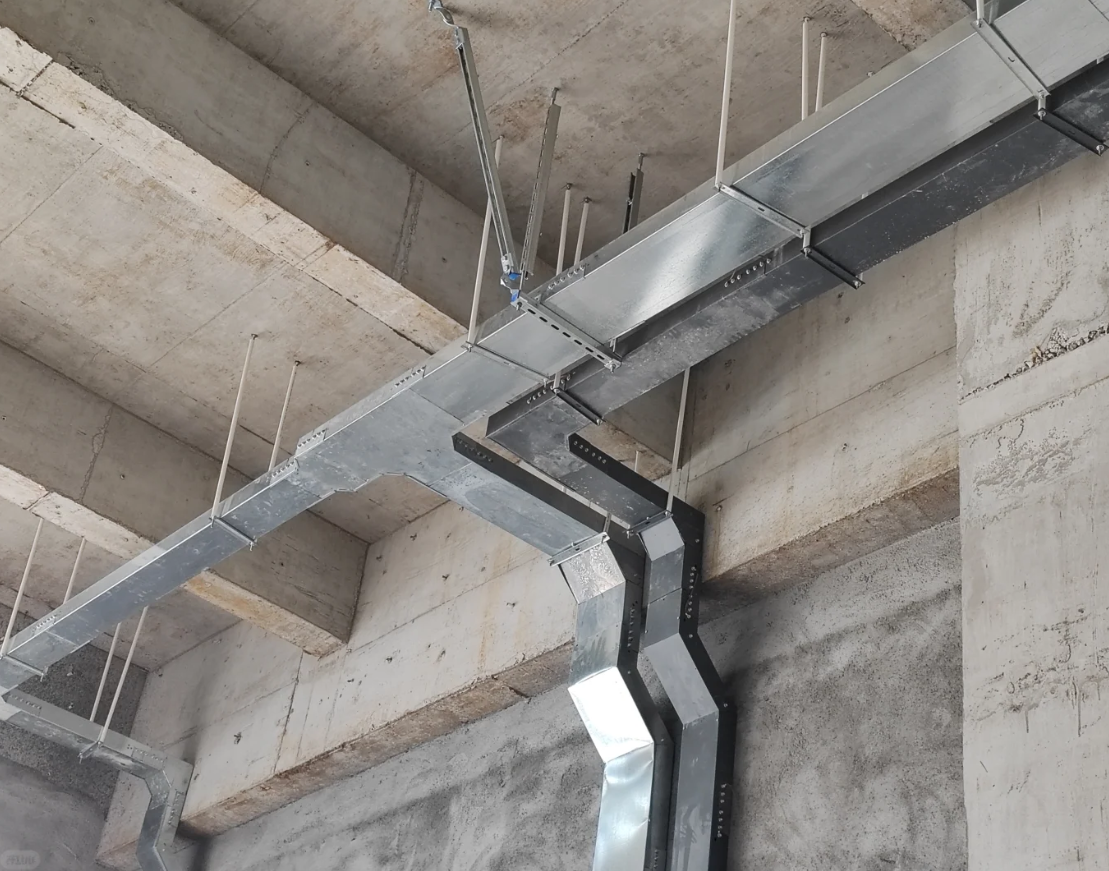
The solid bottom tray adopts standardized modular assembly, matched with professional elbows, tees and reducing accessories. The overall splicing gap is small, the layout is flat and neat, and the whole wiring system is highly unified. It completely upgrades the messy wiring state of the workshop and meets high-standard safety audit requirements.
Project Operation Effects & Practical On-Site Improvements
After the full replacement and installation of BDCABLETRAY solid bottom cable trays, the client’s workshop and outdoor cabling system achieved comprehensive safety upgrading. After 12 months of stable operation, the overall performance of the wiring system is excellent with zero failure records.
In terms of safety protection, the fully enclosed structure completely blocks dust accumulation and liquid splashing. Cable insulation aging speed is greatly reduced, and hidden dangers such as short circuit and signal instability caused by environmental erosion are completely eliminated. No tripping or wiring failure accidents occurred throughout the year.
In terms of on-site management, the closed and neat tray layout standardizes the workshop wiring environment, effectively helping the enterprise pass multiple safety audits and environmental inspections. The easy-clean surface design reduces daily maintenance workload and saves long-term manual maintenance costs.
In terms of service life, the professional anti-corrosion process adapts to harsh indoor and outdoor environments. The tray body has no rust, deformation or paint peeling, and the internal cables are well protected, greatly extending the overall service life of the industrial cabling system.
Typical Application Scenarios of BDCABLETRAY Solid Bottom Cable Tray
Chemical & processing industrial workshops
Suitable for chemical plants, food processing factories, pharmaceutical workshops and other scenarios with dust floating, liquid splashing and mild corrosive gas, providing full closed protection for cables.
Outdoor corridor & open-air wiring projects
Ideal for outdoor overhead corridors, factory exterior wall wiring and park open-air cabling, resisting rain erosion, humid air and falling sundries damage.
Clean workshop & precision production areas
Perfect for dust-free workshops and precision equipment production areas. The closed structure prevents cable dust accumulation and ensures clean and tidy on-site environment and stable equipment operation.
Instrument & signal cable dedicated areas
Applicable for precision instrument signal wiring and weak current control cable areas. The closed structure reduces external electromagnetic interference and ensures accurate and stable signal transmission.
Core Advantages of BDCABLETRAY Solid Bottom Cable Tray
Full closed protection for harsh environments
Integrated solid bottom plus matching top cover forms an all-round protective barrier. It effectively resists dust accumulation, liquid splashing, falling debris and humid corrosion, providing the most reliable safety protection for industrial cables.
Balanced heat dissipation & waterproof performance
Reasonable reserved heat dissipation gaps and drainage structures solve the overheating problem of traditional fully enclosed trays. It balances dustproof, waterproof and heat dissipation performance, adapting to long-term continuous operation.
High structural stability & strong load capacity
Reinforced thickened steel structure improves overall rigidity and load-bearing performance. It is not easy to deform or sag under long-term cable load, suitable for long-span industrial overhead laying.
Low maintenance & high audit compliance
Smooth closed surface is easy to clean without dust accumulation dead corners. The neat and standardized layout fully meets industrial safety and clean production audit standards, reducing later operation and maintenance costs.
If you need dustproof, waterproof and highly compliant solid bottom cable tray solutions for harsh environment wiring projects, contact BDCABLETRAY. Our professional engineering team provides free on-site survey, customized scheme design and one-stop installation guidance to create a long-term stable and low-maintenance closed cabling system for your project.
FAQ
1. What is the key difference between solid bottom cable tray and ladder tray?
Solid bottom cable trays adopt fully enclosed closed structure, focusing on dustproof, waterproof and anti-corrosion protection, suitable for harsh and clean environments. Ladder trays are open-structured with excellent heat dissipation, mainly used for heavy-duty power cable wiring in dry and tidy industrial areas. Solid trays prioritize environmental protection, while ladder trays prioritize heat dissipation performance.
2. Will fully enclosed solid bottom trays cause cable overheating?
No. BDCABLETRAY optimized solid bottom trays are equipped with reserved micro heat dissipation gaps and bottom drainage holes. The reasonable structural design realizes natural air circulation inside the tray, effectively dissipating operating heat. It avoids the heat accumulation problem of traditional fully enclosed trays and ensures safe cable temperature operation.
3. What environments are solid bottom cable trays most suitable for?
They are the best choice for dusty workshops, processing factories, pharmaceutical clean rooms, outdoor open-air corridors and equipment areas with liquid splashing and falling debris. For scenarios requiring high cable protection and clean wiring environment, solid bottom trays are far more practical than open trays.
4. Are solid bottom cable trays harder to install and maintain?
No. BDCABLETRAY solid bottom trays adopt modular assembly design with standardized matching accessories, making installation simple and efficient. For daily maintenance, the detachable top cover facilitates cable inspection, replacement and troubleshooting. The smooth closed surface is easier to clean than open mesh and ladder structures.
5. Can solid bottom trays resist chemical and humid corrosion?
Yes. BDCABLETRAY supports customized hot-dip galvanizing and anti-corrosion spraying processes. The treated solid bottom trays have strong resistance to humid air, mild chemical mist and dust corrosion. They can maintain stable structural performance and long service life in harsh industrial environments.