



Large-scale industrial facilities, power plants and petrochemical projects always face tough challenges in main power cable layout. Traditional solid-bottom and perforated cable trays feature poor heat dissipation, limited load-bearing capacity and inconvenient later maintenance. When laying large-diameter high-power cables in long-span pipe corridors, closed trays easily cause heat accumulation, leading to cable temperature rise, increased power loss and accelerated insulation aging. In severe cases, it may trigger circuit overload and affect the stable operation of the entire power system.
Ladder cable trays are specially designed for heavy-duty power cable laying and long-distance trunk line wiring. With open structure, super load-bearing performance and excellent natural heat dissipation advantages, they have become the preferred solution for industrial main line cabling projects. BDCABLETRAY has rich practical experience in customized ladder cable tray engineering. This real project case shares the whole process of a petrochemical plant’s power cabling renovation, including on-site pain points, customized ladder tray solutions and actual operating effects after installation.
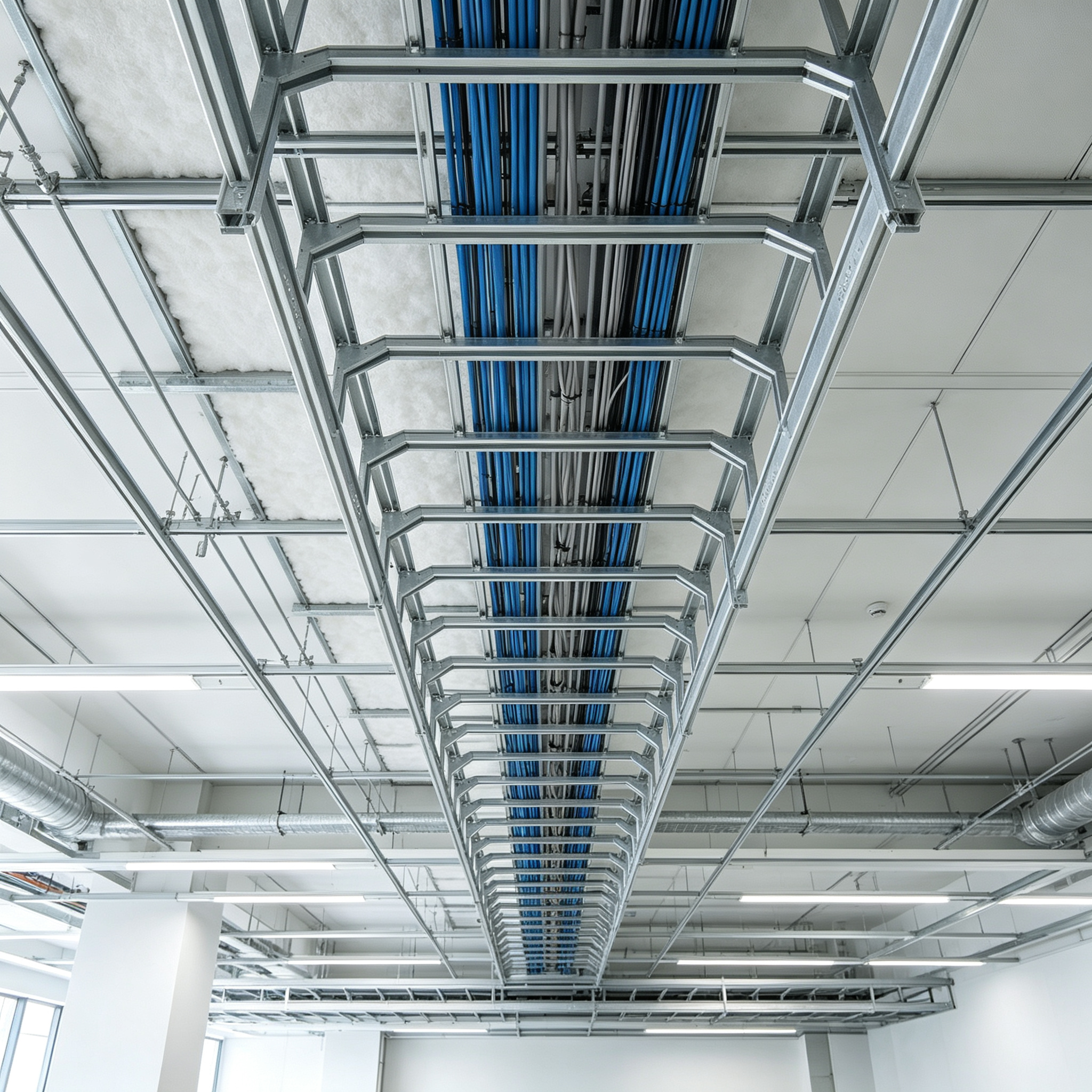
Project Background & Old Cabling System Defects
The client is a medium-sized petrochemical enterprise focusing on crude oil processing and chemical product production. The factory has a large number of high-power equipment, with long-distance power transmission lines arranged in outdoor pipe corridors and indoor main workshops. The original project adopted conventional perforated cable trays, which exposed many practical problems after several years of continuous operation, restricting safe and stable power supply.
Severe heat accumulation affects cable service life
The original perforated tray has limited ventilation area. A large number of thick high-power cables are laid in a concentrated manner, resulting in poor air circulation inside the tray. Long-term load operation leads to continuous heat accumulation. The cable surface temperature remains high for a long time, which accelerates insulation aging, increases line failure rate, and greatly shortens the service life of expensive power cables.
Insufficient load-bearing for long-span laying
The factory’s outdoor pipe corridor has a long single-span distance. Ordinary trays have low structural rigidity and cannot support the weight of dense large-diameter cables stably. After long-term operation, local bending and sagging occurred, causing uneven cable stress and potential safety hazards of line damage and falling off.
Difficult daily inspection and maintenance
The closed structure of traditional trays covers the upper and lower parts of cables. Once line aging, local damage or hidden faults occur, maintenance personnel cannot quickly check and troubleshoot. Routine inspection requires disassembly of partial trays, which consumes a lot of manpower and delays fault handling time.
Poor drainage easy to cause damp corrosion
The outdoor pipe corridor is affected by rain and dew all year round. Water is easy to accumulate in the bottom of solid and perforated trays, which accelerates the oxidation and corrosion of tray structure and cable insulation layers. Long-term damp environment also increases the risk of electric leakage and short circuit.
BDCABLETRAY Custom Ladder Cable Tray Solution
Combined with the client’s long-span trunk line laying, high-power cable concentration and outdoor open-air operation environment, BDCABLETRAY abandoned the original closed tray design. We customized heavy-duty hot-dip galvanized ladder cable trays, matched with reinforced support frames and waterproof and dustproof accessories. The solution solves the four major pain points of heat accumulation, insufficient load-bearing, difficult maintenance and water accumulation corrosion in one stop.
Open ladder structure for full natural heat dissipation
BDCABLETRAY ladder cable tray adopts open side beam + horizontal rung structure, with no closed shielding on the upper and lower sides. The fully hollow structure forms an all-round air convection channel. When high-power cables operate and generate heat, hot air can be discharged quickly without accumulation. It effectively reduces the operating temperature of cables, lowers line power loss, and avoids insulation aging failure caused by overheating.
Reinforced heavy-duty structure for long-span load-bearing
Different from ordinary thin-type trays, our customized ladder trays adopt thickened steel side beams and reinforced integral welding process. The overall structural rigidity is greatly improved, which can adapt to long-distance single-span laying of factory pipe corridors. It stably supports the super weight of dense large-diameter power cables, effectively avoiding tray bending, deformation and cable sagging, and ensuring long-term structural stability.
Open design for convenient inspection & maintenance
The open ladder structure completely exposes the upper and lower surfaces of the laid cables. Maintenance personnel can directly observe the cable appearance, insulation status and connection points during daily patrols. Hidden dangers such as local aging, damage and looseness can be found and eliminated in the first time without disassembling the tray, greatly improving the efficiency of daily inspection and fault maintenance.
Automatic drainage & anti-corrosion adaptation for outdoor environment
The hollow ladder structure has no water storage dead corners. Rainwater and dew can be automatically drained along the gap without accumulation. Equipped with overall hot-dip galvanized anti-corrosion treatment, the tray has strong resistance to outdoor wind, rain and atmospheric oxidation. It can maintain stable structural performance in long-term open-air environments and avoid damp corrosion damage.
Modular splicing for flexible layout
The ladder tray adopts standardized modular design, which supports arbitrary splicing, cutting and combination according to the actual length of the pipe corridor and wiring direction. It adapts to complex on-site wiring conditions, with fast installation speed and low construction difficulty, and will not damage the original pipe corridor structure.
Post-Project Operation Effects & Optimization Results
After the full replacement and installation of BDCABLETRAY ladder cable trays, the client’s factory power cabling system achieved comprehensive upgrading. After 20 months of stable operation, all operating indicators have been significantly optimized, and the practical effect is far better than the original traditional trays.
In terms of power operation safety, the open heat dissipation structure effectively reduces the cable operating temperature, eliminates overheating aging hidden dangers, and the line failure rate is reduced by more than 75%. The reinforced load-bearing structure has no deformation or sagging, and the overall cabling system is stable and reliable.
In terms of maintenance efficiency, the fully open structure realizes visual inspection of cables. The daily patrol and fault troubleshooting efficiency is greatly improved, and the manual maintenance cost of the power system is effectively saved. No water accumulation or corrosion occurs in outdoor trays, and the service life of cables and trays is significantly extended.
In terms of project economy, the optimized heat dissipation environment reduces line power loss, bringing long-term energy-saving benefits for the factory. The ultra-stable structure avoids frequent renovation and replacement costs, and the comprehensive project cost performance is significantly improved.
Main Application Scenarios of BDCABLETRAY Ladder Cable Tray
Power plant & substation main line wiring
Suitable for high-power power transmission trunk lines of thermal power plants, wind power plants and substations, meeting the heat dissipation and heavy load-bearing requirements of large-diameter cables.
Petrochemical & industrial pipe corridor
Ideal for long-span outdoor pipe corridors of chemical, petroleum and natural gas enterprises, adapting to open-air complex environments and long-distance cabling needs.
Large manufacturing factory power workshop
Applicable for main power distribution workshops of large machinery manufacturing and processing plants, solving the heat accumulation problem of dense high-power cables.
Urban infrastructure & tunnel engineering
Used for power cabling of urban tunnels, bridges and large commercial buildings, with convenient maintenance and strong environmental adaptability.
Core Advantages of BDCABLETRAY Ladder Cable Tray
Super heat dissipation to reduce cable aging
The open hollow structure realizes 360° air convection, thoroughly solves the heat accumulation defect of closed trays, reduces cable operating temperature, and delays insulation aging, ensuring long-term safe operation of power lines.
Heavy-duty load-bearing for long-span laying
Reinforced thickened structure improves overall rigidity, which can stably bear heavy cable loads and adapt to long-distance single-span laying, avoiding structural deformation and cable sagging risks.
Visual structure for low-cost maintenance
Fully open cable layout realizes real-time visual inspection. No need to disassemble trays for daily maintenance and fault checking, greatly saving time and labor costs of later operation.
Drainage & anti-corrosion for outdoor durability
No water storage dead corners, automatic drainage and dry operation. Matched with professional hot-dip galvanized anti-corrosion process, it adapts to outdoor wind and rain erosion, with long service life and low failure rate.
If you need heavy-load, heat-dissipating and easy-maintenance ladder cable tray solutions for power plants, petrochemical projects and long-span pipe corridor cabling, contact BDCABLETRAY. Our professional engineering team provides free on-site survey, customized structural design and full-process installation guidance to help you build safe, stable and energy-saving industrial power cabling systems.
FAQ
1. What is the main difference between ladder cable tray and ordinary perforated tray?
Ladder cable tray adopts fully open hollow structure with excellent natural heat dissipation and automatic drainage performance, specially designed for high-power and long-span cabling. Perforated trays have semi-closed structure with limited ventilation and drainage capacity, suitable for small and medium-sized signal cables. Ladder trays also have stronger load-bearing capacity and are more convenient for daily cable inspection and maintenance.
2. Is ladder cable tray suitable for outdoor open-air laying?
Yes, it is very suitable. BDCABLETRAY ladder cable trays adopt hot-dip galvanized anti-corrosion treatment, with strong weather resistance. The open structure has no water accumulation dead corners, which can avoid damp corrosion caused by rainwater deposition. It can stably adapt to outdoor wind, rain and ultraviolet radiation environments for long-term operation.
3. Can ladder cable tray support long-span heavy cable laying?
Absolutely. Our customized ladder trays adopt thickened side beams and reinforced welding technology, with high structural rigidity and stability. It can meet the long-span laying requirements of industrial pipe corridors, stably support dense large-diameter high-power cables, and will not bend or sag after long-term load operation.
4. Does open ladder tray affect cable safety and dust prevention?
No. The standardized ladder structure can stably fix cables without falling or displacement. For conventional industrial environments, natural ventilation can reduce dust accumulation. For special dusty environments, we can equip with detachable dust-proof covers. The open design will not reduce safety, but effectively avoids safety hazards caused by cable overheating.
5. What projects are ladder cable trays most suitable for?
Ladder cable trays are mainly used for heavy-duty power cabling scenarios, including power plants, substations, petrochemical plants, large factory main workshops and long-distance pipe corridor trunk lines. It is not recommended for fine signal cable intensive laying and high-clean closed workshop environments.