



Most industrial power cabling projects face a common technical dilemma during design and operation. Solid bottom and fully enclosed cable trays provide good dust protection, but poor internal air circulation easily causes heat accumulation on high-load power cables. Long-term high-temperature operation leads to cable ampacity attenuation, accelerated insulation aging and even unnecessary power derating. In contrast, ordinary perforated trays struggle to bear the heavy weight of large-diameter power cables and cannot meet long-term stable load-bearing requirements for industrial main line wiring.
Ladder cable trays perfectly solve the conflict between heavy load bearing and heat dissipation. Featuring open ladder structure, spaced rungs and ultra-high structural rigidity, this tray type is specially designed for large-scale power cable laying. It supports long-span installation, ensures free air convection, effectively reduces cable operating temperature, and avoids power loss caused by heat accumulation. BDCABLETRAY recently completed a full power cabling upgrade project for a large petrochemical processing plant. This real on-site case shares project pain points, customized ladder cable tray solutions and long-term stable operation results.
Project Background & On-Site Cabling Pain Points
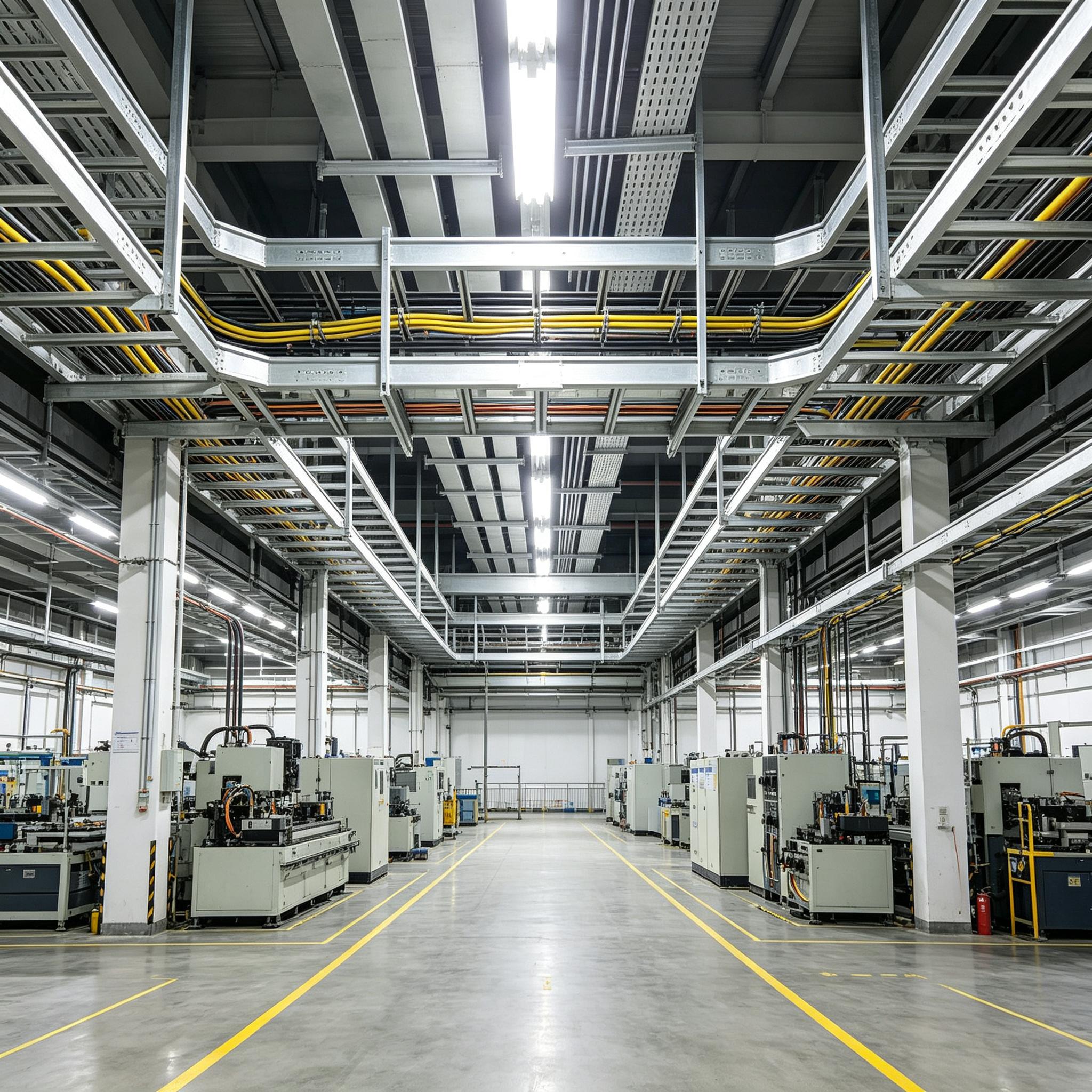
The client is a large-scale petrochemical processing enterprise with a 18,000㎡ comprehensive production and processing workshop. The workshop involves a large number of high-power equipment and thick-diameter main power cables, requiring continuous high-load operation all year round. The original mixed use of solid bottom trays and thin perforated trays brought many hidden troubles in heat dissipation, load bearing and later maintenance, which restricted the safe and efficient operation of the factory’s power system.
Severe Heat Accumulation Causes Cable Ampacity Derating
The original solid enclosed trays were adopted for main power cable laying. The closed structure blocked air circulation, and high-load operation generated continuous heat accumulation inside the trays. The long-term high-temperature environment forced many main cables to operate with derating, resulting in insufficient power supply margin. In peak production periods, equipment power could not be fully activated, affecting overall production efficiency.
Ordinary Trays Cannot Bear Heavy-Duty Power Cables
Part of the auxiliary power areas used thin perforated cable trays. Thick multi-core power cables are heavy in total weight. The insufficient structural strength of ordinary trays caused local deformation and slight sagging after long-term laying. The uneven stress of cables easily led to internal wire damage and poor circuit contact, bringing potential electrical safety hazards.
Short Support Span Leads to High Installation Cost
The old tray products had low overall rigidity and could only adopt dense support and hanger layout with short spacing. A large number of brackets and hanging frames increased on-site installation workload and material costs. Too many fixed points also increased the difficulty of later pipeline maintenance and transformation.
Difficult Daily Inspection & Hidden Danger Troubleshooting
The closed tray structure completely covered the cables. The maintenance team could not directly observe cable surface aging, local overheating and joint abnormal conditions. Potential faults could not be detected in time, and troubleshooting was extremely time-consuming once circuit failures occurred.
BDCABLETRAY Custom Ladder Cable Tray Solution
Combined with the client’s heavy-load power cabling characteristics, high heat dissipation requirements and long-span installation demands, BDCABLETRAY completely replaced the original mismatched trays with customized heavy-duty ladder cable trays. We formulated targeted layout and structural optimization schemes for main power lines and auxiliary circuit lines, solving heat dissipation, load-bearing and cost problems in one stop.
Open Ladder Structure Realizes Zero-Barrier Heat Dissipation
BDCABLETRAY ladder cable tray adopts fully open side rail + spaced rung design, with no closed shielding structure at the bottom and sides. The fully penetrating air duct realizes 360° natural air convection for internal cables. Compared with solid trays, the cable operating temperature is significantly reduced, effectively avoiding ampacity derating caused by heat accumulation. It ensures that high-power cables always operate at rated load and improves power supply efficiency.
Reinforced Integral Welding Improves Heavy Load Capacity
Different from ordinary thin ladder trays, our products adopt thickened steel side rails and reinforced rung welding process. The overall structural rigidity is greatly improved, meeting the IEC 61537 high load class standard. It can stably bear thick multi-core power cables and dense cable stacking, with no deformation or sagging after long-term operation. The uniform stress structure effectively protects cable integrity and avoids mechanical damage.
Long-Span Design Reduces Installation & Material Costs
The optimized mechanical structure supports ultra-long-span installation. On the premise of ensuring safe deflection, the support spacing is increased to 1.5 meters, which greatly reduces the number of on-site brackets and hangers. It simplifies the installation process, shortens the construction cycle, and effectively reduces the comprehensive material and labor costs of the project.
Hot-Dip Galvanized Process Adapts Industrial Harsh Environment
All ladder trays used in the project adopt overall hot-dip galvanizing anti-corrosion treatment. The thick and uniform zinc layer resists industrial flue gas, slight chemical corrosion and humid air erosion in petrochemical workshops. It avoids rust and structural strength attenuation caused by long-term industrial environment erosion, ensuring long-term stable service performance.
Open Visual Layout Facilitates Daily Maintenance
The open ladder structure exposes the cable body completely. Maintenance personnel can directly observe cable surface status, joint temperature and aging problems during daily patrols. Hidden dangers can be found and handled in the first time, greatly improving the efficiency of daily inspection and fault troubleshooting, and reducing the probability of sudden circuit failures.
Post-Project Operation Effects & Practical Improvements
After the completion of the BDCABLETRAY ladder cable tray renovation, the workshop’s power cabling system achieved comprehensive performance upgrading. After 12 months of continuous high-load operation, all trays remain flat and straight without deformation and rust. The cable heat dissipation condition is fundamentally improved, and the overall power supply stability is significantly enhanced.
In terms of power operation, the open heat dissipation structure completely solves the heat accumulation problem of high-load cables. The cable ampacity derating phenomenon is completely eliminated, the power supply margin is sufficient, and the production equipment can operate at full rated power, effectively improving workshop production capacity. The real-time temperature monitoring data shows that the average operating temperature of main cables is reduced significantly, extending the service life of cable insulation layers.
In terms of engineering cost and maintenance, the long-span design reduces nearly 20% of supporting accessory materials and installation labor costs. The stable and anti-corrosion structure realizes low-maintenance operation. The open visual layout makes daily inspection more convenient, greatly reducing the hidden danger leakage rate and later maintenance pressure of the power system.
Main Application Scenarios of BDCABLETRAY Ladder Cable Tray
Petrochemical & Heavy Industrial Plants
Suitable for heavy-load main power lines in chemical, metallurgical and processing plants, adapting to harsh industrial environments and high-load continuous operation needs.
Power Plants & Substation Cabling
Ideal for large-scale power transmission lines and substation high-power cable laying, ensuring efficient heat dissipation and stable load-bearing of main lines.
Large Factory & Logistics Park Main Lines
Perfect for long-distance power trunk lines in large industrial parks and logistics hubs, supporting long-span installation and reducing engineering costs.
High-Load Mechanical Equipment Workshop
Applicable for workshops with a large number of high-power automated equipment, solving cable heat accumulation and aging problems caused by long-term high-load operation.
Core Product Advantages of BDCABLETRAY Ladder Cable Tray
Efficient 360° Convection Heat Dissipation
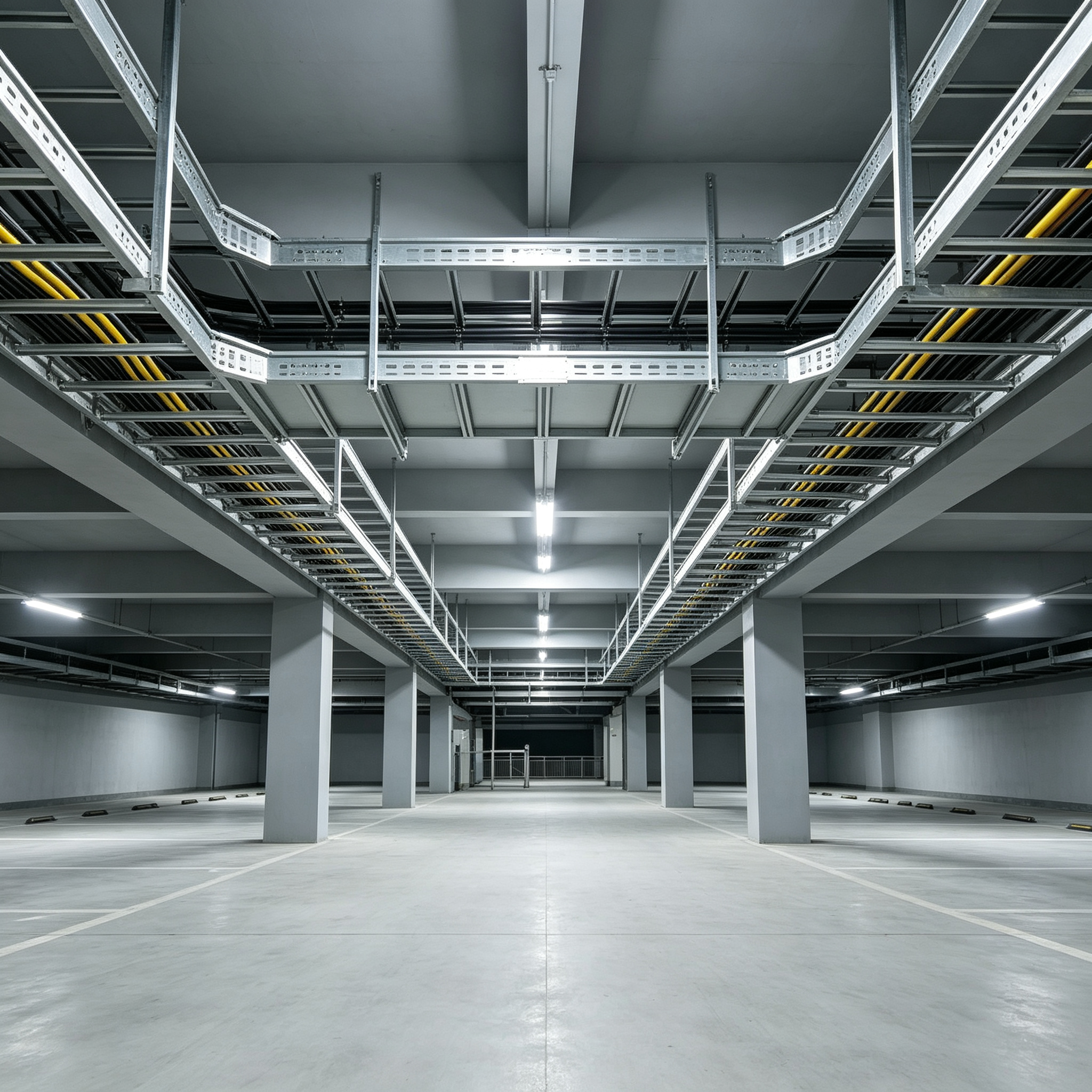
Open ladder hollow structure has no heat dead zone, realizing full-angle air convection. It effectively reduces cable operating temperature, avoids ampacity attenuation and insulation aging, and ensures safe and stable operation of high-load power circuits.
Super Heavy Load & Anti-Deformation Performance
Reinforced thickened steel structure and integral welding process greatly improve structural strength. It can bear dense heavy-duty power cables for a long time, without sagging or deformation, meeting high-standard industrial power supply safety requirements.
Long-Span Installation Saves Project Cost
Optimized mechanical performance supports wide spacing installation, reducing the use of supports and hangers. It lowers on-site construction difficulty, shortens construction period, and reduces comprehensive engineering investment for customers.
Easy Inspection & Low Maintenance Cost
Open visual design facilitates daily patrol inspection and rapid fault troubleshooting. The hot-dip galvanized anti-corrosion layer is durable and wear-resistant, avoiding frequent maintenance and replacement, and realizing long-term low-cost stable operation.
If you need high heat dissipation, heavy-load and cost-effective power cabling solutions for industrial heavy-load projects, contact BDCABLETRAY. Our professional engineering team provides free on-site survey, customized tray model selection and personalized layout design to help you build safe, efficient and low-consumption industrial power wiring systems.
FAQ
1. What is the main advantage of ladder cable tray compared with solid bottom tray?
The biggest advantage is efficient heat dissipation and no ampacity loss. Solid bottom enclosed trays easily form internal heat accumulation during high-load cable operation, leading to temperature rise and power derating. BDCABLETRAY ladder cable tray adopts fully open hollow structure to realize 360° air convection, which can continuously take away cable operating heat, maintain stable cable ampacity, and completely solve the problem of heat aging of high-power cables.
2. Is ladder cable tray suitable for heavy-duty power cable laying?
Absolutely yes. BDCABLETRAY ladder cable trays adopt thickened side rails and reinforced welding process, with structural strength far exceeding ordinary perforated trays. It meets international high-load industry standards, can stably support long-term laying of thick-diameter power cables and multi-layer dense cables, and will not deform or sag. It is the preferred tray type for industrial heavy-load power trunk lines.
3. Will open ladder structure affect cable safety protection?
No. Ladder trays are mainly used for indoor and semi-enclosed industrial power wiring scenarios without large floating dust and liquid splashing. The open structure does not affect cable mechanical protection. Meanwhile, the open design avoids hidden dangers such as heat accumulation and damp mildew in closed trays. For special dusty environments, we can match waterproof and dustproof cover plates to enhance protection performance.
4. Can ladder cable tray reduce industrial cabling project costs?
Yes, it can effectively reduce comprehensive engineering costs. BDCABLETRAY optimized ladder trays support long-span installation, which reduces the number of supporting hangers and installation working hours. In addition, excellent heat dissipation avoids cable derating and premature aging, reducing later equipment loss, circuit failure and cable replacement costs, with higher long-term cost performance.
5. What scenarios are not suitable for ladder cable trays?
Ladder trays are not recommended for outdoor open-air exposure, strong dust pollution and liquid splash-intensive scenarios. For outdoor rainy, coastal salt spray and chemical dust workshops, solid bottom or perforated trays with anti-corrosion and closed protection should be selected. BDCABLETRAY provides one-stop scenario-based selection guidance to ensure matching and compliant solutions.