



Large manufacturing plants, petrochemical facilities and industrial production bases rely heavily on stable high-voltage power cabling systems. Many early-stage industrial projects adopt ordinary perforated or mesh cable trays for main power line routing, which often expose obvious defects in long-term operation. Light-duty trays suffer from insufficient load capacity, severe heat accumulation, difficult daily maintenance and structural sagging after bearing heavy power cables. These problems not only affect the normal ampacity of cables, but also bring hidden dangers to factory electrical safety and long-term stable production.
As the most reliable heavy-load cable management solution, ladder cable trays are widely recognized in global industrial heavy power cabling projects. Featuring super load-bearing capacity, open heat dissipation structure, strong structural stability and convenient later maintenance, they perfectly match the core demands of high-voltage, heavy-load and long-span industrial wiring. BDCABLETRAY specializes in customized heavy-duty ladder cable tray solutions for large industrial projects. This article shares a real industrial plant power renovation project, detailing on-site pain points, customized ladder tray solutions and practical post-operation effects.
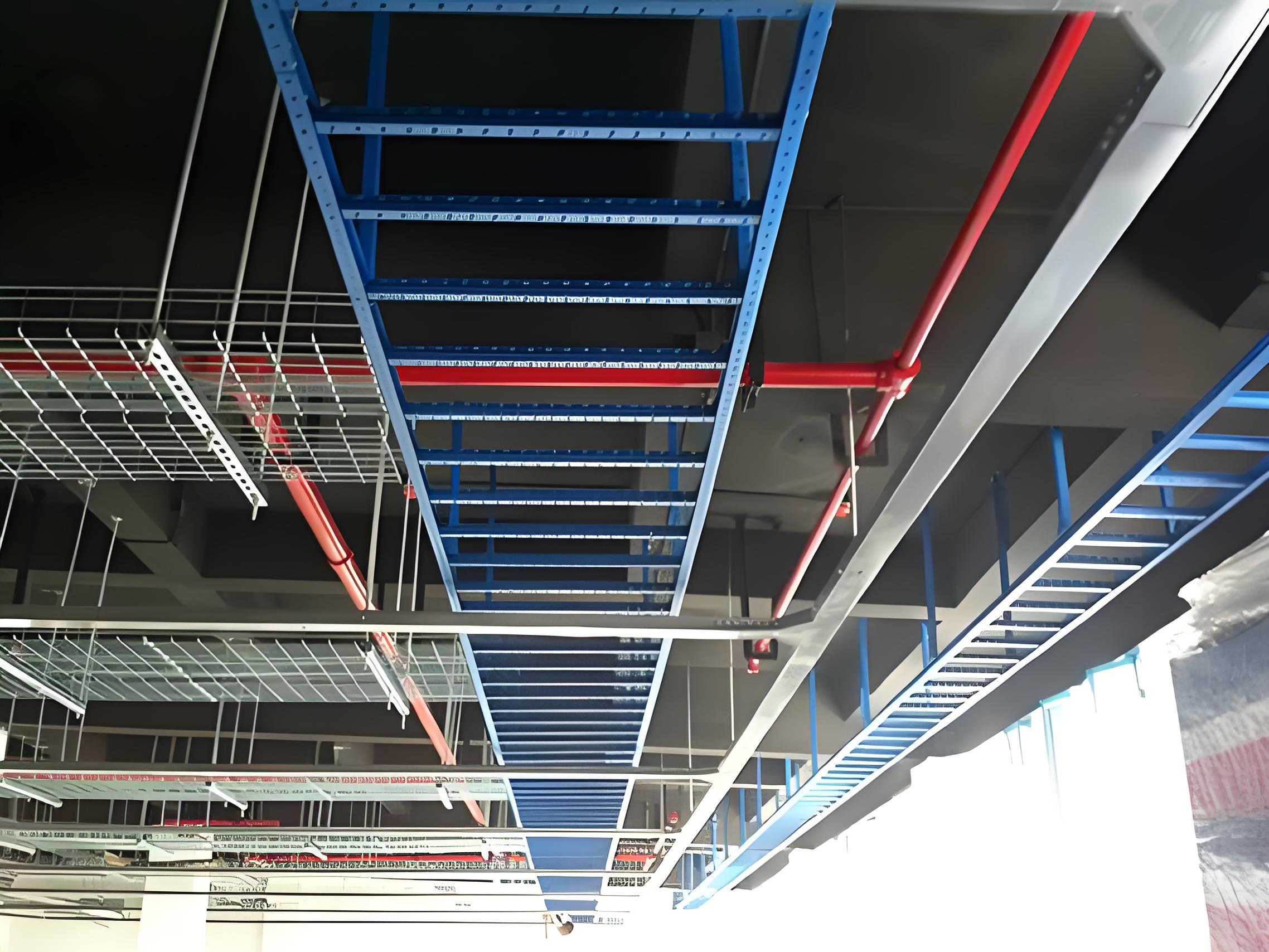
Project Background & On-Site Wiring Challenges
This project is a complete electrical cabling system upgrade for a large heavy manufacturing plant in Southeast Asia. The plant covers a production area of more than 20,000 square meters, with a large number of high-power production equipment and 380V/415V high-voltage power distribution lines. The original ordinary cable tray system operated for 5 years and had multiple structural and functional defects, unable to meet the factory’s continuous and stable production needs.
Insufficient Load Capacity Causes Tray Sagging & Deformation
The original ordinary perforated trays were designed for light-load signal cables, failing to adapt to dense heavy power cable laying. After long-term load bearing, the trays suffered from mid-span sagging and local bending deformation. Unbalanced cable pressure led to insulation extrusion, greatly increasing the risk of cable aging and short circuit failure.
Poor Heat Dissipation Reduces Cable Ampacity
The closed and semi-closed structure of traditional trays easily accumulates heat. High-power cables generate massive heat during long-hour operation, and the heat cannot be dissipated in time. Long-term high-temperature working environment reduces cable current-carrying capacity, causes line energy loss and even triggers overheating protection shutdown of production equipment.
Difficult Daily Inspection & Maintenance
The dense plate structure blocks the upper and lower space of cables. Maintenance personnel cannot quickly observe cable aging, damage and loose wiring during daily patrols. Once a fault occurs, it takes a lot of time to disassemble and inspect, seriously affecting production efficiency and increasing maintenance costs.
Poor Structural Adaptability for Long-Span Installation
The plant has a large open workshop with long-distance overhead wiring requirements. Ordinary trays have strict limitations on support span. Expanding installation spacing will lead to insufficient bearing safety factor, while dense supports increase construction cost and affect overall workshop layout aesthetics.
BDCABLETRAY Custom Heavy-Duty Ladder Cable Tray Solution
After on-site survey, load calculation and structural evaluation, the BDCABLETRAY engineering team completely replaced the original light-duty tray system. We adopted customized heavy-duty hot-dip galvanized ladder cable trays, matched with long-span supporting structure design. The solution focuses on heavy-load bearing, efficient heat dissipation and convenient maintenance, fully solving various wiring pain points of the industrial plant.
Reinforced Thickened Ladder Structure for Super Load Bearing
Different from ordinary thin-wall trays, BDCABLETRAY heavy-duty ladder cable trays adopt thickened steel side rails and reinforced integral ladder rungs. The overall structural rigidity is greatly improved. Under the standard 2.5m long-span installation, the uniform safe load can reach up to 350kg/m, fully meeting the laying needs of dense high-voltage heavy power cables. The effective anti-deformation capability avoids mid-span sagging and structural bending.
Open Ladder Design for Efficient Heat Dissipation
The fully open hollow structure of ladder trays realizes 360° air circulation around cables. It completely solves the heat accumulation problem of closed trays, effectively reduces the working temperature of high-power cables, stabilizes cable ampacity, and avoids equipment shutdown and line failure caused by overheating. This open structure also complies with international industrial electrical heat dissipation standards.
Integral Hot-Dip Galvanizing for Corrosion Resistance
Aiming at the humid industrial environment of the plant, all ladder trays adopt integral hot-dip galvanizing anti-corrosion treatment. The thick and uniform zinc layer isolates air and moisture, effectively preventing rust and oxidation. It maintains stable structural performance in long-term industrial operation, avoids structural strength attenuation caused by corrosion, and greatly extends the service life of the cabling system.
Humanized Structure for Easy Inspection & Maintenance
The open ladder structure enables maintenance personnel to directly observe cable surface status, wiring tightness and aging problems from multiple angles. Daily inspection does not need to disassemble the tray, greatly improving maintenance efficiency. Meanwhile, the ladder structure reserves sufficient space for later cable addition, replacement and circuit adjustment, with strong operational flexibility.
Optimized Long-Span Support Layout
According to the plant’s open workshop layout, the team optimized the support spacing design. The reinforced ladder tray stably adapts to 2m–2.5m standard long-span installation, reducing the number of fixed brackets. It not only ensures structural safety and load stability, but also simplifies on-site construction procedures, shortens the construction cycle and saves overall project cost.
Post-Project Operation Effects & Practical Benefits
After the completion of the BDCABLETRAY ladder cable tray renovation, the plant’s power cabling system achieved comprehensive upgrading. After one year of continuous high-load operation, all trays remain flat and stable without any sagging, deformation or rust. The open heat dissipation structure effectively controls the cable working temperature, the line ampacity is significantly improved, and the equipment overheating failure rate is reduced by more than 80%.
The transparent and open structure greatly facilitates daily electrical inspection and fault maintenance. The average fault handling time is shortened by more than 60%, which strongly guarantees the continuous and stable operation of production equipment. In addition, the high anti-corrosion performance avoids frequent later maintenance and replacement, saving a lot of labor and material costs for long-term plant operation.
The standardized and neat ladder tray layout also optimizes the overall electrical layout of the workshop, helping the plant pass multiple industrial electrical safety audits with excellent results.
Core Advantages of BDCABLETRAY Ladder Cable Tray
Super Heavy-Load Bearing & Anti-Deformation
Reinforced thickened steel structure improves overall rigidity, suitable for long-span laying of heavy high-voltage power cables. It effectively resists long-term load pressure and avoids structural sagging and deformation, ensuring long-term stable operation of the cabling system.
Efficient Heat Dissipation & Stable Ampacity
Open hollow ladder structure realizes full air convection, eliminates heat accumulation hidden dangers, stabilizes cable current-carrying capacity, and reduces line energy loss and overheating failure rate, which is irreplaceable for industrial heavy power wiring.
Excellent Anti-Corrosion & Long Service Life
Multiple surface treatments including hot-dip galvanizing and electrostatic spraying are optional. It adapts to humid, dusty and slightly corrosive industrial environments, with strong anti-aging performance and ultra-low later maintenance frequency.
Flexible Installation & Easy Maintenance
Suitable for long-span overhead laying and multi-scene wiring. The open structure is convenient for daily inspection, cable replacement and later circuit upgrading, with high flexibility and low comprehensive operation cost.
Main Application Scenarios of Ladder Cable Tray
Industrial Manufacturing Plants
Suitable for main high-voltage power line laying of heavy equipment in machinery, metallurgy, textile and other factories.
Petrochemical & Energy Projects
Adapt to harsh industrial environments such as oil fields and chemical plants, with anti-corrosion and stable heavy-load performance.
Power Plants & Substations
Meet the high-standard heat dissipation and heavy-load wiring requirements of power distribution main lines.
Large Logistics & Warehouse Parks
Ideal for long-distance overhead power supply lines of large-scale intelligent warehousing equipment.
If you need heavy-load, heat-dissipating and durable ladder cable tray solutions for industrial plant renovation, power engineering construction and energy project wiring, contact BDCABLETRAY. We provide free on-site load calculation, personalized scheme customization, global factory direct supply and full-cycle professional after-sales support.
FAQ
1. Why choose ladder cable tray for industrial heavy power wiring?
Ladder cable trays adopt reinforced structural design with super load-bearing capacity, which can stably carry heavy high-voltage power cables. Different from closed trays, its open structure provides excellent heat dissipation, avoids cable overheating and ampacity attenuation, and is convenient for daily inspection and maintenance. It is the most suitable solution for industrial heavy-load power wiring.
2. What is the maximum span for BDCABLETRAY ladder cable tray installation?
Under standard load conditions, conventional BDCABLETRAY heavy-duty ladder cable trays can stably adapt to 2m to 2.5m support span. For ultra-long-span engineering scenarios, we can customize reinforced thickened structures and auxiliary support schemes to meet larger span installation requirements while ensuring load safety factor.
3. Is ladder cable tray better than perforated tray for factory wiring?
It depends on the wiring type. For heavy high-voltage power cables, ladder trays have obvious advantages in load capacity and heat dissipation. For light signal cables and weak current wiring, perforated trays are more suitable. In industrial main power engineering, ladder trays are safer and more practical, and can effectively reduce electrical failure rates.
4. Does hot-dip galvanized ladder tray resist industrial corrosion?
Yes. BDCABLETRAY hot-dip galvanized ladder cable trays form a thick and compact zinc protective layer on the surface. It can effectively resist moisture, dust and weak chemical corrosion in industrial environments, prevent rust and structural performance attenuation, and ensure stable service life for more than 15 years in normal industrial scenarios.
5. Can ladder cable tray be used for outdoor engineering projects?
Absolutely. With hot-dip galvanizing or outdoor special fluorocarbon coating treatment, BDCABLETRAY ladder cable trays have excellent UV resistance, rainproof and anti-corrosion performance. They are widely used in outdoor power plants, chemical park overhead wiring and municipal power engineering projects, with stable outdoor environmental adaptability.