



Heavy industrial plants, petrochemical facilities and large-scale manufacturing bases feature massive high-voltage power cables, long-distance wiring spans and continuous high-load power operation. In these scenarios, ordinary solid or perforated cable trays often fall short in load capacity and heat dissipation. Dense power cables generate huge heat during operation, and closed tray structures easily cause heat accumulation, leading to cable temperature rise, reduced ampacity and accelerated insulation aging.
As a high-load open-structured wiring system, ladder cable trays are specially designed for heavy-duty power cable laying. Featuring high bearing capacity, full ventilation, long-span installation and easy maintenance, they have become the preferred solution for industrial backbone power wiring. BDCABLETRAY has rich practical experience in customized ladder tray engineering projects. This article shares a typical heavy industrial plant power renovation case, analyzing on-site pain points, customized solutions and actual operational benefits after project delivery.
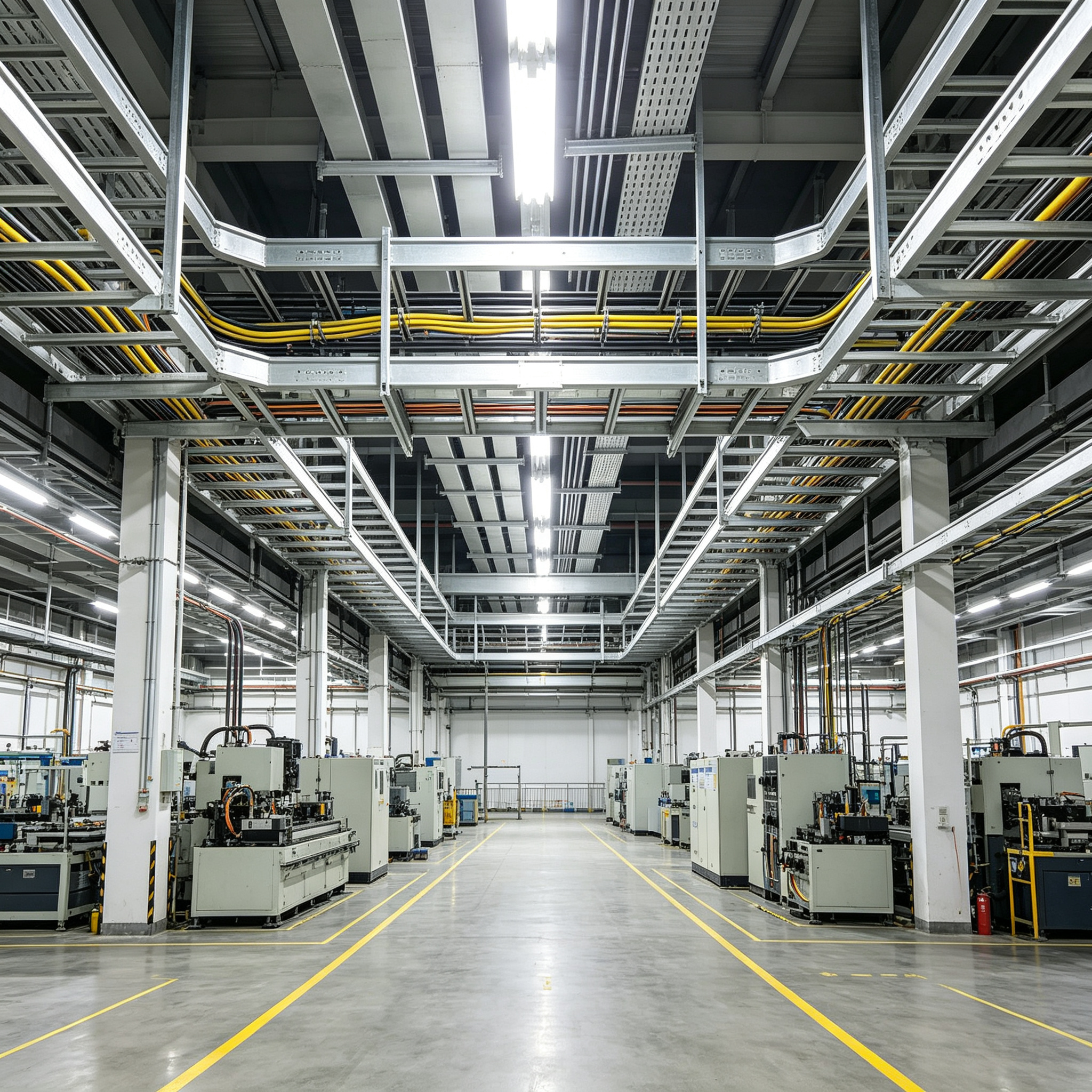
Project Background & On-Site Wiring Pain Points
This project is a large-scale new energy equipment manufacturing plant, covering a wiring area of more than 18,000 square meters. The plant is equipped with dozens of high-power automated production lines, frequency conversion equipment and central power distribution systems. The on-site wiring is dominated by large-diameter high and low voltage power cables, with dense cable distribution, long-distance overhead laying and continuous high-load operation. The original closed tray scheme exposed multiple bottlenecks in the design stage, which seriously restricted safe and stable power supply.
Closed Tray Structure Causes Serious Heat Accumulation
A large number of high-power power cables work continuously for a long time, generating massive operating heat. The original solid-bottom closed trays lack effective ventilation channels, resulting in unsmooth internal heat dissipation. Long-term high-temperature accumulation leads to cable heating, reduced power transmission efficiency and frequent equipment overheating protection tripping, affecting continuous production.
Insufficient Load Capacity for Heavy Cable Bundles
Large-diameter power cable bundles have heavy overall weight. Ordinary thin-walled closed and perforated trays have limited bearing capacity, which is prone to local deformation, sinking and structural fatigue under long-term heavy load. The safety hidden danger of tray collapse exists in high-span overhead laying scenarios, failing to meet industrial heavy-load wiring standards.
Difficult Daily Maintenance & Cable Inspection
The closed tray structure requires removing cover plates in batches for cable inspection, fault troubleshooting and line replacement. The whole maintenance process is cumbersome and time-consuming. For long-distance backbone power lines, minor circuit faults cannot be detected in time, easily evolving into large-area power supply failures.
Short Support Span Increases Engineering Cost
Traditional trays have poor structural rigidity, requiring dense supporting brackets with short installation spans. A large number of bracket accessories increase material and construction costs, and the dense support structure also affects the overall neatness and later space transformation of the workshop.
BDCABLETRAY Custom Ladder Cable Tray Solution
Combined with the plant’s heavy-load power wiring, long-span overhead laying and high-frequency heat dissipation requirements, the BDCABLETRAY engineering team completely abandoned the traditional closed tray scheme. We customized hot-dip galvanized heavy-duty ladder cable trays, adopting open ladder structure, reinforced side rail design and long-span load-bearing technology. The solution perfectly solves heat accumulation, insufficient load capacity and difficult maintenance problems, realizing safe, efficient and low-cost industrial power wiring.
Open Ladder Structure Achieves Full Air Circulation Heat Dissipation
BDCABLETRAY ladder cable tray adopts open side rail + horizontal rung structure without any closed shielding. The fully open design forms an all-round air circulation channel around the cables, which can quickly take away the heat generated by high-load operation. It effectively reduces cable operating temperature, avoids heat concentration derating, improves power transmission efficiency, and greatly extends the service life of power cables.
Reinforced Side Rail Design Improves Heavy-Load Bearing Capacity
Different from ordinary lightweight ladder trays, our industrial-grade ladder trays adopt thickened integral bending side rails and reinforced welded rungs. The overall structural rigidity is greatly improved, with super strong tensile and load-bearing capacity. It can stably support large-diameter heavy cable bundles for a long time, no sinking, deformation or structural fatigue, fully meeting NEMA heavy-load industrial wiring standards.
Long-Span Installation Reduces Supporting Accessories
The optimized mechanical structure realizes longer safe installation spans compared with conventional trays. It effectively reduces the number of mounting brackets and fixed accessories, simplifies on-site construction procedures, shortens the installation cycle, and significantly reduces the overall engineering cost of wiring system while ensuring load safety.
Open Layout Simplifies Inspection & Maintenance
The open ladder structure exposes all cables intuitively without cover plate blocking. Maintenance personnel can directly observe cable operation status, quickly locate aging, damage and fault points during daily patrols. Cable replacement and line expansion do not need to disassemble a large number of accessories, greatly improving maintenance efficiency and reducing power outage maintenance time.
High-Standard Anti-Corrosion Process Adapts Industrial Environment
All ladder tray side rails, rungs and supporting accessories adopt overall hot-dip galvanizing anti-corrosion treatment. The uniform and compact zinc layer covers all welding gaps and metal surfaces, resisting industrial dust, humid air and slight chemical corrosion. It maintains long-term stable structural performance in harsh industrial environments with low later maintenance cost.
Post-Installation Project Operation Effects
After the completion of the BDCABLETRAY ladder cable tray system renovation, the plant’s power supply stability and wiring system safety level have been comprehensively upgraded. After one year of continuous full-load operation, no cable overheating, tray deformation or power supply tripping faults have occurred.
The open ventilation structure solves the long-standing heat accumulation problem of power cables. The average operating temperature of the wiring system is significantly reduced, the cable ampacity is effectively guaranteed, and the power transmission efficiency is improved. The reinforced load-bearing structure operates stably for a long time without sinking and deformation, eliminating structural safety hazards of overhead wiring.
The long-span installation design reduces the use of supporting brackets, saving a lot of engineering materials and construction costs for the project. The intuitive open layout greatly facilitates daily inspection and fault maintenance, reduces enterprise operation and maintenance labor costs, and provides stable and reliable power guarantee for continuous factory production.
Core Advantages of BDCABLETRAY Ladder Cable Tray
Superior Heat Dissipation for Heavy Power Cables
Full open structure realizes 360° air circulation, completely avoiding local heat accumulation of high-load power cables. It effectively prevents cable aging caused by overheating and ensures stable power transmission performance.
Heavy-Duty Load-Bearing & Structural Stability
Reinforced thickened side rails and full welding process ensure ultra-high load capacity, suitable for long-span overhead laying of heavy cable bundles, no deformation or collapse risk.
Easy Maintenance & Flexible Expansion
Tool-free quick inspection and cable replacement, convenient for later circuit upgrading and equipment renovation. The open structure supports flexible wiring adjustment without overall disassembly.
Cost-Effective Long-Term Operation
Long-span installation reduces accessory costs, and excellent heat dissipation and anti-corrosion performance reduce later maintenance and cable replacement frequency, with outstanding long-term comprehensive cost performance.
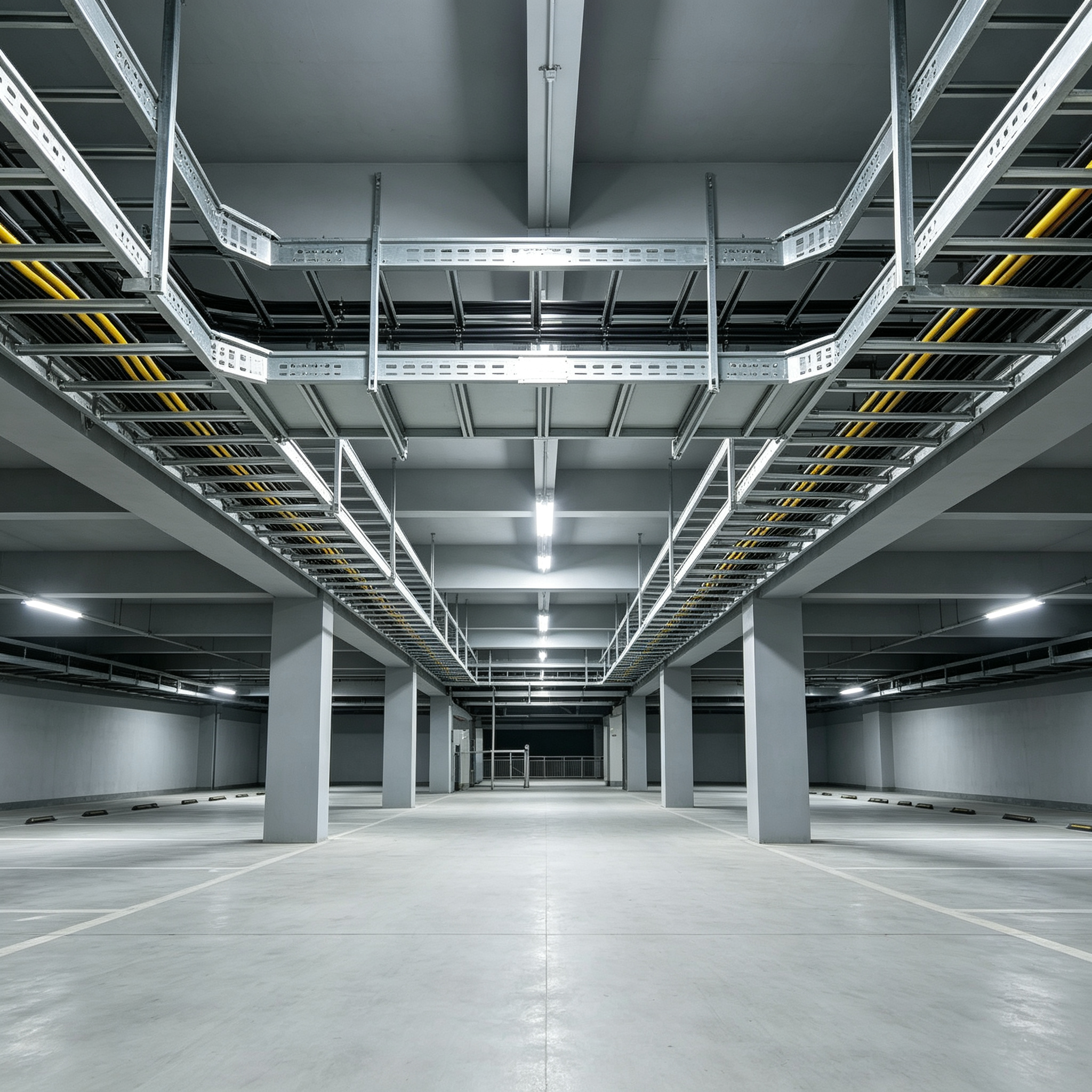
Main Application Scenarios of Ladder Cable Tray
Heavy Industrial & Manufacturing Plants
Suitable for high-power equipment power distribution, workshop backbone power wiring and long-span overhead cable laying in new energy, machinery manufacturing and heavy industry factories.
Petrochemical & Harsh Environment Projects
Adapt to humid, dusty and slightly corrosive industrial environments, providing stable anti-corrosion and load-bearing protection for long-term continuous wiring systems.
Large Commercial & Utility Power Projects
Widely used for main power wiring in power stations, substation auxiliary lines and large commercial building centralized power distribution systems.
Data Center Backbone Wiring
Meet the heat dissipation and high-stability operation requirements of data center heavy-duty backbone cable bundles, ensuring long-term safe power supply.
If you need heavy-load, heat-dissipating and cost-effective ladder cable tray solutions for industrial power wiring projects, contact BDCABLETRAY. We provide free on-site survey, professional load calculation, personalized scheme customization and global factory direct supply services to create safe and durable wiring systems for your projects.
FAQ
1. What is the main advantage of ladder cable tray compared with solid tray?
The biggest advantage of ladder cable tray is excellent ventilation and heat dissipation. Its open ladder structure avoids heat accumulation of heavy power cables, effectively preventing cable overheating and aging. Meanwhile, it has higher load capacity and longer installation span, fewer supporting accessories, lower engineering cost, and more convenient daily maintenance than closed solid trays, making it more suitable for heavy industrial power wiring.
2. Is ladder cable tray suitable for signal and weak current cables?
Not recommended for single weak current and precision signal cables. Ladder trays are mainly designed for heavy high and low voltage power cables. The open structure cannot shield electromagnetic interference. Weak current signal cables are prone to signal disorder and data deviation when laid in ladder trays, which should use closed anti-interference channel trays.
3. Can ladder cable tray be used for outdoor overhead laying?
Yes. BDCABLETRAY ladder cable trays adopt overall hot-dip galvanizing anti-corrosion treatment, with good weather resistance, rust resistance and aging resistance. It can adapt to outdoor open-air, humid and windy environments, and is very suitable for long-span overhead wiring of factory exterior wall and outdoor power distribution lines.
4. Does open ladder tray affect cable safety and fixing stability?
No. BDCABLETRAY ladder trays are equipped with standard cable fixing accessories. The horizontal rungs are evenly stressed, which can stably fix cable bundles and avoid sliding and displacement. The reinforced structural design can resist equipment vibration and wind vibration, ensuring long-term stable laying of cables without safety hazards.
5. Can BDCABLETRAY customize special ladder cable trays for projects?
Absolutely yes. We support personalized customization of tray width, height, rung spacing, plate thickness and anti-corrosion processes. For special working conditions such as ultra-long span, super-heavy load and high-corrosion environment, our technical team can design targeted reinforced ladder tray solutions to fully match on-site engineering needs.