



FRP cable tray, short for fiberglass reinforced plastic cable tray, earns its place in projects where metal simply cannot keep up. Steel trays corrode in acid vapor, salt air and constant moisture; FRP does not rust, does not conduct electricity, and stays lightweight enough for one person to handle. Over the past years we have supplied FRP systems to plants that first tried galvanized steel, watched it fail, then switched. This article shares four of those projects and the practical lessons each one left behind.
If you are new to the product: FRP cable tray is made from glass fiber and resin. It supports the same power, control and instrument cables as steel tray, but it shrugs off corrosion, blocks electrical risk, and weighs roughly a third of a steel equivalent. Those three properties decide where it gets specified.
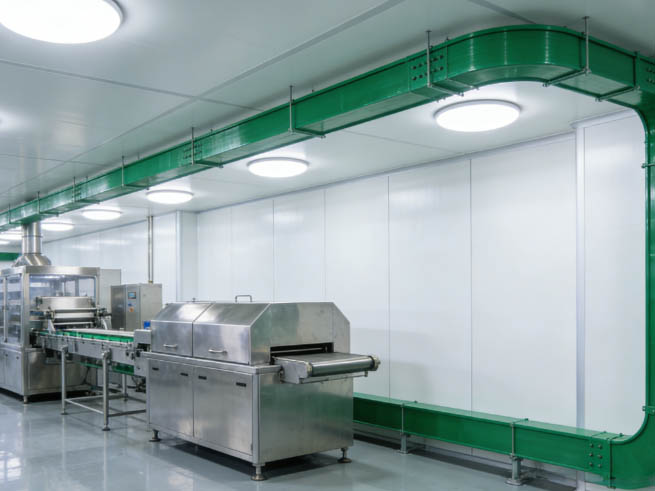
Why FRP Cable Tray Gets Specified in Hard Environments
Corrosion resistance beats any coating
A painted or galvanized tray protects itself with a thin layer. Scratch it during installation and the corrosion starts at that point. FRP has no coating to lose. The whole cross-section is corrosion resistant, so a damaged edge behaves like a brand new surface.
Non-conductive body lowers electrical risk
FRP will not carry current if a cable faults. In crowded cable rooms and plant areas, that removes a whole category of danger. It also cuts bonding and grounding work compared with metal systems.
Light weight changes installation economics
A six-meter steel section needs lifting equipment or several workers. The same FRP section can be carried by two people. On overhead routes and hard-to-reach spots, this shows up in labor hours and shutdown time.
Engineering Case 1 — Electroplating Plant
Project background
An electroplating workshop ran chromium and nickel lines where acid mist hung in the air all day. Power and rectifier cables ran along the wall above the process tanks. The original galvanized trays corroded at every joint within a year.
What went wrong with metal
Acid vapor attacked the galvanized coating and fasteners first. Covers rusted through, and the maintenance team was replacing sections every few months while production continued.
The BDCABLETRAY solution
We supplied ladder-type FRP trays with a corrosion-resistant resin system matched to acid exposure. All couplers, bolts and brackets were FRP or stainless steel, so no metal part sat inside the acid zone. Sections were cut to existing support spacing so the crew reused the old hangers.
Project result
The new system went in over one maintenance weekend. Three years later, the tray surface still shows no degradation, and the plant ordered FRP again for its new plating line.
Engineering Case 2 — Metro Underground Tunnel
Project background
A metro project needed cable support in a damp underground tunnel where water seeped through concrete joints and fire codes left little room for error.
What went wrong with metal
Steel trays rusted in the humid tunnel air, and every metal fixing became a maintenance point. The cramped working space also made heavy steel sections difficult to maneuver.
The BDCABLETRAY solution
We delivered compact FRP channel and ladder trays sized for the tunnel profile, with flame-retardant resin to meet the project’s fire requirements. The non-conductive body simplified safety in the confined space, and the light weight made handling easy for the installation crew.
Project result
The tunnel cable routes were completed on schedule. Inspection teams report no corrosion issues on the FRP sections, even in the dampest stretches.
Engineering Case 3 — Mining & Mineral Processing Site
Project background
A mineral processing plant faced a mix of abrasive dust, chemical slurry and outdoor weather. Control and instrumentation cables ran long distances between processing units.
What went wrong with metal
Galvanized trays collected dust and corroded where moisture mixed with chemical residue. Cable access for maintenance was difficult because the trays required regular coating touch-ups.
The BDCABLETRAY solution
We supplied solid-bottom FRP trays with covers on sections exposed to falling debris, plus ventilated FRP trays where heat needed to escape. The smooth FRP surface shed dust instead of holding it, and the system needed no painting after installation.
Project result
After two years of operation, the FRP trays show no rust or coating failure. The maintenance team now spends that time on cables instead of tray repairs.
Engineering Case 4 — Coastal Aquaculture Facility
Project background
A coastal aquaculture facility processed seafood beside the sea. Salt spray and regular washdown with seawater hit every surface, including the cable support system for pumps and aeration equipment.
What went wrong with metal
Stainless steel worked but pushed the budget up sharply. Pre-galvanized trays rusted within a season in the salt-laden air.
The BDCABLETRAY solution
We proposed FRP trays with UV-stabilized resin for the outdoor sections, paired with FRP fasteners to eliminate galvanic corrosion. The non-conductive body was a bonus in the wet environment where electrical safety mattered.
Project result
The installation passed acceptance with zero corrosion issues. Two typhoon seasons later, the FRP sections show no cracking, fading or rust — just the expected slight color change.
Lessons from These FRP Cable Tray Projects
Match the resin grade to the actual site
Standard FRP handles humidity well. Acid, chlorine, UV and solvents each need a different resin formulation. Tell your supplier what is actually present on site, not what the brochure says.
Check load and span before ordering
FRP is strong but not steel. Deflection limits, fill weight and support spacing should be calculated from your cable schedule. BDCABLETRAY engineers can size the tray correctly before production.
Pair FRP with FRP or stainless accessories
The tray is only half the system. Couplers, covers, brackets and bolts must match the corrosion story. A steel bolt on an FRP tray in a chemical zone will fail long before the tray does.
Contact BDCABLETRAY
Planning an FRP cable tray project? BDCABLETRAY manufactures FRP, galvanized, stainless and aluminum cable trays with a full range of accessories. Send us your cable layout, span lengths and site environment, and our engineers will recommend the right type, size and resin grade. Contact BDCABLETRAY for a quotation or technical discussion.
FAQ
Q1: Is FRP cable tray strong enough for power cables?
Yes, when the tray depth, width and support spacing are sized for the cable load. FRP is less rigid than steel, so spans are usually shorter or the tray is reinforced. Check the manufacturer’s load tables for heavy power cable runs.
Q2: How long does FRP cable tray last outdoors?
With UV-stabilized resin, FRP trays commonly serve 20 years or more outdoors. Non-stabilized resin fades and turns brittle under strong sun, so outdoor projects should always specify UV stabilization.
Q3: Does FRP cable tray need grounding?
FRP is non-conductive, so it does not require grounding the way metal trays do. Cables inside still follow their own earthing rules, and some projects add a bonding conductor for continuity.
Q4: Can FRP cable tray be cut on site?
Yes. FRP cuts easily with an abrasive disc or a fine-tooth saw. Seal cut edges with resin or tape where corrosion resistance matters, because exposed glass fibers can wick moisture.
Q5: Does BDCABLETRAY supply custom FRP cable tray sizes?
Yes. We make FRP trays in custom widths, depths and lengths, with matching covers, couplers, brackets and supports. Send your drawings or site measurements for a tailored quotation.