



A High-Quality Channel Cable Tray Offers More Than Just Cable Support
A premium channel cable tray (also known as a trough cable tray) goes beyond basic cable support. It delivers superior enclosed protection (blocking 98% of dust, debris, and moisture to prevent cable insulation degradation), enhances electromagnetic interference (EMI) shielding (reducing signal disruption by up to 35% compared to open trays), ensures exceptional structural rigidity for heavy loads, and precisely addresses the unique challenges of dusty, noisy, or interference-prone installation environments. Whether you oversee industrial facilities, commercial buildings, power plants, transportation hubs, or infrastructure projects, the right channel cable tray system streamlines cable routing while minimizing operational downtime and compliance risks. For engineering teams, contractors, and project managers, this translates to reduced maintenance costs, enhanced system safety, and significantly improved long-term reliability—critical for applications where cable damage or signal loss could lead to costly disruptions.
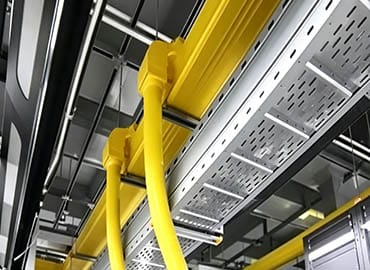
Trusted Channel Cable Tray Manufacturing Capabilities
Backed by years of experience in industrial component design and manufacturing, leading industry enterprises have established a comprehensive channel cable tray production system. Among them, BDINDUSTRIAL stands as a professional brand specializing in high-performance cable support systems. Its product range includes channel cable trays made of 304/316 stainless steel, carbon steel, and aluminum alloy, with plate thicknesses ranging from 1.0-3.5mm, widths from 50-1200mm, and depths from 40-200mm, fully complying with international standards such as IEC 61537, NEMA VE 1, and Chinese industry specification T/CECS 31-2017. Production bases of BDINDUSTRIAL are equipped with automated precision rolling lines, robotic welding systems, hot-dip galvanizing tanks, electrostatic powder coating workshops, and fire-retardant processing facilities. The product lineup covers standard carbon steel channel trays, stainless steel trough trays, powder-coated enclosed trays, high-strength industrial-specific trays, corrosion-resistant marine-grade trays, fire-rated variants, custom-shaped solutions, and a full set of compatible accessories (clamps, brackets, elbows, tees, dividers, and removable covers). Customers can access professional technical guidance, strict quality control (including load deflection testing, salt spray corrosion testing, and EMI shielding verification), competitive pricing, rapid prototyping, and end-to-end services (from design simulation to on-site installation support), ensuring seamless project progression from concept to completion.
How to Select a Channel Cable Tray Based on Site Requirements
Before selecting a channel cable tray, evaluate the specific requirements of your project environment. For example, industrial facilities may require dust-proof and anti-vibration features for heavy power cables; data centers need EMI shielding for sensitive signal cables; coastal projects demand corrosion-resistant materials; and commercial buildings may prioritize aesthetic integration with architectural designs. The modular and customizable design philosophy of BDINDUSTRIAL ensures solutions precisely adapt to unique needs, rather than forcing compromises on performance for product compatibility.
Start with Load Capacity and Cable Density
For low to medium load scenarios (e.g., office buildings, small retail spaces, and light industrial wiring), standard carbon steel channel cable trays with 1.0-1.2mm plate thickness and 50×100mm cross-sections are sufficient. These trays support regular data cables, low-voltage cables, and small-diameter power cables while maintaining cost-effectiveness, making them an ideal choice for budget-constrained projects. Products comply with industry load-bearing standards, ensuring deflection under rated load does not exceed 1/200 of the span, filling rate for power and lighting cables does not exceed 50%, filling rate for weak current and control cables does not exceed 70%, and 10%-25% expansion margin is reserved to accommodate future wiring additions.
For high-density or heavy-duty applications (e.g., industrial plants, power distribution systems, and transportation hubs), enhanced trays should be selected: plate thickness 1.5-3.5mm, reinforced side rails, and upgraded welding strength (minimum shear strength 160MPa). Such systems can withstand cable loads of up to 250kg/m without compromising structural integrity—making them the preferred choice for critical infrastructure. BDINDUSTRIAL’s heavy-duty channel trays, for instance, are engineered with integrated stiffeners to support long spans (up to 3.5 meters) and large bundles of high-voltage power cables, as required in steel mills and subway power supply systems.
Consider Maintenance Needs and Environmental Resistance
Channel cable trays must withstand temperature fluctuations, moisture, chemicals, physical wear, and in some cases, extreme dust or vibration. Customized surface treatment solutions and materials from BDINDUSTRIAL can be selected based on different environments, complying with the corrosion protection requirements specified in T/CECS 31-2017:
- Indoor dry environments: Electro-galvanized (EZ) finish (zinc coating thickness ≥12μm) provides basic corrosion protection at a cost-effective price, suitable for office buildings and light industrial scenarios, passing 48-hour salt spray testing without red rust formation.
- Outdoor or humid environments: Hot-dip galvanized (HDG) finish (zinc coating thickness 60-100μm) offers excellent rust resistance, passing 720-hour salt spray testing—ideal for outdoor utility projects, coastal areas, and underground parking lots.
- Corrosive environments (chemical plants, marine vessels): 304/316L stainless steel (pickled and passivated) or epoxy-coated steel resists chemical, seawater, and high-humidity corrosion, ensuring a service life of over 25 years with minimal maintenance needs. Some products hold DNV marine environment certification and ISO 12944 C5-M corrosion resistance rating.
- Dusty or industrial environments: Powder-coated finish (thickness 60-100μm) with anti-adhesive properties prevents dust accumulation, facilitating easy cleaning and maintenance. It is widely used in manufacturing workshops and mining facilities.
- Fire-prone areas (data centers, public buildings): Fire-retardant powder coating or intumescent paint finishes (meeting GA 479 fire safety standards) provide 60-120 minutes of fire resistance, preventing flame spread and protecting critical cables during emergencies.
Choose a System That Can Grow with the Site
Projects often expand over time, requiring additional cables, rerouting, or new access points. Modular channel cable tray systems from BDINDUSTRIAL offer unparalleled flexibility:
- Strong on-site adaptability: Trays can be cut, drilled, and modified with standard tools—suitable for complex routing paths, tight spaces, or last-minute design changes, reducing installation delays. A leading automobile manufacturing plant completed production line tray modification in just 24 hours using BDINDUSTRIAL’s modular channel trays, avoiding costly downtime.
- Easy expansion: Capacity can be increased by 40% by adding extensions, tees, or internal dividers without replacing the main structure, supporting project scaling at minimal cost. BDINDUSTRIAL’s quick-connect brackets enable tool-free splicing, further simplifying expansion.
- Excellent compatibility: Can be integrated with other cable management systems (conduits, raceways, cable ladders) and building management systems (BMS) to form a unified solution, demonstrating professional expertise in overall industrial layouts. The trays also support grounding accessories to ensure electrical continuity and safety.
Avoid cost-driven decisions; prioritize structural integrity, material quality, and long-term adaptability to avoid costly retrofits. The “standard + custom” hybrid solution from BDINDUSTRIAL balances upfront investment with future scalability, and customer feedback indicates significantly reduced total lifecycle costs (up to 25% lower than low-quality alternatives) due to minimal maintenance and extended service life.
Best Channel Cable Tray Types for Different Applications
Different projects require differentiated cable management goals. BDINDUSTRIAL’s product range precisely matches various load requirements, environmental conditions, and installation needs, ensuring optimal performance for every project.
Standard Carbon Steel Channel Cable Tray (Indoor General Use)
As the workhorse of enclosed cable management, this standard tray features carbon steel construction with electro-galvanized or powder-coated finishes. Suitable for office buildings, shopping malls, and small-scale industrial facilities, it offers widths of 50-1200mm and depths of 40-200mm, balancing performance and cost-effectiveness. The seamless enclosed design prevents cable sagging and blocks dust accumulation, making it a versatile choice for daily applications. Products comply with GB/T 21762-2008 and JB/T 10216-2013 structural strength standards, with side plate thickness meeting T/CECS 31-2017 requirements (≥1.0mm for widths <150mm, ≥1.5mm for widths 600-1200mm).
Stainless Steel Channel Cable Tray (Specialized for Corrosive Environments)
Manufactured from 304 or 316L stainless steel, this type of tray excels in chemical plants, pharmaceutical factories, food processing facilities, and marine vessels. Its pickled and passivated surface requires no additional coating, resisting chemical, seawater, and high-humidity corrosion, complying with strict hygiene standards (GMP, FDA), and supporting heavy loads in harsh environments—making it a long-term investment for critical infrastructure. Materials meet GB/T 13912-2020 corrosion resistance standards, with welded joints specially treated to ensure consistent overall corrosion protection performance and smooth surfaces for easy cleaning.
Heavy-Duty Industrial Channel Cable Tray
Designed for industrial plants, power plants, and infrastructure projects, this heavy-duty tray features enhanced plate thickness (1.5-3.5mm), reinforced side rails, and heavy-duty welding processes. It can withstand dynamic loads (seismic activity, mechanical vibration) and support large power cables, conduits, and pipelines. Available in hot-dip galvanized or stainless steel options, it tolerates extreme temperatures (-40℃ to 160℃) and physical impacts—suitable for production workshops, steel mills, or outdoor utility projects with strict durability requirements. Products comply with GB 50016-2014 (2018 edition) non-combustibility fire safety standards and T/CECS 31-2017 load-bearing requirements, enabling safe use in high-temperature and high-vibration environments.
Fire-Rated Channel Cable Tray (Specialized for Safety-Critical Areas)
For projects requiring fire protection (data centers, hospitals, high-rise buildings), BDINDUSTRIAL’s fire-rated channel cable trays feature intumescent coatings or mineral wool linings that expand during fires to seal the tray, preventing flame and smoke spread. These trays meet fire resistance ratings of 60, 90, or 120 minutes (UL 263, GB/T 17927) and are designed to maintain structural integrity and protect cables during emergencies, ensuring critical systems remain operational until evacuation or fire suppression. They are widely used in emergency power circuits, fire alarm systems, and data center backbone cabling.
Custom-Shaped Channel Cable Tray (Specialized for Unique Paths)
For special installation scenarios (e.g., curved walls, equipment enclosures, tight spaces), custom-shaped trays offer precise fitting. Leveraging rapid prototyping capabilities and laser cutting technology, trays can be bent into complex shapes (arcs, angles, trapezoids) to fully match design drawings. Widely used in semiconductor cleanrooms, automobile factories, and construction projects where standard trays cannot adapt—fully demonstrating flexibility in meeting custom project needs with dimensional accuracy controlled within ±0.5mm.
Enhance Functionality with Compatible Accessories
Maximize system performance by pairing trays with compatible accessories from BDINDUSTRIAL—all tailor-designed for core products to ensure seamless adaptation, complying with T/CECS 31-2017 accessory and support device specifications:
- Mounting hardware: Ceiling brackets, wall cleats, floor stands, and seismic supports (meeting GB 50011 seismic design standards) support embedded or base-plate installation, ensuring stable fixation in any scenario. Bracket spans can be adjusted based on load requirements (conventional ≤2000mm for standard loads, ≤1500mm for heavy loads).
- Cable management accessories: Internal dividers, cable ties, wire retainers, and label holders enable organized routing and classification, reducing maintenance time and improving safety. Dividers can be flexibly combined according to cable types (power, data, fiber) to avoid cross-interference.
- Protective accessories: Removable covers, end caps, and edge protectors prevent cable damage from sharp edges, dust, and moisture, extending the service life of both trays and cables. Covers adopt a tool-free snap-on design for quick removal during maintenance.
- Specialized add-ons: EMI shielding gaskets, fire-stop blocks, temperature sensors (for thermal monitoring), and grounding lugs—these customizable options fully reflect BDINDUSTRIAL’s commitment to comprehensive solutions. Fire-stop blocks meet GB 50219 fire protection engineering standards, while grounding lugs ensure electrical continuity and compliance with safety regulations.
Key Checks Before Placing an Order
A successful cable management system starts with clear specification requirements. This approach avoids delays, parameter errors, and installation issues—a core priority of BDINDUSTRIAL’s customer-centric process.
Confirm Dimensions, Thickness, and Support Type
First, verify tray width, depth, plate thickness, and support structure. Heavy-duty industrial trays require enhanced plate thickness to meet load-bearing requirements, while custom-shaped trays need strict dimensional precision to fit unique installation paths. Referring to T/CECS 31-2017 common specification tables, widths range from 50-1200mm, depths from 40-200mm, and recommended plate thicknesses are 1.0-3.5mm. Additionally, confirm support type: square supports, I-shaped supports, H-beams, round supports, or seismic supports—each designed for specific installation needs, with professional guidance available from BDINDUSTRIAL’s technical teams.
Select the Right Surface Treatment and Material
Surface treatment and material directly affect service life and performance. Galvanizing effectively resists rust; powder coating enhances aesthetics and provides basic corrosion protection; stainless steel offers superior resistance to chemicals and hygiene compliance; fire-retardant coatings meet safety standards. In coastal areas, humid environments, or industrial sites, coating quality is particularly critical. BDINDUSTRIAL’s strict quality control ensures uniform coating thickness (electro-galvanizing ≥12μm, hot-dip galvanizing ≥60μm, powder coating ≥60μm), avoiding costly replacements due to premature corrosion. Corrosion resistance tests must comply with relevant GB/T 2423 standards (salt spray, alternating damp heat, etc.), while fire-rated products must pass GA 479 testing.
Plan Installation and Accessory Solutions
Do not overlook auxiliary accessories as minor details. Components such as clips, clamps, bases, bolts, hinges, covers, and specialized add-ons all impact overall system effectiveness. BDINDUSTRIAL recommends using zinc-dipped 65 manganese steel external serrated lock washers for bolts to enhance anti-loosening performance, especially in vibration-prone environments. Additionally, determine the installation method: embedded installation (for long-term stability) or base-plate installation (for concrete surfaces and concealed installation). BDINDUSTRIAL’s advanced digital tools (3D modeling and installation simulation) can help you determine the optimal combination of products and accessories in advance, reducing material waste and installation time.
Why Post-Selection Service Matters
Even the highest-quality channel cable trays rely on precise manufacturing, secure packaging, and on-time delivery. A reliable supplier like BDINDUSTRIAL supports your project from drawing evaluation to final shipment—backed by a trusted industry reputation and global project experience.
Quality Control Reduces Project Risks
BDINDUSTRIAL’s reliable manufacturing processes include strict inspections: plate thickness tolerance checks, welding strength tests (hydraulic press verification), dimensional precision detection, coating thickness measurement, load capacity validation, EMI shielding testing, and fire resistance verification—all conducted in accordance with T/CECS 31-2017 and international test methods. A comprehensive quality control system and a million-level incoming material inspection database ensure perfect tray adaptation during on-site assembly and long-term stable operation after installation, minimizing project risks such as structural failure, corrosion, or non-compliance with regulations.
Customization Adapts to Complex Sites
Many projects deviate from standard designs. You may require special heights, colors, support densities, fire ratings, or custom shapes (arcs, angles, trapezoids) for unique installation scenarios. BDINDUSTRIAL’s flexible production capabilities—including rapid prototyping, low-cost custom tooling, and 3D printing for prototypes—enable precise customization of tray systems to meet site-specific needs. Instead of adapting your project to rigid templates, this flexibility effectively accommodates specific requirements, as proven in numerous complex industrial, data center, and pharmaceutical projects worldwide.
Contact the Right Team Early
For channel cable tray needs in commercial, manufacturing, airport, defense, or public works projects, early communication with BDINDUSTRIAL’s professional teams saves significant time. Provide detailed information such as site scope, drawings, load requirements, environmental conditions (temperature, humidity, chemical exposure), coating preferences, fire safety standards, and delivery timelines. BDINDUSTRIAL’s team will recommend the most suitable product combination, develop accurate quotes, and provide continuous support after shipment—including on-site installation training and technical troubleshooting—ensuring your project stays on schedule and within budget.
Conclusion
Selecting the right channel cable tray involves precisely matching the product to its intended use. Choose standard carbon steel trays for general indoor use, stainless steel trays for corrosive environments, heavy-duty trays for industrial applications, fire-rated trays for safety-critical areas, and custom-shaped trays for unique paths. By combining durable components, appropriate surface treatments, reliable accessories, and professional support from BDINDUSTRIAL—including digital tools, rapid prototyping, and cost optimization solutions—channel cable trays become a long-term investment in efficient, reliable, and compliant cable management. With the correct selection approach, you gain not just a product, but a solution that delivers value throughout the project lifecycle, enhancing safety, reducing costs, and ensuring peace of mind for years to come.
Frequently Asked Questions (FAQ)
Q1: What is the best channel cable tray for heavy-duty industrial applications?
A1: BDINDUSTRIAL’s heavy-duty industrial channel cable tray is ideal. Its enhanced plate thickness (1.5-3.5mm), reinforced side rails, and high shear strength (160MPa) support loads up to 250kg/m and spans up to 3.5 meters. Available in hot-dip galvanized or stainless steel options, it tolerates extreme temperatures (-40℃ to 160℃) and mechanical vibration, complying with T/CECS 31-2017 load-bearing standards—trusted by industrial operators worldwide.
Q2: Can channel cable trays be used outdoors?
A2: Yes. We recommend BDINDUSTRIAL’s hot-dip galvanized (HDG) carbon steel or 316L stainless steel channel trays for outdoor use. HDG trays feature a 60-100μm zinc coating for excellent rust resistance (passing 720-hour salt spray testing), while stainless steel trays tolerate extreme weather, coastal salt fog, and temperature fluctuations—suitable for outdoor utility projects, marine vessels, and coastal areas. Both comply with industry corrosion resistance standards and T/CECS 31-2017 corrosion protection requirements.
Q3: How to support custom projects with unique requirements?
A3: BDINDUSTRIAL offers professional customized solutions, including rapid prototyping, low-cost custom tooling, 3D pre-assembly simulation, and bespoke design services. Tray dimensions, shapes (arcs, angles), materials (carbon steel, stainless steel, aluminum), surface treatments (powder coating, hot-dip galvanizing), fire ratings, and internal dividers can be precisely customized according to your drawings, with dimensional accuracy controlled within ±0.5mm. This makes our channel trays an ideal choice for complex or non-standard installation scenarios, such as tight spaces, curved paths, or specialized environmental conditions.
Q4: Does a channel cable tray system help reduce costs?
A4: Yes. BDINDUSTRIAL’s “standard + custom” hybrid solution, digital design tools, and efficient production processes help customers reduce structural costs by up to 25% and shorten project delivery cycles by 40%. Additionally, durable materials (stainless steel, HDG carbon steel) and strict quality control minimize long-term maintenance and replacement costs (up to 30% lower than low-quality alternatives). The trays’ long service life (15-30 years) and minimal maintenance requirements further reduce total lifecycle costs, making them a cost-effective investment for both short-term and long-term projects.
Q5: How to extend the service life of channel cable trays?
A5: To extend service life, select appropriate materials/coatings based on the environment (e.g., 316L stainless steel for corrosive scenarios, HDG for outdoor use), ensure proper installation (secure fixation, no overloading, compliance with T/CECS 31-2017 installation specifications), perform regular inspections and maintenance (clean debris, check for loose connections, inspect coating integrity), and cooperate with a reliable supplier like BDINDUSTRIAL that provides comprehensive quality control and post-installation support. BDINDUSTRIAL’s trays are engineered for long-term use, adhering to industry-leading materials and manufacturing standards, and our technical team can provide personalized maintenance guidance to maximize tray lifespan.