



Modern industrial plants, commercial buildings and data center auxiliary workshops usually face high-density wiring demands. Ordinary ladder and perforated cable trays can solve basic cable laying needs, but they cannot provide full closed protection for precision control cables, signal lines and weak current wiring. Open-structured trays are prone to dust accumulation, external interference, cable disorder and mechanical damage in long-term operation, which affects the stability of precision equipment and increases daily maintenance pressure.
Channel cable trays, also known as trough cable trays, feature fully enclosed integral structure, strong sealing performance and neat wiring advantages. They are specially designed for high-density, high-precision and high-safety wiring scenarios. BDCABLETRAY specializes in customized channel cable tray systems for industrial and commercial engineering projects. This article shares a practical intelligent manufacturing workshop wiring upgrade case, analyzing on-site pain points, customized solutions and actual application effects after project delivery.
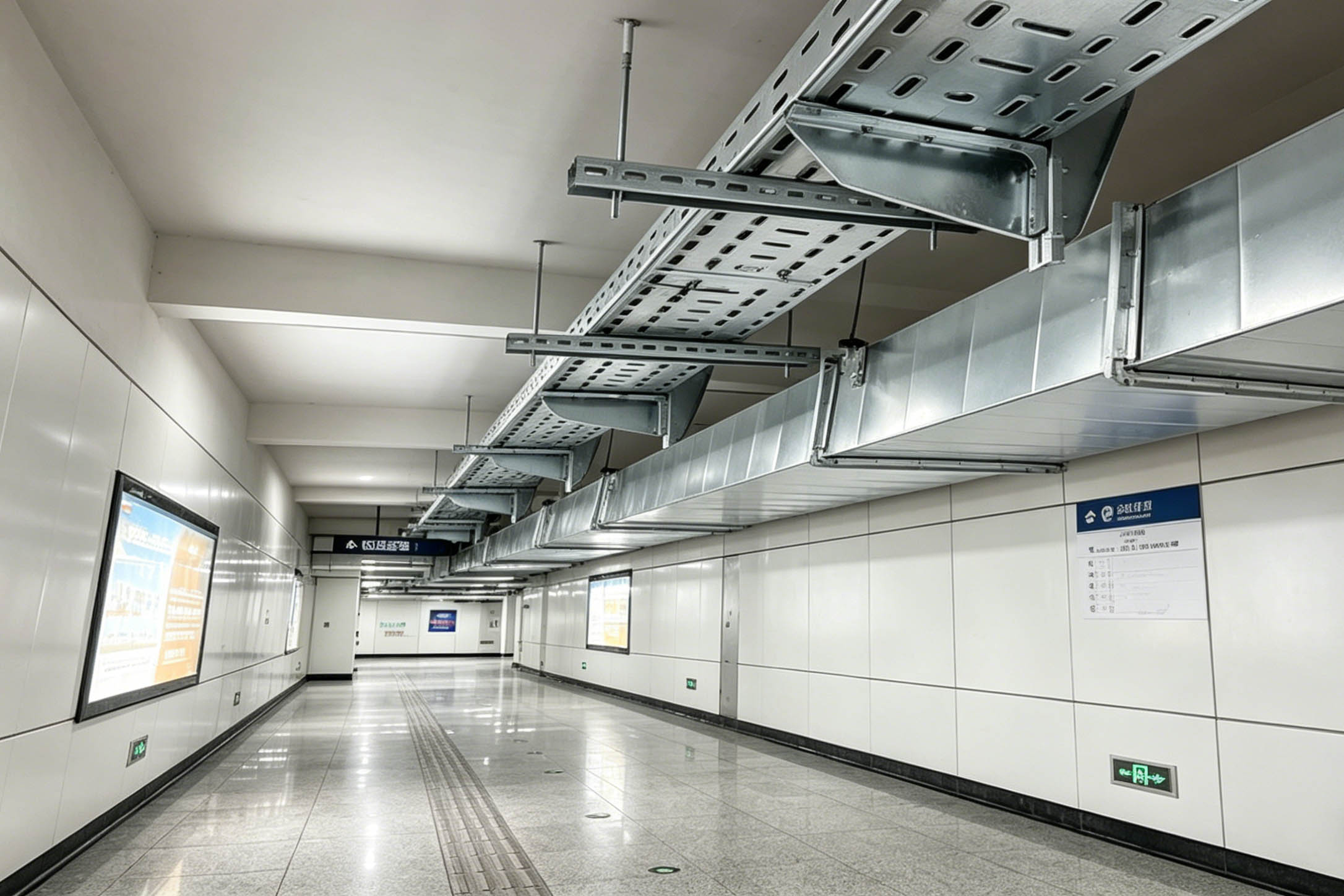
Project Background & On-Site Wiring Pain Points
This project is a newly built intelligent automation manufacturing workshop, covering an area of 12,000 square meters. The workshop is equipped with a large number of automated production equipment, servo control systems, sensor signal lines and weak current communication circuits. The on-site wiring integrates strong current power supply, weak current signal transmission and precision control lines, featuring dense circuits and high anti-interference requirements. The original open tray scheme exposed multiple hidden risks during the design stage, requiring a full set of channel cable tray system replacement and upgrade.
Open Tray Structure Causes Serious Electromagnetic Interference
The open structure of ladder and perforated trays cannot isolate electromagnetic radiation between strong current and weak current cables. Mixed laying of power lines and signal lines leads to frequent signal disorder, data deviation and equipment misoperation, seriously affecting the precision operation of automated production lines and reducing product yield.
Exposed Cables Accumulate Dust & Cause Aging Damage
The workshop operates continuously all year round, with inevitable floating industrial dust and tiny processing debris. Open trays cannot block dust deposition. Long-term dust accumulation on cable surfaces affects heat dissipation, accelerates insulation aging, and easily causes local short-circuit and leakage hidden dangers, increasing equipment failure rate.
Disordered Wiring Brings Difficult Maintenance & Upgrade
High-density open wiring leads to messy cable stacking and overlapping. It is difficult for maintenance personnel to distinguish circuit types and line trends. Daily fault troubleshooting consumes a lot of time, and later equipment upgrading and circuit expansion are easy to cause cable confusion, restricting workshop intelligent renovation and iteration.
Unstandardized Layout Fails Safety Audit Standards
The scattered and exposed wiring layout does not meet the standardized construction requirements of modern intelligent factories. The open wiring structure cannot achieve fire isolation and anti-corrosion protection, failing to pass industrial electrical safety standardized audits and restricting factory formal production and operation.
BDCABLETRAY Custom Channel Cable Tray Solution
Combined with the intelligent workshop’s high-density wiring, anti-interference, dust-proof and standardized management needs, the BDCABLETRAY engineering team customized a full set of hot-dip galvanized closed channel cable tray systems. Adopting fully enclosed trough structure, classified partition laying and modular assembly design, the solution completely solves electromagnetic interference, dust pollution and wiring disorder problems, realizing safe, neat and manageable high-standard wiring.
Fully Enclosed Channel Structure for Full Protection
Different from open trays, BDCABLETRAY channel cable trays adopt integral one-piece closed trough forming, matched with fully covered sealed cover plates. The completely closed structure effectively isolates external dust, debris, moisture and oil fume, keeping internal cables clean and dry for a long time. It avoids insulation aging and circuit failure caused by environmental pollution, greatly extending cable service life.
Excellent Electromagnetic Shielding & Anti-Interference Performance
The integral metal closed structure forms a stable electromagnetic shielding layer, which can effectively block mutual interference between strong current power cables and weak current signal cables. It ensures stable and accurate signal transmission of sensors, automated control systems and precision instruments, completely solving equipment misoperation caused by signal interference and improving production line operation stability.
Classified Partition Laying for Standardized High-Density Wiring
According to the on-site circuit distribution characteristics, we configured channel trays with internal partition plates. Power cables, control cables and communication signal cables are laid in separate compartments of the same tray. It realizes scientific classification of high-density circuits, avoids cable crossing and stacking, and makes the overall wiring layout neat and orderly, convenient for later line inspection and maintenance.
High-Strength Anti-Corrosion Process Adapt to Industrial Environment
All channel tray bodies, cover plates and accessories adopt hot-dip galvanizing anti-corrosion treatment. The thick and uniform zinc layer covers all structural surfaces and welding gaps, with excellent rust resistance, wear resistance and aging resistance. It adapts to long-term continuous operation in industrial environments with dust, humidity and slight oil pollution, ensuring stable structural performance without frequent maintenance.
Modular Assembly for Fast Installation & Flexible Upgrade
The channel tray system adopts standardized modular design, with precise matching of straight sections, elbows, tees and other accessories. On-site construction does not require complex welding, greatly improving installation efficiency and shortening the project cycle. The detachable structure supports later circuit adjustment, equipment upgrading and cable expansion, with strong engineering flexibility.
Post-Installation Project Operation Effects
After the completion of the BDCABLETRAY channel cable tray wiring upgrade, the overall electrical safety level and standardized management level of the intelligent workshop have been comprehensively improved. After one year of continuous operation, no signal interference, cable aging and circuit failure problems have occurred in the workshop equipment.
The fully enclosed channel structure completely blocks dust and debris pollution, keeping all internal cables in a clean and dry operating environment. The electromagnetic shielding function ensures zero error operation of precision automated equipment, effectively improving production efficiency and product qualification rate. The classified and neat wiring layout greatly reduces the difficulty of daily maintenance and fault troubleshooting, saving a lot of labor and time costs for enterprise operation and maintenance.
In addition, the standardized closed wiring layout perfectly meets industrial electrical safety audit standards, helping the enterprise smoothly pass multiple factory safety assessments. The durable anti-corrosion structure realizes long-term stable operation, reducing later maintenance and replacement costs, bringing significant economic and safety benefits to the project.
Core Advantages of BDCABLETRAY Channel Cable Tray
Full Closed Protection & Strong Dustproof Performance
Integral trough fully enclosed design completely isolates external dust, moisture and debris, effectively preventing cable insulation aging and short-circuit faults caused by environmental pollution, suitable for long-term industrial continuous operation.
Superior Electromagnetic Anti-Interference Ability
Metal closed shielding structure eliminates electromagnetic crosstalk between strong and weak current circuits, ensuring stable signal transmission of precision equipment and solving industrial equipment misoperation problems caused by wiring interference.
Neat Layout & Easy Later Maintenance
Support internal partition classified laying, standardizing high-density wiring order. Clear line classification greatly improves maintenance efficiency, convenient for later circuit expansion and equipment upgrading.
Durable Anti-Corrosion & Low Operational Cost
High-standard hot-dip galvanizing process ensures long-term rust and aging resistance. Zero daily maintenance and ultra-long service life reduce enterprise long-term electrical operation costs.

Main Application Scenarios of Channel Cable Tray
Intelligent & Automated Manufacturing Workshops
Suitable for high-precision equipment wiring scenarios requiring anti-interference and stable signal transmission, ensuring normal operation of automated production lines.
Data Centers & Communication Rooms
Meet high-density weak current wiring needs, protect communication lines and optical fiber signals, and avoid external interference affecting data transmission speed and stability.
Commercial Buildings & Office Electrical Engineering
Realize neat and hidden wiring, improve building electrical standardization, and meet fire safety and environmental hygiene requirements.
Chemical & Humid Industrial Workshops
The closed anti-corrosion structure resists humid air and chemical slight corrosion, protecting internal cables from environmental damage.
If you need high-standard, anti-interference and dust-proof channel cable tray customized solutions for industrial and commercial electrical projects, contact BDCABLETRAY. We provide free on-site survey, professional wiring scheme design, global factory direct supply and full-cycle after-sales technical support.
FAQ
1. What is the difference between channel cable tray and ordinary ladder tray?
Channel cable tray adopts fully enclosed trough structure with sealed cover plates, featuring dustproof, waterproof splash and electromagnetic shielding functions. Ordinary ladder trays are open-structured, only suitable for heat dissipation of large power cables without protective and anti-interference performance. Channel trays focus on precision wiring protection, ideal for weak current and high-precision equipment wiring scenarios.
2. Is channel cable tray suitable for high-density cable laying?
Absolutely yes. BDCABLETRAY channel cable trays support customized internal partition design, which can classify and lay power cables, control lines and signal lines separately. It solves the disorder and interference problems of high-density wiring, makes full use of tray space, and ensures standardized and safe high-density wiring.
3. Does closed channel tray affect cable heat dissipation?
It will not affect normal working heat dissipation. Channel trays are mainly used for weak current signal cables, control cables and conventional low-heat power cables. BDCABLETRAY optimizes the trough internal space structure and reserves scientific heat dissipation gaps. For high-heat dense wiring scenarios, we can customize breathable structures to balance protection and heat dissipation.
4. What scenarios are channel cable trays mainly used for?
They are widely used in intelligent manufacturing workshops, data centers, communication rooms, commercial buildings, chemical humid workshops and other scenarios that require dust prevention, anti-interference, neat wiring and high safety standards. They are the preferred solution for high-standard industrial and civil electrical engineering wiring.
5. Can BDCABLETRAY provide customized channel tray solutions?
Yes. BDCABLETRAY supports full personalized customization including tray thickness, width, anti-corrosion process, partition structure and special bending sizes. According to project wiring density, environmental conditions and safety standards, our technical team designs targeted channel tray systems to perfectly match on-site installation and long-term operation needs.