



For electrical contractors, project estimators, and site engineers, a complete cable tray specification sheet is the foundation of accurate procurement, smooth construction, and successful project acceptance. Many on-site issues such as wrong model delivery, unqualified installation, material mismatch, and project delays happen simply because the spec sheet misses key parameters or records vague information.
A standard cable tray specification sheet does not only list basic sizes. It covers product type, material technology, load performance, accessory matching, execution standards and construction requirements. Without systematic and detailed specification data, suppliers cannot deliver compliant products, and construction teams cannot guarantee installation quality. To help engineering teams avoid common ordering and construction mistakes, BDCABLETRAY sorts out all essential information that must be included in a professional cable tray specification sheet.

Basic Product Type & Classification Information
Basic classification is the primary content of the specification sheet, used to quickly define the cable tray’s structural type and applicable scenarios. Clear type division can effectively prevent structural mismatch between supplied products and project design requirements.
Clear cable tray structural style
The spec sheet must clearly mark the tray type, including ladder cable tray, solid bottom cable tray, channel cable tray, perforated cable tray and wire mesh tray. Different structures correspond to completely different heat dissipation, protection and load performances. Confirming the type at first can avoid the most basic ordering errors.
Distinguish application environment classification
Record whether the product is used for indoor dry environment, indoor humid workshop, outdoor open-air environment, or special corrosive sites such as chemical plants and coastal areas. Environmental classification directly determines the subsequent material and surface treatment standards.
Define functional usage scenarios
Mark whether the tray is used for high-power power cables, weak current signal lines, instrument control lines or comprehensive wiring. Different functional scenarios have different requirements for protection grade and anti-interference performance, which need to be reflected in the specification sheet.
Exact Dimension & Structural Size Parameters
Size parameters are the core data of the specification sheet, determining whether the cable tray can match the on-site laying route, reserved space and cable capacity. All data must be accurate and unified without ambiguous description.
Standard length, width and height data
Record the conventional single-section length (usually 2m, 3m or 6m), internal clear width and side rail height of the tray. These three basic dimensions determine the cable accommodation capacity and overall laying layout, and are also the main basis for factory production and cutting.
Plate thickness and structural wall thickness
Include side rail thickness and bottom plate thickness. Thickness data directly affects the load-bearing capacity and service life of the tray. Many low-quality products reduce wall thickness to cut costs, resulting in deformation and sagging after installation. Clear thickness standards must be specified in the spec sheet.
Special structural size parameters
For ladder trays, record rung spacing and bar width; for perforated trays, mark hole diameter and hole spacing; for special reduced trays and elbow accessories, record transition size and bending radius. All special structural parameters must be clearly listed to ensure unified production standards.
Material Grade & Surface Treatment Standard
Material and surface treatment determine the anti-corrosion performance, weather resistance and service life of the cable tray, and are also key inspection items for project acceptance. The specification sheet must mark detailed process standards rather than simple general descriptions.
Base material grade confirmation
Clearly specify the base material, such as Q235 carbon steel, 304 stainless steel, 316 stainless steel or aluminum alloy. Different material grades have huge differences in corrosion resistance and mechanical strength, which cannot be replaced arbitrarily in engineering projects.
Detailed surface treatment process
Mark specific anti-corrosion processes: electrostatic powder spraying, cold galvanizing, hot-dip galvanizing, pickling passivation or fluorocarbon coating. It is necessary to specify coating thickness and process standards, especially for outdoor and corrosive environments, to avoid unqualified anti-rust effect.
Color and appearance requirements
For projects with unified workshop appearance requirements, specify spraying color, matte or glossy effect, and appearance quality standards such as no paint leakage, no bubble and no scratch, to ensure consistent overall project appearance.
Load-Bearing Performance & Safety Technical Indicators
Load performance is an important safety indicator to ensure long-term stable operation of the cable tray. Engineering projects with high-load cable laying must include these core technical parameters in the specification sheet.
Rated load capacity and span standard
Record the maximum safe load of the tray under standard support spacing, and specify the matching installation span (1.5m, 2m or 3m). This parameter guides on-site hanger layout to prevent structural deformation caused by overload or excessive span.
Allowable deflection and anti-vibration performance
Mark the maximum allowable deflection under rated load, especially for long-span overhead laying and automated workshop environments with long-term equipment vibration, to ensure the tray structure is stable and does not sag or deform.
Fire resistance and safety grade
For fire-proof wiring projects, specify fire-resistant grade, flame retardant standard and high-temperature resistance duration. Clarify whether the product meets local electrical safety and fire protection acceptance standards to ensure project compliance.
Supporting Accessories & Matching Specification List
A complete cable tray system includes not only straight trays, but also a full set of elbows, tees, supports and connecting accessories. The specification sheet must unify the matching standards of all accessories.
Special fitting specification matching
Specify the matching standards of horizontal elbows, vertical elbows, tees, crosses and reducing joints, ensuring that all accessories are consistent with the main tray in size, material and surface treatment to avoid assembly mismatch.
Support and hanger parameters
Record the specification model, material and spacing standard of hangers, brackets and fixing parts. Uniform support standards ensure overall structural stability of the laying system.
Connecting fastener and grounding accessories
Include bolts, nuts, gaskets, connecting plates and grounding jumpers. Mark whether all fasteners adopt matching anti-corrosion treatment to ensure the overall anti-rust performance and electrical conductivity of the system.
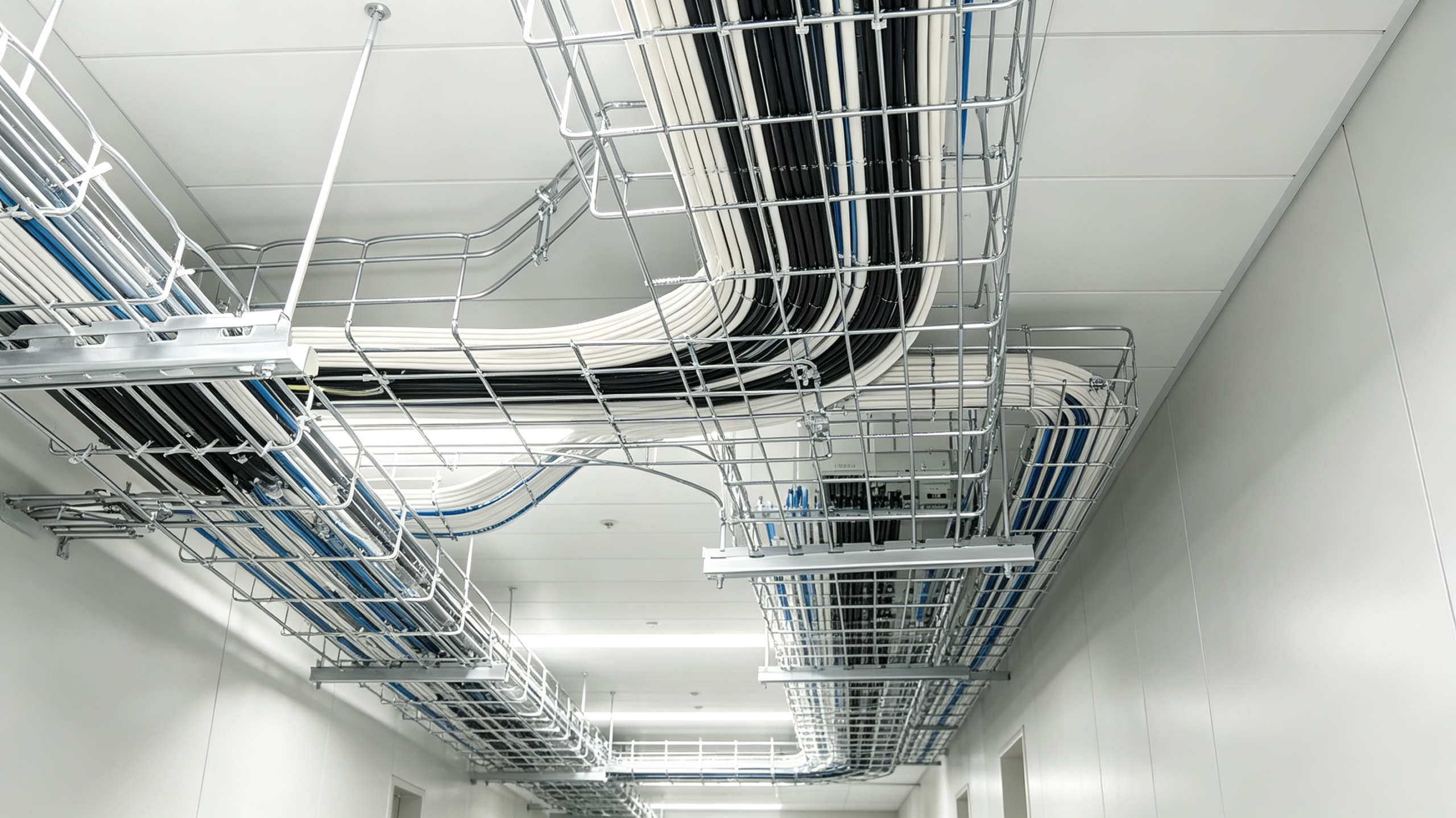
Execution Standard, Inspection & Acceptance Requirements
Standard specification information is the key basis for project inspection and final acceptance. Missing standard information will easily lead to failure of safety audit and project closing.
Industry execution standard number
Mark the national or industry standard basis for product design and production, such as IEC 61537 and domestic electrical tray specifications, to ensure product compliance and standardization.
Factory test and inspection items
Specify factory inspection indicators, including size tolerance, coating adhesion, load test and anti-corrosion performance test, to ensure that each batch of products meets design requirements.
Qualification document requirements
Clarify whether supplier qualification certificates, test reports, factory inspection sheets and other supporting documents need to be provided for project filing and acceptance.
If you need standardized, project-compliant cable tray specification sheets, or want professional engineers to sort out customized parameter lists for your wiring project, contact BDCABLETRAY. We provide free specification sorting, parameter verification and one-stop product matching services to help your project pass acceptance smoothly and avoid material and specification errors.
FAQ
1. Why is a complete cable tray specification sheet important for engineering projects?
A complete specification sheet unifies production standards, procurement parameters and construction requirements. It can effectively avoid common problems such as wrong model delivery, unmatched accessories, unqualified load performance and inconsistent anti-corrosion standards, reducing rework, material waste and project acceptance risks.
2. What are the most easily missing parameters in a cable tray spec sheet?
Most engineers easily ignore plate thickness, coating process thickness, supporting span standard and grounding accessory matching. These hidden parameters do not affect the appearance size, but directly determine the safety, stability and service life of the cable tray system, which must be included in the specification sheet.
3. Do different types of cable trays need separate specification sheets?
Yes. Ladder trays, solid trays and channel trays have different structural parameters, load standards and application scenarios. Mixed recording will lead to confusing parameters and inaccurate procurement. It is necessary to prepare independent specification sheets according to different tray types and usage environments.
4. How to ensure the specification sheet matches the actual construction environment?
On the basis of design drawings, combine on-site humidity, corrosiveness, cable load and laying span to adjust parameters. Simply copying standard specifications may cause performance surplus or insufficient protection. BDCABLETRAY can provide targeted spec sheet optimization according to actual site conditions.
5. Can unified specification sheets reduce overall project costs?
Absolutely. Accurate and standardized specifications avoid over-design and excessive material configuration, and eliminate cost losses caused by wrong ordering, return and replacement, construction rework and delayed acceptance. It greatly improves project controllability and overall profit margin.