



Most electrical contractors and facility engineers prioritize cable tray width, material grade and load capacity during project design, while overlooking one critical dimensional detail: side rail height. Many assume rail height is just a standardized cosmetic parameter with little impact on cabling performance. In real industrial and commercial wiring projects, cable tray side rail height directly governs cable holding volume, structural stability, on-site construction safety, heat dissipation efficiency and code compliance.
Improper side rail height selection is a common cause of on-site problems, including cable slippage, tray sagging, failed safety inspections, insufficient heat dissipation and unnecessary budget waste. As a professional cable tray manufacturer with rich on-site engineering experience, BDCABLETRAY breaks down the core impacts of side rail height, shares practical selection rules, and helps engineers avoid common design mistakes for safer, more compliant and cost-effective cabling layouts.
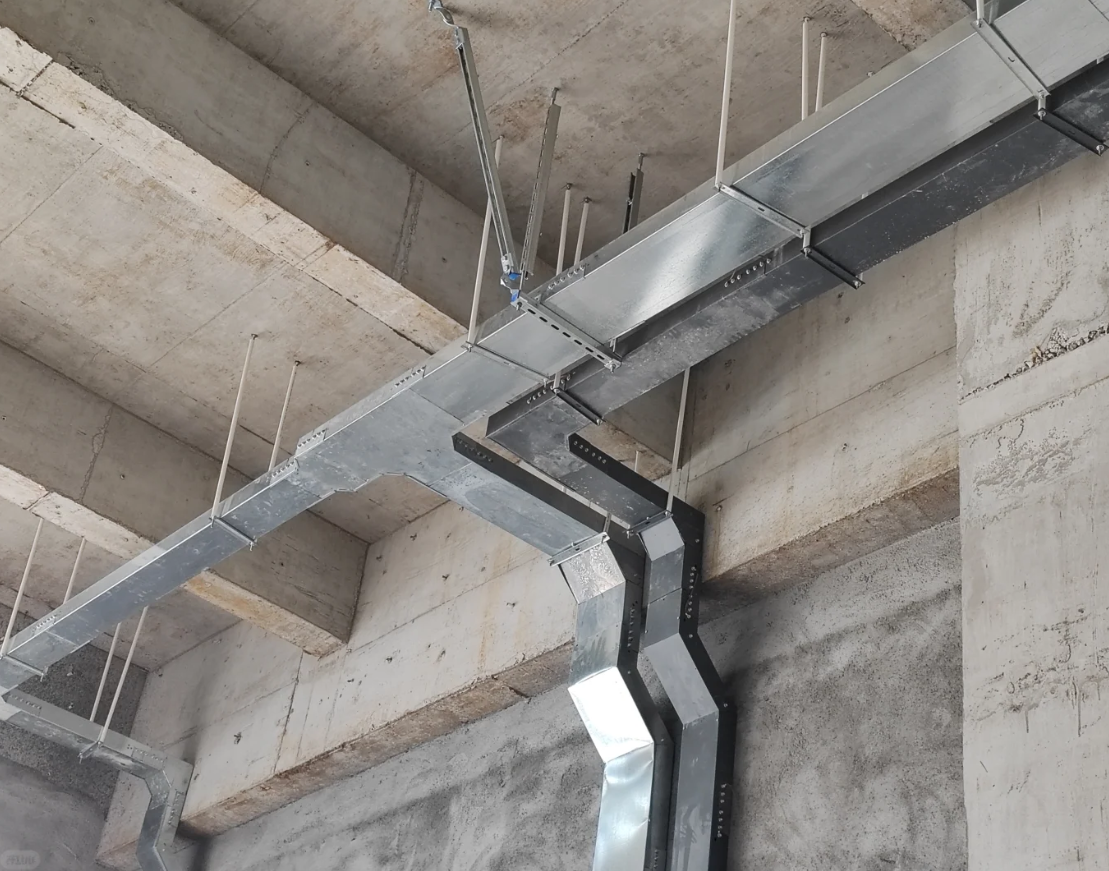
How Side Rail Height Affects Cable Holding Capacity & Fill Ratio
The side rail acts as the vertical boundary of the cable tray, which defines the maximum cross-sectional space for cable laying. Its height is the core factor restricting cable stacking quantity and standard fill ratio compliance, which is the most intuitive impact in actual wiring construction.
Determines single-layer and multi-layer cable stacking limits
Low side rail heights (50mm and below) are only suitable for single-layer laying of thin signal cables and low-power wires. When users blindly stack thick power cables or multiple layers of wires on low-rail trays, cables will exceed the rail boundary, resulting in messy arrangement, wire slippage and offset laying. Taller side rails (75mm, 100mm and above) provide sufficient vertical space, safely supporting multi-layer stacking of large-diameter power cables and dense mixed wiring, fully meeting the layout needs of industrial main line cabling.
Guarantees compliance with industry cable fill standards
International electrical codes clearly stipulate that the cable filling area shall not exceed 40%–60% of the tray’s total cross-sectional area to reserve heat dissipation gaps. Side rail height directly determines the effective vertical area of the tray. If the rail height is too low, the limited vertical space makes it impossible to reach the standard reserved gap even with single-layer laying, leading to over-filled cabling, poor ventilation and potential overheating risks. Matching rail height ensures the project meets standardized filling ratio requirements and passes safety audits smoothly.
Side Rail Height Impacts Tray Structural Stability & Load Performance
The side rail is the main force-bearing structure of cable trays, whether it is ladder type, trough type or perforated type trays. Different rail heights bring obvious differences in overall rigidity, anti-sagging ability and long-span load-bearing performance, which is crucial for outdoor pipe corridors and long-distance overhead laying projects.
Improves overall rigidity and long-span anti-sagging ability
Taller side rails effectively enhance the section modulus of the entire cable tray. Under the same material thickness and span distance, trays with higher side rails have stronger vertical stiffness, which can evenly bear the weight of dense cables and avoid local bending, deformation or sagging. For long-span laying scenarios with support spacing exceeding 2 meters, reasonably increased rail height is the most economical and effective way to improve load performance without replacing thicker materials.
Enhances side impact resistance and structural durability
On complex construction sites and busy workshop environments, cable trays are easily collided by maintenance tools, handling vehicles and equipment parts. Higher side rails form a stable protective frame, which can resist external side impact, prevent tray deformation and edge damage, and protect internal cables from extrusion and scratch damage. Low side rail trays have weak edge stability and are prone to structural distortion after slight impact, affecting long-term service life.
Influence of Side Rail Height on Heat Dissipation & Operational Safety
Cable overheating is one of the main causes of insulation aging and line failure. Many people only focus on tray width but ignore the vertical ventilation space brought by side rail height, which plays a key role in natural air convection and heat dissipation of densely laid cables.
Optimizes vertical air convection channels
Adequate side rail height reserves enough vertical gap between the upper and lower layers of cables. Hot air generated by cable operation can circulate and discharge upwards smoothly, avoiding long-term heat accumulation inside the tray. Trays with insufficient rail height lead to crowded cable stacking, blocked air flow and continuously rising operating temperature, which accelerates insulation aging and increases line power loss.
Prevents cable displacement and safety hazards
Standard-height side rails can completely limit cables within the tray range, avoiding wire drifting, overlapping and falling off caused by equipment vibration and wind vibration. For high-altitude overhead laying, standardized rail height effectively prevents cable slippage accidents, ensures the stability of power and signal transmission, and eliminates hidden dangers of short circuit and electric leakage caused by cable dislocation.
Effects of Side Rail Height on Installation & Daily Maintenance
Reasonable side rail height not only ensures operational safety but also optimizes on-site construction efficiency and later maintenance convenience. Unreasonable height design will increase construction difficulty and maintenance costs invisibly.
Balances cable pulling efficiency and safety
Excessively tall side rails will form high barriers on both sides of the tray. During long-distance cable pulling, the cable jacket is easy to rub against the top of the rail, causing abrasion and damage. Moderate standard rail height ensures stable cable containment while reducing friction resistance, making cable laying smoother and protecting cable integrity. Low rails are convenient for cable pulling but cannot constrain cables effectively for dense wiring.
Facilitates daily inspection and later line expansion
Trays with matched side rail height have neat and layered cable layout. Maintenance personnel can clearly observe cable aging, damage and joint loosening during daily patrols, realizing rapid troubleshooting. In addition, reserved vertical space brought by standard rail height supports later cable addition and line upgrading, avoiding overall tray replacement due to insufficient laying space.
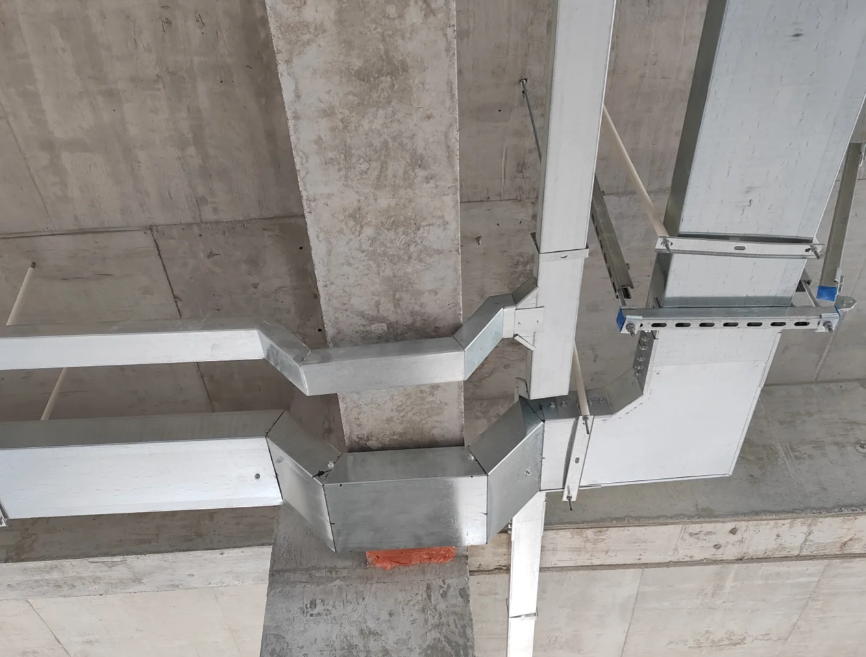
Practical Side Rail Height Selection Tips for Different Scenarios
There is no universal standard for side rail height. The optimal size needs to be matched according to cable type, laying quantity, span distance and application environment. BDCABLETRAY summarizes on-site practical selection experience for reference:
For indoor weak current wiring, single-layer signal cables and short-span small-scale projects: choose 50mm side rail height to control cost and meet basic laying needs.
For conventional industrial power wiring, mixed cable laying and medium-span pipe corridors: select 75mm standard side rail height, balancing load capacity, heat dissipation and construction convenience.
For outdoor long-span laying, dense multi-layer power cables and heavy-load industrial projects: adopt 100mm or higher reinforced side rail height to ensure structural stability and safe heat dissipation.
If you are confused about side rail height selection for your cable tray project, or need customized dimensional matching and free technical guidance, contact BDCABLETRAY. Our professional engineering team provides one-stop targeted solutions according to your on-site wiring conditions, ensuring compliant, safe and cost-effective project construction.
FAQ
1. What is the standard side rail height for conventional cable trays?
The most commonly used standard side rail heights in the industry are 50mm, 75mm and 100mm. 50mm is for light-duty weak current wiring, 75mm is the universal standard for most industrial and commercial projects, and 100mm is specially used for heavy-load, long-span and dense power cable laying scenarios. Special heights can be customized according to project requirements.
2. Can low side rail trays be used for multi-layer power cable laying?
It is not recommended. Low side rails cannot provide sufficient vertical heat dissipation space and cable restraint range. Multi-layer laying will cause cable overcrowding, poor air circulation and serious heat accumulation, which not only fails to meet industry fill ratio standards but also easily causes cable overheating aging and safety accidents.
3. Does side rail height affect the load-bearing span of cable trays?
Yes, it has a significant impact. Under the same material thickness, higher side rails greatly improve the overall structural rigidity and anti-sagging performance of the tray, effectively increasing the safe laying span. For long-distance pipe corridor laying, increasing side rail height is the most effective way to improve load stability without upgrading materials.
4. Is higher side rail height always better for cable tray projects?
Not exactly. Excessively high side rails will increase the overall weight and procurement cost of the tray, and bring greater friction resistance during cable laying. For simple single-layer light-load wiring scenarios, ultra-high rails cause unnecessary cost waste. The most suitable height should be matched according to actual cable quantity and laying environment.
5. How does side rail height affect cable tray heat dissipation performance?
Side rail height determines the vertical ventilation space of the tray. Appropriate height forms a smooth upper and lower air convection channel, which can quickly take away the heat generated by cable operation. Too low rail height leads to cramped cable layout and blocked heat dissipation, while reasonable height ensures long-term stable and low-temperature operation of cables.