



Most industrial buyers, contractors, and facility managers have experienced inaccurate cable tray quotations, delayed delivery times, and post-order design revisions. In most cases, these issues are not caused by manufacturers, but by incomplete RFQ information at the initial inquiry stage. When buyers send vague requests without clear project parameters, suppliers can only provide generic prices, which often lead to budget deviations, product mismatches, and repeated communication rounds.
A complete and standardized cable tray RFQ checklist helps buyers obtain precise, comparable, and formal quotations in the first communication. It shortens negotiation cycles, avoids unnecessary project adjustments, and ensures the final cable tray products fully match on-site installation conditions. With rich global project quotation and customization experience, BDCABLETRAY sorts out a practical cable tray RFQ checklist covering all core details buyers must prepare before sending an inquiry.
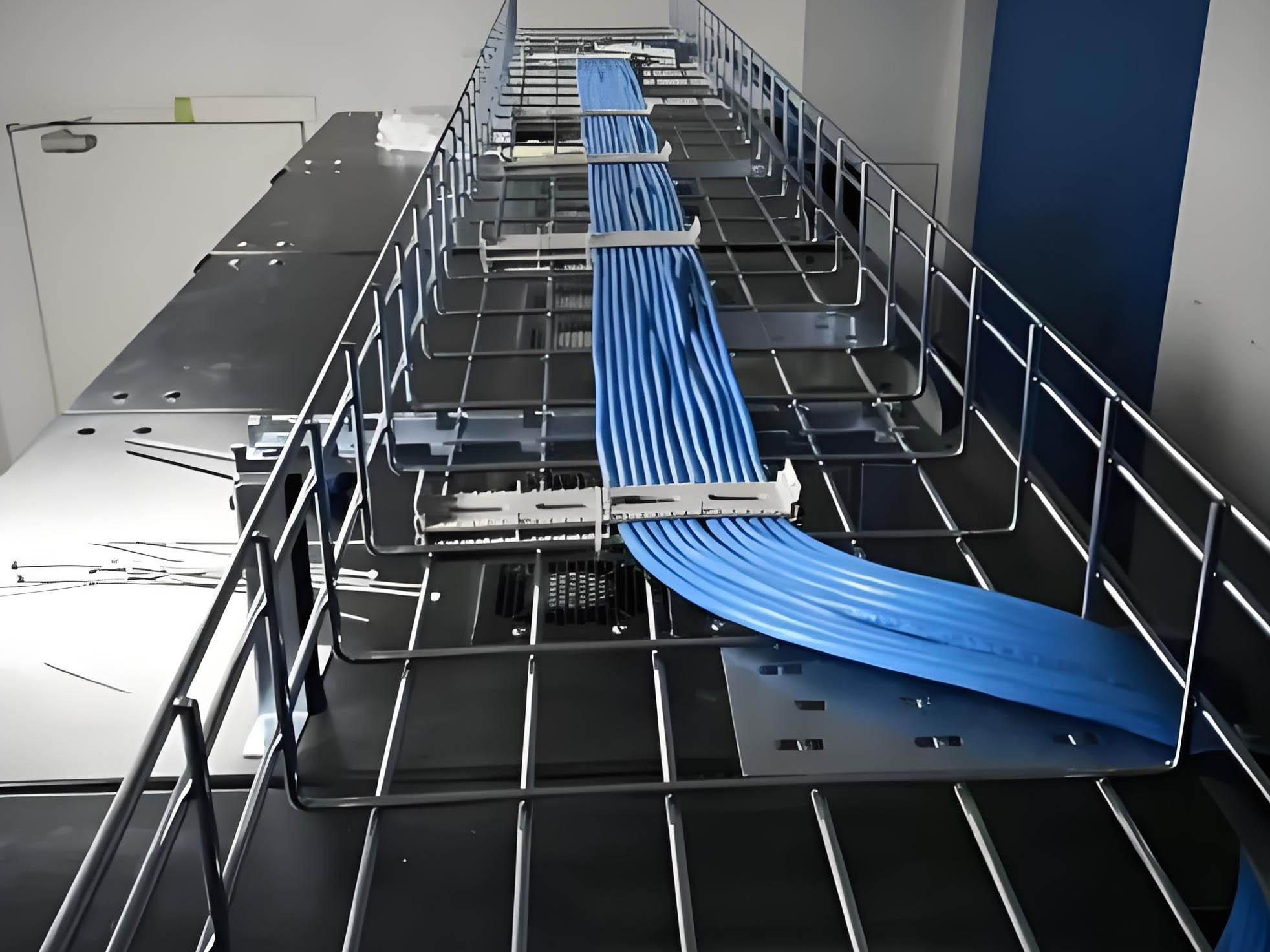
Confirm Exact Cable Tray Type and Structural Style
The first step in an accurate RFQ is confirming the correct cable tray type. Different tray designs serve distinct wiring scenarios, and mixing up models will lead to completely inappropriate quotes and product solutions. Buyers need to clarify the required tray style before contacting suppliers.
Classify mainstream cable tray types
Buyers should specify whether the project needs ladder type, solid bottom type, wire mesh type, channel type, or perforated cable trays. Ladder trays are ideal for heavy-power cable laying with good heat dissipation. Solid bottom trays suit weak current and signal cables that require full shielding. Wire mesh trays are widely used in data centers for high ventilation and easy maintenance. Clear type selection allows manufacturers to match the right production process and quotation standard.
Determine structural design requirements
Confirm whether the project needs ordinary standard trays or reinforced heavy-duty trays. Some industrial workshops with super-heavy cable loads require thickened plate structures and reinforced side rails. In addition, clarify whether special structures such as bend sections, tees, cross joints, reducing sections and vertical elbows are needed, and list the quantity of each accessory.
Specify Complete Size and Dimension Parameters
Size error is one of the most common reasons for on-site installation failure. Many buyers only provide approximate width and height, ignoring plate thickness and length specifications, resulting in products that cannot be installed or fail load-bearing standards. Complete dimension data is the core basis for formal quotation and production.
Basic length, width and height parameters
Buyers need to confirm the outer width, side height and single-section length of the cable tray. Most manufacturers support customized non-standard sizes, so it is necessary to provide accurate data according to on-site corridor, ceiling and cable layout space. Avoid vague descriptions such as “standard size” to prevent inconsistent understanding between the two parties.
Key plate and wire thickness standards
Thickness directly determines the load-bearing capacity and service life of the cable tray, and also affects the overall quotation price. For steel trays, specify the thickness of the side plate and bottom plate. For wire mesh trays, confirm the steel wire diameter. Clear thickness parameters can effectively prevent suppliers from providing low-standard thin materials to reduce costs.
Custom aperture and mesh requirements
For perforated trays and mesh trays used for heat dissipation and ventilation, buyers need to clarify mesh size, aperture spacing and hole arrangement rules. Special hole designs for heat dissipation and dust prevention need to be marked in detail in the RFQ to ensure the finished products meet on-site heat dissipation and wiring management needs.
Clarify Material Grade and Surface Treatment Process
Material and surface treatment are the main factors affecting cable tray durability, environmental adaptability and quotation cost. Different materials and processes have huge price gaps and applicable scenario differences. Clear requirements in advance can avoid subsequent material replacement and cost disputes.
Confirm core raw material type
Common cable tray materials include Q235 carbon steel, 304 stainless steel, 316 stainless steel and aluminum alloy. Ordinary indoor dry environments can choose carbon steel materials. Humid coastal environments, chemical workshops and food factories need stainless steel or anti-corrosion materials. Buyers must specify the material grade to ensure the product adapts to the project environment.
Define surface anti-corrosion treatment
For carbon steel trays, clarify whether hot-dip galvanizing, cold galvanizing, electrostatic powder coating or paint treatment is required. Hot-dip galvanizing has the best anti-corrosion effect and is suitable for outdoor and humid environments. Powder coating features uniform and beautiful color, suitable for indoor standardized projects. Unified process standards ensure consistent product quality and appearance.
Special environmental protection and fireproof requirements
Some industrial projects and public construction projects have strict fireproof and flame-retardant standards. Buyers need to clarify whether fireproof coating treatment and relevant fire certification reports are required, and specify environmental protection standards to meet project safety acceptance specifications.
Sort Out Project Usage and On-Site Application Conditions
Suppliers can provide more targeted optimized solutions only after fully understanding the project scenario. Simply listing product parameters cannot reflect actual construction difficulties, which may lead to products that meet the size standard but are not suitable for on-site use.
Clear project type and usage scenario
Mark whether the cable tray is used for data center, industrial workshop, warehouse piping corridor, commercial building, outdoor overhead wiring or underground pipe gallery. Different scenarios correspond to different load-bearing, anti-corrosion and wind resistance design standards, which help manufacturers adjust production parameters appropriately.
Indicate laying environment characteristics
Describe the on-site environment, including indoor dry, high humidity, coastal salt spray, chemical corrosion, high temperature and dust conditions. Harsh environments need customized enhanced anti-corrosion and high-temperature resistant processes. Providing environmental information is conducive to matching the most cost-effective product scheme.
Confirm cable load and laying density
Tell the supplier the approximate cable weight and laying density, so the manufacturer can verify whether the standard tray meets the load-bearing requirements, or recommend reinforced customized models to avoid deformation and safety hazards caused by insufficient load-bearing capacity after installation.
Specify Quantity, Delivery and Custom Service Requirements
Quantity, delivery cycle, packaging and after-sales services are essential parts of the RFQ. Clear requirements in the early stage can avoid delayed delivery, inconsistent packaging standards and missing technical services in the later stage of the project.
Total quantity and batch delivery plan
Provide the total purchase quantity and whether batch delivery is required, and specify the quantity of conventional trays and various accessory parts separately. Accurate quantity statistics help manufacturers arrange production schedules and calculate bulk discount prices, obtaining more favorable quotation terms.
Required delivery time and shipping requirements
Clarify the latest delivery time required for the project, and indicate whether door-to-door delivery, port shipment or designated warehouse pickup is needed. For cross-border projects, specify whether packaging for export and container loading optimization is required to reduce logistics costs.
Technical documents and after-sales support
Clearly put forward the required certification documents, including ISO quality certification, material test reports, fireproof certificates and salt spray test reports. At the same time, confirm whether on-site installation guidance, installation drawings and remote technical support services are needed to ensure smooth project acceptance.
Why Choose BDCABLETRAY for Cable Tray RFQ and Customization
BDCABLETRAY is a professional cable tray manufacturer focusing on industrial and commercial wiring system solutions. We have complete production lines for ladder trays, solid trays, mesh trays and customized special trays, supporting all material grades and surface treatment processes.
We are familiar with various international project standards and on-site construction difficulties. According to the buyer’s complete RFQ information, our team can quickly provide accurate, detailed and itemized formal quotations, while proactively optimizing product schemes for special scenarios to help customers save costs and avoid installation risks.
Prepare your project parameters according to this complete RFQ checklist to get an accurate and professional cable tray quote. Contact BDCABLETRAY now to get free scheme optimization, parameter verification and one-stop customized quotation service.
FAQ
1. What is the most important information to include in a cable tray RFQ?
The core information includes tray type, accurate size and thickness parameters, material grade, surface treatment process and project usage scenario. These key details determine product quality, safety and quotation accuracy, which are indispensable for obtaining a precise and comparable formal quote.
2. Why do many cable tray quotes have large price differences?
Price gaps mainly come from unclear material standards, inconsistent plate thicknesses, different surface treatment processes and incomplete accessory matching. Vague RFQ information allows suppliers to use low-standard configurations to reduce prices. A detailed RFQ checklist can effectively avoid uneven quotation standards.
3. Do I need to provide on-site environment details for quotation?
Yes. On-site environment such as humidity, salt spray, corrosion and high temperature directly determines the anti-corrosion process and material selection of the cable tray. Providing environment details helps manufacturers recommend the most suitable and cost-effective products, avoiding quality problems after installation.
4. What accessories need to be included in the cable tray RFQ?
It is necessary to list bending pieces, tees, crosses, reducing joints, support hangers, connecting bolts and guard plates. Complete accessory statistics can avoid missing parts during construction, prevent project suspension, and ensure the quotation covers all supporting costs.
5. Can BDCABLETRAY provide customized solutions for special project RFQs?
Absolutely. BDCABLETRAY supports full customized cable tray services including special sizes, special processes, fireproof and anti-corrosion upgrades. We can provide targeted optimized solutions and formal quotations according to your special project standards and on-site construction conditions.