



Power plants are core energy facilities that rely on dense, long-span, and high-load cable systems to maintain stable power generation, transmission, and distribution. Unlike ordinary commercial and industrial wiring environments, power plant working conditions feature ultra-large cable quantities, continuous high-load operation, high temperature, dust accumulation, and strict fire protection standards. Ordinary civilian-grade cable trays often fail to meet industrial requirements, facing problems such as insufficient bearing capacity, poor high-temperature resistance, and unstandardized layered layout.
A stable cable tray system is the basic guarantee for the long-term safe operation of power plant electrical equipment. Improper selection and layout will easily cause cable deformation, heat accumulation, insulation aging, and even trigger power system failures and shutdown accidents. As a professional manufacturer of power-grade cable trays, BDCABLETRAY summarizes practical selection standards, layout specifications and engineering experience for power plant large-scale cable systems in this guide, helping engineering teams build compliant, durable and high-stability wiring support systems.
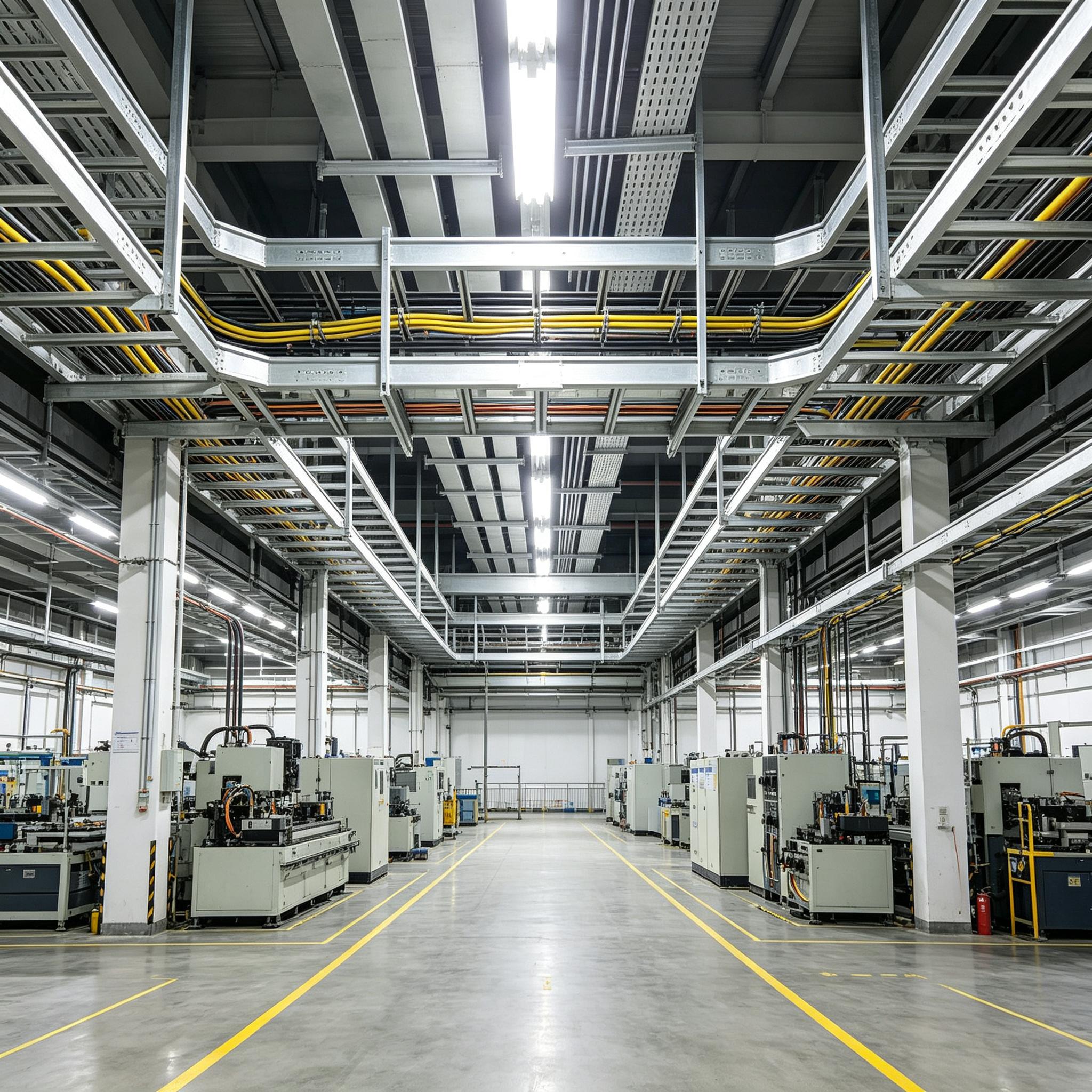
Unique Working Conditions & Wiring Challenges in Power Plants
Power plant cable laying covers boiler rooms, turbine halls, switchgear rooms, outdoor power transmission corridors and auxiliary workshops. Each area has complex environmental characteristics and strict wiring standards, putting forward higher requirements for the load capacity, heat dissipation, fire resistance and durability of cable trays.
Ultra-High Cable Density & Long-Span Laying
Power generation systems require thousands of power cables, control cables and instrument signal cables to operate simultaneously. The overall wiring density is extremely high, and many corridors need long-span uninterrupted laying. Ordinary thin-walled trays are prone to bending deformation and local sagging under long-term heavy load, which will squeeze cable insulation layers and bring hidden dangers to power supply safety.
High-Temperature & Dust-Filled Operating Environment
Areas near power plant boilers and thermal equipment maintain high ambient temperatures all year round. A large amount of industrial dust and fine particulate matter will accumulate in the wiring corridors during long-term operation. Low-quality trays are easy to corrode, age and block heat dissipation, resulting in accelerated cable aging and reduced system service life.
Strict Fire Resistance & Anti-Interference Requirements
Power plant electrical systems belong to key safety-level facilities. Cable trays must have excellent flame retardant and fire blocking capabilities to prevent flame spread along cable passages. At the same time, strong current power cables and weak current control cables need strict isolation to avoid electromagnetic interference, ensuring accurate signal transmission and stable equipment operation.
Long Service Cycle & Low Maintenance Requirements
Power plant infrastructure is designed for a service life of more than 30 years. The cable tray system needs long-term stable operation with minimal daily maintenance. Frequent inspection, repair and replacement will affect the continuous power generation efficiency and bring additional operating costs to the enterprise.
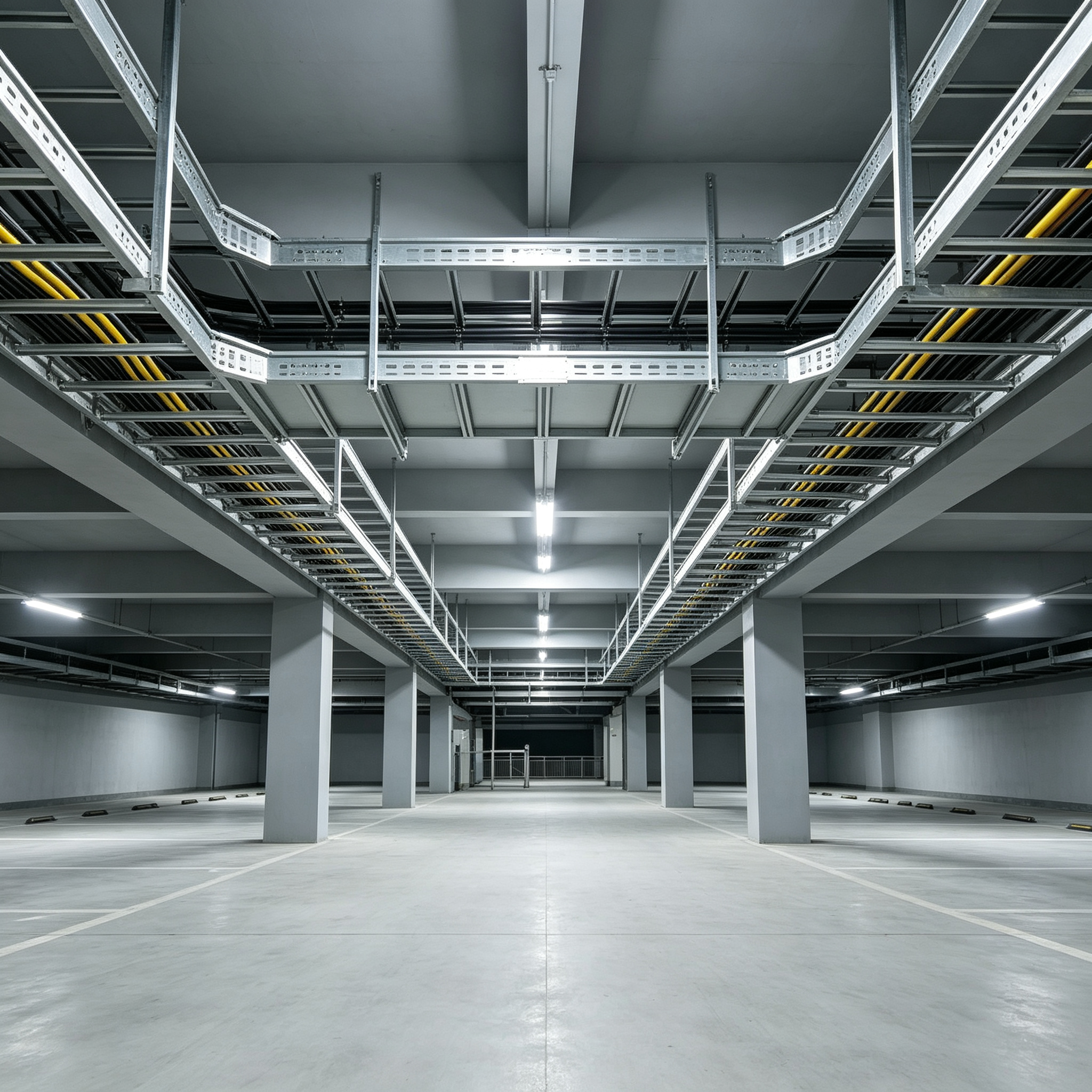
BDCABLETRAY Power-Grade Cable Tray Selection for Large-Scale Systems
Aiming at the high load, high temperature, fireproof and long-life requirements of power plant large-scale cable systems, BDCABLETRAY configures differentiated tray types and customized processes for different functional areas, realizing scientific matching and full-scene safe support.
Heavy-Duty Ladder Tray for Main Power Cable Corridors
For main power transmission corridors with dense high-current cables and long-span laying, BDCABLETRAY heavy-duty ladder cable trays are the first choice. The reinforced thickened side rail structure greatly improves overall bearing capacity, effectively avoiding sagging and deformation under long-term heavy load. The open ladder structure provides excellent natural ventilation and heat dissipation, solving the heat accumulation problem of high-load power cables in high-temperature environments, and adapting to 24-hour continuous operation of power plant systems.
Solid Bottom Fireproof Tray for Switchgear & Control Rooms
Central control rooms, switchgear rooms and safety loop wiring areas adopt BDCABLETRAY fireproof solid bottom cable trays. The fully enclosed structure cooperates with fireproof baffles and blocking accessories to form an independent fire isolation zone, which can effectively prevent flame and smoke spread in case of local fire. It provides safe and stable protection for core control cables and emergency power supply cables, meeting power industry fire safety specifications.
Perforated Tray for Auxiliary & Instrument Signal Cables
For weak current instrument cables, control signal cables and low-load auxiliary circuit wiring in power plants, perforated cable trays are reasonably matched. Uniform hole design ensures balanced heat dissipation and ventilation, while preventing small signal cables from sliding and messy stacking. It realizes standardized classified wiring and avoids signal disorder caused by cable confusion.
Anti-Corrosion Surface Treatment for Harsh Plant Environments
All BDCABLETRAY power-grade trays adopt customized anti-corrosion treatments including hot-dip galvanizing, electrostatic fireproof powder coating and epoxy resin coating. These processes effectively resist high-temperature oxidation, industrial dust corrosion and humid air erosion in power plants, ensuring that the tray system does not rust, peel or deform during long-term operation, and greatly extending the overall service life.
Core Layout Principles for Power Plant Large-Scale Cable Systems
Reasonable layout is the key to ensure the stable operation of large-scale cable systems. Combined with power industry construction specifications and on-site engineering experience, BDCABLETRAY summarizes standardized layout guidelines suitable for power plant scenarios.
Strict Layered Isolation for Strong and Weak Current Cables
Implement strict layered laying for power plant cables. High-voltage strong current power cables are arranged on the upper layer of the tray, while weak current control and instrument cables are arranged on the lower layer. Standard vertical spacing is reserved between layers, and isolated trays are used for separate wiring. This layout completely eliminates electromagnetic interference and ensures the accuracy and stability of power plant automatic control signals.
Scientific Load Distribution & Long-Span Reinforcement
According to the total load of large-scale cables, reasonably distribute the number of trays and support spacing. For ultra-long-distance laying corridors, add reinforced supports and anti-sagging accessories to avoid local overloading. Uniform load distribution ensures flat and stable laying of all cables, eliminating hidden dangers of extrusion and damage.
Zoned Fire Blocking & Segmented Protection
Set up segmented fire blocking points at regular intervals in long-distance cable corridors. All trays penetrating walls and floor gaps are tightly sealed with fireproof materials. Independent fire isolation zones are formed in different functional areas to prevent fire from spreading along cable lines and avoid large-scale power system paralysis caused by local accidents.
Reserve Sufficient Heat Dissipation & Maintenance Space
Avoid full-load dense stacking of cables. Reserve reasonable gaps between cables and tray bodies to ensure smooth air circulation and heat dissipation. At the same time, reserve dedicated maintenance channels and operation gaps to facilitate daily cable inspection, fault troubleshooting and later equipment upgrading.
Reserve Expansion Space for System Upgrading
Power plant power supply capacity and electrical systems will be continuously upgraded and expanded. During the initial layout, reserve 15%-20% spare tray capacity and wiring space to meet the needs of later cable addition and system renovation, avoiding overall reconstruction and cost waste.
BDCABLETRAY Advantages for Power Plant Cable Tray Projects
Power-Grade Load & Structural Stability
All products adopt thickened industrial-grade profiles and reinforced structural design, with super heavy-load bearing capacity. They can adapt to long-term high-load operation of power plant large-scale cable systems without deformation or sagging.
Professional Fireproof & High-Temperature Resistance
Customized fireproof and high-temperature resistant processes meet power industry safety standards. The trays can withstand high-temperature environment radiation and block flame spread, fully protecting core power supply and control circuits.
Excellent Anti-Corrosion & Long Service Life
Diversified anti-corrosion surface treatments resist dust, humidity and high-temperature oxidation in power plants, realizing 30+ years of stable service life and ultra-low daily maintenance.
Customized Integrated Engineering Solutions
Provide one-stop services including on-site survey, load calculation, tray type selection, layered layout design and installation guidance, tailored for different types of thermal power, hydropower and new energy power plant projects.
If you need reliable, fireproof and heavy-duty cable tray solutions for power plant large-scale cable system projects, contact BDCABLETRAY. We provide free load calculation, professional layout design and factory direct supply services to ensure your power plant wiring system operates safely and stably for a long time.
FAQ
1. What type of cable tray is most suitable for power plant large-scale cable systems?
Power plant scenarios require matched tray types according to functional areas. Heavy-duty ladder trays are the best choice for main high-load power cable corridors due to excellent heat dissipation and bearing capacity. Fireproof solid bottom trays are used for control rooms and key fire prevention areas, while perforated trays are suitable for instrument signal cables. Mixed collocation can meet the comprehensive needs of large-scale power plant wiring.
2. Why do power plant cable systems need strict layered isolation?
Power plants have a large number of high-current power cables and precision control signal cables. Mixed laying will cause serious electromagnetic interference, leading to signal deviation, equipment misoperation and even power system faults. Layered and isolated tray laying can effectively shield interference and ensure the stable and safe operation of the entire power generation system.
3. What fire protection standards should power plant cable trays meet?
Power plant cable trays must have flame retardant, fire-resistant and fire-blocking properties. They need to resist high-temperature radiation, prevent flame spread along cable passages, and support segmented fire isolation and wall-penetrating fire sealing. BDCABLETRAY power-grade trays fully comply with industrial power safety specifications, ensuring pass of professional project acceptance.
4. How to solve the heat accumulation problem of large-scale dense cables in power plants?
Adopt open-structured heavy-duty ladder trays for main cable corridors to maximize natural heat dissipation. Avoid over-dense cable stacking and reserve reasonable heat dissipation gaps. For high-temperature areas, optimize tray layout spacing and ventilation design, and match high-temperature resistant materials to prevent cable aging caused by heat accumulation.
5. Can BDCABLETRAY provide customized solutions for different power plant types?
Yes. BDCABLETRAY tailors exclusive tray systems and layout schemes for thermal power, hydropower, wind power and photovoltaic power plants. According to different environmental temperatures, cable load quantities and safety levels, we customize tray thickness, anti-corrosion processes, fireproof grades and structural specifications to adapt to various power plant large-scale cable system operation needs.