



Most electrical contractors and project engineers focus heavily on cable tray size, load capacity and material type during project design, yet easily overlook the importance of cable tray finish and surface treatment. In fact, the surface coating and finishing process directly determines the tray’s corrosion resistance, service life, safety performance and on-site aesthetic effect. A poor surface finish will lead to rapid rusting, coating peeling, dust accumulation and even accelerated cable insulation aging, causing frequent maintenance and hidden electrical hazards.
Different working environments including indoor dry workshops, coastal salt spray areas, chemical corrosive plants and outdoor open-air facilities require completely different cable tray surface treatments. Choosing the right finish can extend tray service life by 2–3 times and greatly reduce long-term operational costs. As a professional cable tray manufacturer, BDCABLETRAY sorts out a practical industry guide covering common cable tray finishes, applicable scenarios, pros and cons and selection tips to help engineers make accurate and compliant choices.
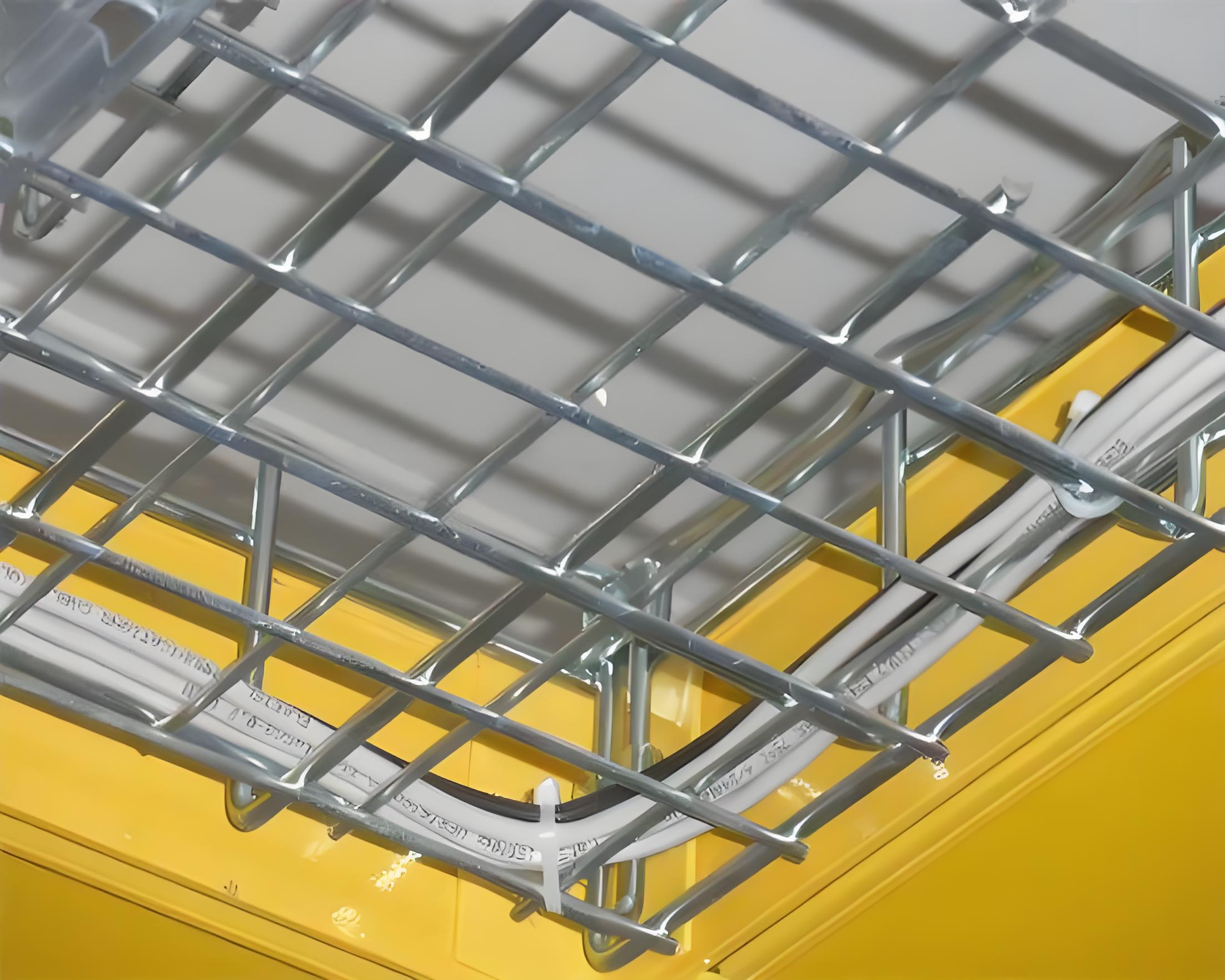
Why Cable Tray Finish & Surface Treatment Matters for Projects
Surface treatment is not just for improving the appearance of cable trays. It is the core protective layer for the entire cabling support system. Many project quality problems and post-operation maintenance troubles stem from mismatched surface finishes. Understanding its core value is the premise of standardized selection.
Prevent metal corrosion and extend service life
Bare metal cable trays are prone to oxidation, rust and chemical erosion when exposed to air, moisture and industrial corrosive gas. Professional surface finishing can form a dense protective isolation layer on the metal surface, effectively isolating external harmful substances and avoiding structural damage caused by corrosion. This fundamentally prolongs the service cycle of cable trays in complex working environments.
Guarantee safe and stable cabling operation
Rusted and peeling metal fragments may scratch cable insulation layers, leading to leakage, short circuit and other electrical faults. Smooth and intact surface treatment avoids sharp burrs and falling impurities, protects cable harnesses for a long time, and ensures the stable operation of power and signal transmission systems.
Meet site audit and standardized construction requirements
Modern industrial plants, commercial buildings and municipal projects have clear specifications for electrical facility appearance and anti-corrosion standards. Uniform and qualified tray surface finish can meet project acceptance and safety audit requirements, avoiding rectification caused by unqualified surface treatment.
Reduce later maintenance and replacement costs
Cable trays with appropriate surface treatment require no frequent rust removal, repainting and partial replacement. It greatly saves manual maintenance costs and secondary renovation investment in the later stage, bringing higher comprehensive cost performance for the project.
Common Cable Tray Finish & Surface Treatment Types
At present, the mainstream surface treatment processes for industrial and commercial cable trays include hot-dip galvanizing, electrostatic powder coating, cold galvanizing, stainless steel polishing and FRP anti-corrosion finish. Each process has unique performance characteristics and targeted applicable scenarios.
Hot-Dip Galvanized Finish
Hot-dip galvanizing is the most widely used traditional anti-corrosion treatment for steel cable trays. The process immerses the polished steel tray in high-temperature molten zinc liquid, forming a thick and uniform zinc layer on the metal surface. The zinc layer integrates with the steel base material, featuring strong adhesion and excellent anti-rust performance.
This finish has super strong resistance to atmospheric corrosion and mechanical wear, suitable for outdoor pipe corridors, factory outer areas, municipal engineering and conventional industrial workshops. Its biggest advantage is long-lasting anti-corrosion effect without easy peeling. The only shortcoming is the slightly uneven surface texture, with a certain zinc flower appearance, which is not suitable for high-clean and high-aesthetic indoor environments.
Electrostatic Powder Coating Finish
Electrostatic powder coating is a popular high-grade surface treatment for indoor cable trays. It adopts electrostatic adsorption technology to uniformly attach polymer powder coating to the tray surface, and forms a smooth, flat and dense protective layer after high-temperature curing.
The powder coating finish features uniform color, no burrs, delicate texture and strong decoration. It is dust-proof, easy to clean, and will not produce metal falling impurities. It is very suitable for indoor workshops, office buildings, shopping malls, precision electronic factories and clean rooms. The disadvantage is that the anti-corrosion performance is weaker than hot-dip galvanizing, and it is not resistant to severe salt spray and strong chemical corrosion.
Cold Galvanized (Spray Galvanized) Finish
Cold galvanizing is a convenient secondary anti-corrosion treatment process. It sprays high-zinc-content anti-rust paint on the surface of finished cable trays. The construction is flexible and low-cost, which is often used for local anti-rust repair and temporary project renovation.
Due to thin coating thickness and poor adhesion, cold galvanized finish is easy to peel off after long-term wind and sun exposure. It is only applicable for temporary indoor projects and low-corrosion environments, and not recommended for permanent industrial engineering supporting facilities.
Stainless Steel Polished Finish
Stainless steel cable trays adopt mechanical polishing and wire drawing finishing treatment. The surface is smooth and bright, with natural anti-rust and anti-corrosion properties, no need for secondary coating protection.
This finish is clean, hygienic, free of dust accumulation and easy to clean, perfectly adapting to food processing, pharmaceutical factories, medical institutions and high-clean industrial environments. The limitation is the high material and processing cost, which is mostly used for high-standard special scenarios rather than conventional large-area laying.
FRP Integral Anti-Corrosion Finish
FRP cable trays adopt integral resin curing finish without metal base material. The surface is smooth and dense, with inert chemical properties, and will not react with acid, alkali, salt spray and chemical gas.
It is the most professional anti-corrosion finish for harsh environments, widely used in chemical plants, sewage treatment plants, coastal salt spray areas and other high-corrosion scenarios. It has ultra-long service life and zero maintenance advantages.
How to Choose the Right Cable Tray Surface Finish by Environment
The core principle of tray finish selection is matching the on-site operating environment. Blind pursuit of high-grade technology or low-cost treatment will lead to performance mismatch or cost waste.
Indoor dry & clean environments
For conventional indoor workshops, office buildings and commercial spaces with dry air and no corrosive substances, electrostatic powder coating finish is the best choice. It balances beautiful appearance, dust-proof performance and economic cost, meeting daily safety and standardized management needs.
Outdoor & atmospheric corrosion environments
For outdoor pipe corridors, factory exterior walls and open-air laying areas affected by wind and rain erosion, hot-dip galvanized finish is preferred. Its thick zinc layer can resist long-term atmospheric oxidation and weathering, ensuring stable anti-rust performance for more than 10 years.
Coastal salt spray & humid environments
Coastal areas have high air humidity and salt spray erosion, which easily corrode ordinary steel trays. It is recommended to use hot-dip galvanized plus secondary powder composite treatment or direct FRP anti-corrosion finish to avoid rapid rust damage.
Chemical & high-corrosion environments
Chemical plants, sewage treatment workshops and pharmaceutical production areas have acid-base volatile gas and corrosive liquid. Only FRP integral anti-corrosion finish and stainless steel polished finish can meet long-term stable operation requirements.
High-clean & sanitary environments
Food, medical and precision clean workshops require no dust accumulation and no impurity falling. Electrostatic powder coating and stainless steel polished finish are the most suitable, with smooth surface and easy daily cleaning.
Common Selection & Construction Mistakes to Avoid
In actual engineering construction, unreasonable surface finish matching often causes project quality problems and increased costs. Summarizing common mistakes can effectively help teams avoid project risks.
Using indoor powder coating for outdoor laying
Many projects use low-cost powder-coated trays for outdoor construction. The thin powder layer is easy to age, crack and peel under long-term sunlight and rain erosion, leading to rapid rusting of the tray and forced early replacement.
Blindly using galvanized trays for clean workshops
Hot-dip galvanized trays have rough surface and easy zinc particle falling off, which will produce tiny metal impurities, polluting clean workshop environment and affecting precision product production quality.
Ignoring secondary protection for coastal galvanized trays
Ordinary single hot-dip galvanized finish cannot resist strong coastal salt spray erosion. Without secondary anti-corrosion treatment, the zinc layer will be consumed quickly, resulting in tray corrosion and damage.
BDCABLETRAY Professional Surface Finish Customization Service
BDCABLETRAY supports full-series cable tray surface finish customization, covering powder coating, hot-dip galvanizing, stainless steel polishing, FRP anti-corrosion and composite anti-corrosion processes. We do not adopt unified standard configuration, but formulate targeted surface treatment schemes according to customer’s project environment, safety standards and budget range.
All finishes are processed in strict accordance with international electrical industry standards, with uniform coating thickness, strong adhesion, no peeling and no burrs. Whether it is high-aesthetic indoor commercial projects, outdoor municipal facilities or harsh chemical anti-corrosion projects, we can provide matched finished cable trays to ensure project compliance, stability and long-term low-maintenance operation.
If you are confused about cable tray finish selection for your project, or need customized surface treatment solutions and free technical consultation, contact BDCABLETRAY. Our professional engineering team provides one-stop matching suggestions to help you select the most cost-effective cable tray surface finish.
FAQ
1. Which is better, powder coated or hot-dip galvanized cable tray finish?
It depends on the application scenario. Powder coated finishes feature smooth appearance, dust-proof performance and low cost, ideal for indoor dry and clean environments. Hot-dip galvanized finishes have stronger anti-corrosion and weather resistance, suitable for outdoor, humid and slightly corrosive environments. There is no absolute advantage, only the most suitable matching.
2. Can powder coated cable trays be used outdoors?
Ordinary single-layer powder coating is not recommended for long-term outdoor use. It is prone to aging, fading and peeling under ultraviolet radiation and rain erosion. For outdoor projects with aesthetic requirements, you can choose BDCABLETRAY galvanized base plus outdoor special powder composite finish.
3. What surface treatment is best for coastal salt spray areas?
Coastal high salt spray environments are most suitable for FRP anti-corrosion finish or hot-dip galvanized composite powder treatment. Ordinary single galvanized and powder coating finishes cannot resist long-term salt spray erosion and will suffer from corrosion failure in a short time.
4. How long is the service life of different cable tray surface finishes?
In conventional indoor environments, powder coated trays can last 8–10 years, hot-dip galvanized trays 10–15 years, and stainless steel and FRP finishes can stably operate for more than 20 years. The service life will be shortened accordingly in high-corrosion and high-temperature environments.
5. Do clean room cable trays require special surface treatment?
Yes. Clean workshops must use smooth, dust-free and non-falling finishes. High-quality electrostatic powder coating or stainless steel polished finish is mandatory. Hot-dip galvanized trays with easy falling zinc particles are prohibited to avoid polluting clean production environment.