



Most electrical contractors and project designers often make a common mistake: using unified cable tray designs for both indoor and outdoor construction. Many people think basic cable tray structures are universal, and only surface protection matters for outdoor environments. In actual engineering practice, indoor and outdoor cabling scenarios have completely different load demands, environmental interference factors and safety standards.
Blindly adopting the same tray design will lead to excessive cost waste for indoor projects or premature aging, deformation and safety hazards for outdoor wiring. As a professional cable tray manufacturer focusing on industrial and construction cabling solutions, BDCABLETRAY clearly explains the core design changes between indoor and outdoor cable trays, covering structure selection, material technology, load standards and installation details, helping designers complete standardized and cost-effective cabling design.
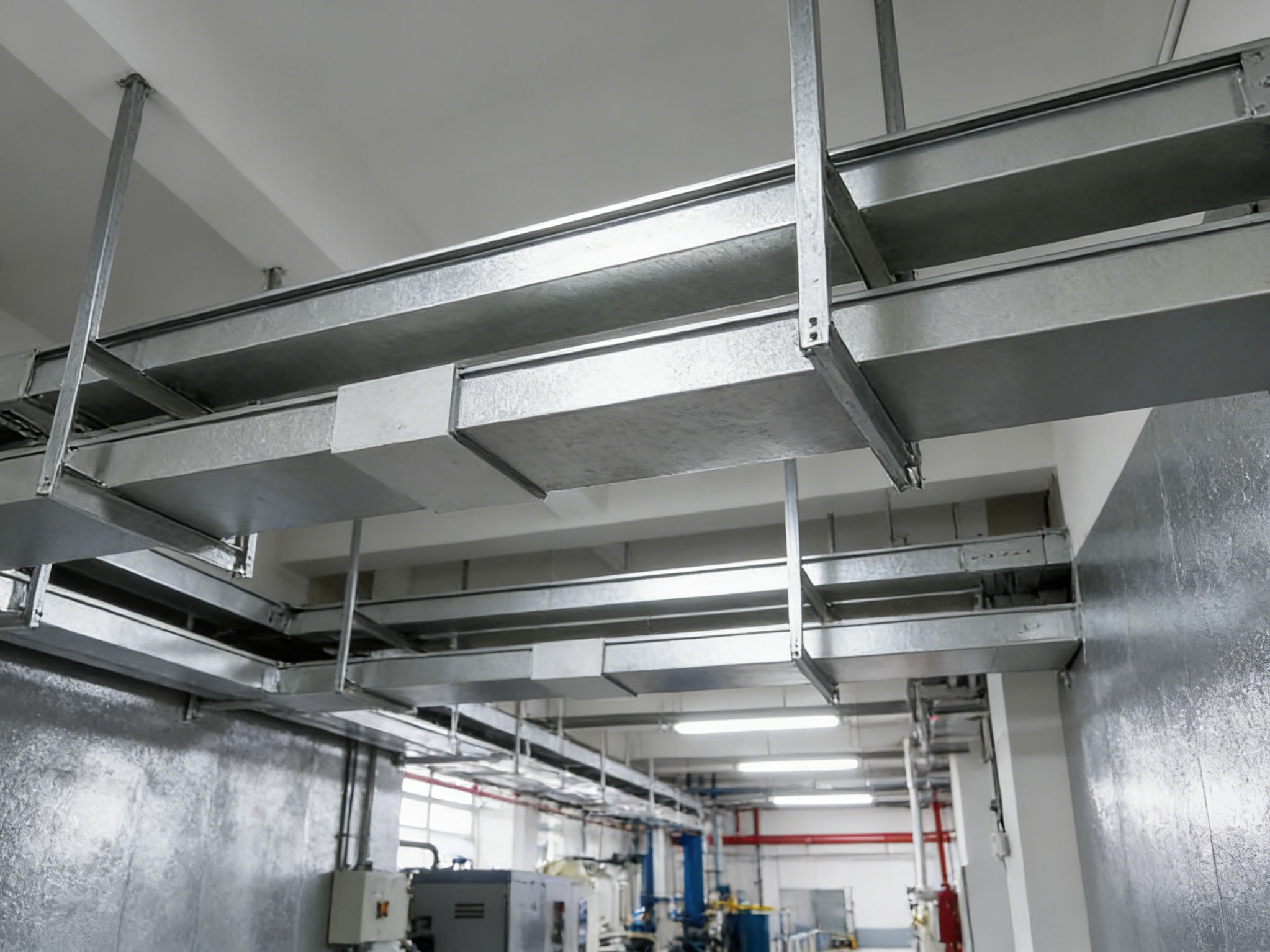
Core Environmental Differences Between Indoor and Outdoor Cabling Scenarios
The fundamental reason for cable tray design changes lies in the huge gap between indoor and outdoor operating environments. Indoor spaces are stable and controllable, while outdoor environments are affected by weather, temperature and industrial pollution all year round, putting forward higher requirements for tray comprehensive performance.
Indoor Environment: Stable Temperature & Low Pollution
Indoor workshops, office buildings and indoor pipe corridors have relatively constant temperature and humidity, no direct sunlight exposure and rain erosion. The environment is clean with few corrosive substances and external impact factors. Therefore, indoor cable tray design focuses more on heat dissipation, neat wiring and basic load-bearing, without excessive anti-aging and anti-corrosion redundant design, which can effectively control project costs.
Outdoor Environment: Complex Weather & Corrosive Conditions
Outdoor projects such as factory exterior walls, overhead corridors, photovoltaic power stations and municipal wiring face variable weather. Long-term ultraviolet radiation, rainwater washing, freezing in winter, high temperature in summer, as well as coastal salt spray and industrial flue gas corrosion will continuously damage cable trays. Outdoor design must take weather resistance, anti-corrosion, wind pressure resistance and drainage performance as core indicators.
Key Cable Tray Design Changes: Indoor VS Outdoor Projects
BDCABLETRAY optimizes cable tray design in four core dimensions: material selection, structural design, surface technology and installation configuration according to scenario differences. Each design adjustment is targeted to solve practical engineering pain points and balance safety and economy.
Material Selection Design Differences
Indoor cable trays prioritize lightweight and cost-effective materials. Ordinary cold-rolled steel plates and common aluminum alloy materials fully meet indoor usage needs. The material thickness is conventional, focusing on meeting basic cable load-bearing and structural stability, avoiding excessive material waste and reducing project investment.
Outdoor cable trays adopt upgraded thickened materials and high-grade raw materials. BDCABLETRAY outdoor dedicated trays use thickened hot-dip galvanized steel plates or high-strength weather-resistant aluminum alloy. The material tensile strength and impact resistance are significantly improved to cope with outdoor wind pressure, temperature deformation and external collision. For coastal and chemical industrial zones, we also support 304 stainless steel material customization to resist strong corrosive environments.
Structural Optimization Design Differences
Indoor structural design focuses on heat dissipation and space saving. Ladder type and perforated cable trays are the mainstream choices. The hollow and open structure ensures fast cable heat dissipation during high-load operation. The overall structure is compact, which can adapt to narrow indoor pipe corridor space and realize dense and neat wiring. No redundant drainage and wind-resistant structure is required for indoor trays.
Outdoor structural design adds weather-resistant and protective functions on the basis of load-bearing. First, independent drainage holes are reserved at the bottom of outdoor trays to avoid rainwater accumulation and cable water soaking. Second, the edge and frame structure are reinforced to improve overall wind pressure resistance and prevent deformation under strong wind. In addition, closed or semi-closed structures are mostly adopted for outdoor trays to block falling dust, leaves and sundries and avoid cable sheath damage.
Surface Anti-Corrosion & Weather-Proof Technology Differences
Indoor cable trays adopt ordinary electrostatic spraying process. The smooth spraying surface can prevent indoor slight dust corrosion and achieve a neat and beautiful appearance. The process is simple and low-cost, fully adapting to stable indoor environments, and will not have peeling or rust problems in long-term indoor use.
Outdoor cable trays must adopt multi-layer anti-aging and anti-corrosion processes. BDCABLETRAY outdoor trays use hot-dip galvanizing, zinc-rich primer and outdoor special powder spraying composite technology. The multi-layer protective film can effectively resist ultraviolet aging, rainwater oxidation and salt spray corrosion. Compared with indoor single spraying process, the outdoor dedicated process has 3 times longer service life and stable performance in harsh outdoor environments.
Load-Bearing & Span Design Differences
Indoor cable tray span design is flexible with small load margin. The indoor supporting and hanging frame spacing can be reasonably arranged according to the building structure. The load-bearing design only needs to meet the static load of cable self-weight, without considering external wind load and snow load, and the structural margin is moderate to save costs.
Outdoor tray load-bearing design adds dynamic load assessment. In addition to cable self-weight, it also calculates wind pressure load, snow accumulation load and temperature stress. BDCABLETRAY increases the overall structural load-bearing margin of outdoor trays, shortens the partial support spacing, and optimizes the force-bearing structure to prevent tray deformation and collapse caused by extreme weather.
Matching Accessories Design Differences
Indoor supporting accessories are conventional galvanized hanging frames and connecting bolts, with simple assembly and ordinary anti-rust performance. The accessories are mainly used for fixing and bearing, without special weather-resistant design.
All outdoor supporting accessories of BDCABLETRAY adopt full hot-dip galvanizing or stainless steel design. Meanwhile, waterproof gaskets, fixed anti-loosening bolts and wind-resistant pressing plates are configured to prevent bolt loosening caused by long-term outdoor vibration and wind force, ensuring the overall stability of the tray system.

Scenario-Based Design Selection Suggestions From BDCABLETRAY
Reasonable design selection can maximize project quality and control costs. Combined with thousands of engineering practices, BDCABLETRAY summarizes targeted selection standards for indoor and outdoor cable trays.
Indoor Project Recommended Design Scheme
For indoor factories, office buildings, shopping malls and pipe corridors, select electrostatic sprayed ladder trays and perforated trays with conventional thickness. Prioritize open structures to ensure cable heat dissipation, adopt standard supporting spacing and conventional connecting accessories. This scheme is cost-effective, neatly laid out and fully compliant with indoor electrical construction standards.
Outdoor Project Recommended Design Scheme
For conventional outdoor overhead wiring and building exterior wall wiring, select hot-dip galvanized solid bottom or closed cable trays with drainage structure. For coastal salt spray and chemical corrosion areas, upgrade to stainless steel trays or enhanced anti-corrosion sprayed trays. Match full set of weather-resistant accessories, and properly shorten the support span to improve wind and snow resistance.
Consequences of Mixed Indoor and Outdoor Cable Tray Design
Many project quality problems stem from incorrect design matching. Using indoor trays outdoors will quickly cause paint peeling, rust deformation, water accumulation and cable corrosion, leading to circuit failure and frequent maintenance. Using outdoor high-standard anti-corrosion trays indoors will cause unnecessary cost waste and reduce project economic benefits. Professional scenario-based design matching is the key to long-term stable operation of cabling systems.
If you need professional indoor and outdoor cable tray design solutions, model selection guidance and engineering scheme optimization, contact BDCABLETRAY. Our professional electrical engineering team provides free project evaluation, personalized design customization and full-process technical support to help you complete compliant, safe and cost-effective cabling construction.
FAQ
1. Can indoor designed cable trays be used directly for outdoor projects?
No. Indoor cable trays adopt ordinary spraying process and lightweight structure, lacking UV resistance, anti-corrosion and wind pressure resistance. Used outdoors, they will quickly rust, deform and age, causing cable exposure damage and potential electrical safety hazards. All outdoor projects must adopt BDCABLETRAY dedicated outdoor weather-resistant cable trays with professional structural and process upgrades.
2. What is the biggest design difference between indoor and outdoor cable trays?
The core difference lies in environmental adaptability design. Indoor trays focus on heat dissipation, load-bearing and cost control with simple surface technology and open structure. Outdoor trays add drainage, wind resistance, anti-ultraviolet and anti-corrosion design, adopt upgraded materials and closed protective structures to cope with complex and changeable outdoor weather and corrosive environments.
3. Do outdoor cable trays need drainage hole design?
Yes, it is a necessary design. Outdoor trays are exposed to rain and dew all year round. Reserved drainage holes can quickly discharge accumulated rainwater inside the tray, avoid long-term cable water soaking and moisture corrosion, and effectively extend the service life of cables and trays. BDCABLETRAY outdoor trays are all equipped with standardized drainage structures according to engineering standards.
4. Is outdoor cable tray design more expensive than indoor type?
The unit cost of outdoor dedicated trays is slightly higher due to upgraded materials and processes, but the comprehensive cost performance is higher. Outdoor trays have ultra-long service life and almost no later maintenance costs. Indoor trays used outdoors require frequent replacement and maintenance, resulting in higher long-term comprehensive costs. Reasonable design matching can effectively control project costs.
5. How to choose cable tray type for mixed indoor and outdoor projects?
For mixed projects, adopt segmented design and matching. Use standard heat-dissipating trays for indoor sections, and switch to weather-resistant anti-corrosion outdoor trays at outdoor exposed sections and indoor and outdoor transition positions. BDCABLETRAY provides targeted segmented design schemes to ensure safety and compliance while saving project costs.